In the 10 years BioCrossroads has been promoting life sciences in Indiana, the effort has netted more than 330 new companies,
an infusion of more than $330 million in venture capital, a tripling of exports, and a growing number of mentions in national
reports on life sciences. More.
Wealth and fame often lead professional athletes to share their success in the charitable arena, but those efforts rarely
last much longer than their careers as the organizations struggle to survive in an already-crowded philanthropic field. More.
Executives at Indiana’s public companies got rich in the down-and-up market, even when investors didn't. CNO Financial's
Jim Prieur, for example, received stock grants now worth $4.4M, despite share prices that are 40 percent lower than three
years ago. With searchable database.More.
Charters and vouchers may have sparked the loudest education-related protests before the Legislature this year, but changes
to teacher evaluations are likely to have the biggest impact on Indiana’s public schools. More.
With economic growth in the United States sluggish, Indiana companies are joining the race to capitalize on the fast-growing
Chinese economy—even as hundreds of millions of Chinese move into the middle class and adopt a Western-style thirst
for goods and services. More.
 As a Danville school board member and superintendent of Indianapolis
Metropolitan High, Scott Bess is straddling the increasingly contentious chasm between traditional public schools and privately
operated charters. More.
The pitch from Mayor Greg Ballard’s administration to privatize the city's parking meters is compelling, but the proposal
to sell the meters to Dallas-based Affiliated Computer Services Inc. has the city giving up more in the long run than is immediately
apparent. More.
Top executives at Indiana's public companies have largely been insulated from the economic crash. IBJ's
review of executive pay found that, although 131 of the 238 executives listed in proxy statements the past two years saw annual
compensation fall in 2009, only 10 experienced cuts of more than $1 million. More.
Records show Marion County Prosecutor Carl Brizzi directed lucrative work for the Prosecutor's Office to his friend, business
partner and political contributor John Bales. More.
For investors, 2008 was the worst year since the Great Depression. Even so, more than half of the state's public-company executives
saw the value of their pay packages rise from 2007despite the fact that only 10 of the companies posted a positive total
return in 2008, and 46 companies shed more than one-third of their stock market value. More.
The Simon family's role in building the city has come at a steep price for taxpayers. Simon and
its business interests in the last 20 years have collected local government incentives
worth more than $400 million, an IBJ tally of those deals shows. More.
Cities must woo people while they’re young—in their 20s or early 30s—because after that age, people tend
to hunker down. The Indianapolis area apparently appeals to at least two key groups of young people—particularly those
already married, according to a new study by researchers at IUPUI. More.
IUPUI is grappling with how to pay for upkeep and improvements necessary to keep its three world-class athletic facilities—and
the city—in the hunt for high-profile sporting events. More.
At an aging building at 863 Massachusetts Ave., they pass through a metal detector and wait in line to show a clerk their
identification and copies of overdue bills. Center Township Trustee Carl Drummer sometimes helps. The Trustee's Office received
an average of $6.9 million each of the last seven years, mostly from taxes, to provide poor relief-now known as township assistance.
But only about $2 million reached the penniless each year, with much of the difference covering administrative overhead.... More.
Center Township has real estate holdings worth more than $10 million, according to IBJ research. The township's robust
real estate portfolio—highly unusual for an Indiana township—fits Trustee Carl L. Drummer's vision for his
taxpayer-supported office. But it makes others see red. More.
|
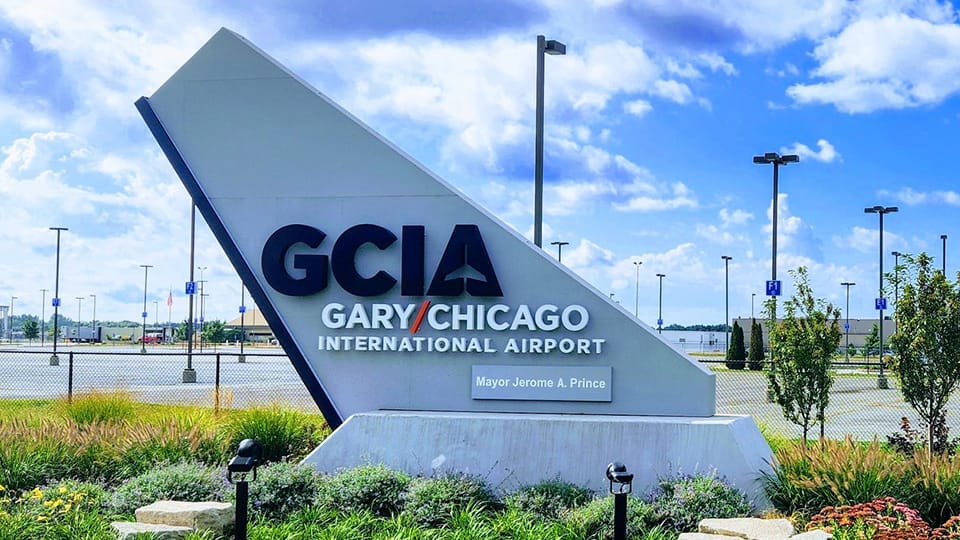
Indianapolis Airport Authority CEO John Clark and two key officers spent more than $67,000 last year on travel that included
extended business trips to Brazil, Denmark, Greece, Morocco and Switzerland. More.
Several state employees openly questioned how John Bales' real estate brokerage did business long before the FBI launched
an investigation that led to his indictment. More.
Three years after Indianapolis Mayor Greg Ballard launched a city office designed to help ex-offenders avoid a repeat prison
visit, some of those original supporters say the city’s Office of Re-Entry Initiatives not only has fallen short of
that goal but has accomplished little else. More.
Legislation that expands charter schools in Indiana also could increase the number of teachers at those schools without licenses,
making it easier for educators like Eric Nentrup to take non-traditional paths to the classroom. More.
There is little agreement—but lots of politics and complex statistics—on how to define success and failure in
Indiana’s public schools. More.
Indiana’s Republican-controlled Legislature will likely pass the bulk of education-reform measures being pushed this
year by party heavyweights, but partisan rancor could threaten the long-term prospects for a sweeping overhaul of the state’s
public schools. More.
Indianapolis Metropolitan High School implemented a school-wide overhaul in its educational approach in only three months.
The charter school might be the face of the future for all Indiana public schools. More.
Wall Street bankers for decades sold municipalities like Indianapolis on debt instruments called swaps as a safe way to reduce
borrowing costs and hedge against rising interest rates. In reality, the swaps were complicated bets that relied
on misguided assumptions, and taxpayers paid. More.
Marion County Prosecutor Carl Brizzi last year intervened in a major drug case to offer a reduced sentence over objections
from both law enforcement officers and his own deputy prosecutors. More.
Indianapolis businessman Tim Durham has treated Ohio-based Fair Finance Co. almost like a personal bank since buying it seven
years ago, and now he, his partners and related firms owe it more than $168 million, records show. More.
Architecture and urban design students from Ball State have created a vision for urban renewal that is arguably more compelling
than the Central Indiana Regional
Transit Authority's principal, utilitarian goal of reducing northeast-side highway congestion and air pollution by running
a diesel commuter train atop the old Nickel Plate Railroad corridor. More.
Indianapolis-area hospitals have suffered a double whammy of spiking interest rates on their bonds and heavy losses in their
investment portfolios and are trying to save cash any way they can. More.
Charter Homes owner Jerry Jaquess fancies himself a white knight for King Park, a neighborhood once known mainly for its rampant
crime, boarded-up homes and vacant lots. But as he’s constructed a slew of homes and carriage houses there, the local
builder has stirred up several lawsuits, dozens of liens and persistent questions about whether his business is legit. More.
Most public companies say they tie executive compensation to performance, but an IBJ review of pay data from 65 Indiana-based
firms shows otherwise. Last year, more than two-thirds of Indiana-based public companies saw their share prices decline, yet
many continued to award eye-popping compensation to their executives. More.
An IBJ review of hundreds of pages of public records shows Christopher P. White and his Premier
Properties USA Inc. are facing major financial and legal challenges. The most glaring signs of trouble: Contractors have filed
more than $3.5 million in liens against Premier’s retail properties in Plainfield; the state of Indiana is trying to
recover $375,000 in sales taxes on White’s airplane; and the contractor who renovated his Lake Clearwater mansion
is suing him to recover more than $600,000 in unpaid bills. More.
The Indianapolis Colts' evolution from perennial patsy to Super Bowl favorite is a body of work with a seldom-told—and
often misunderstood—history. It's easy to see the hues all-pros Peyton Manning, Marvin Harrison and Edgerrin James
painted on this masterpiece season. President Bill Polian and Coach Tony Dungy certainly colored the landscape. And Offensive
Coordinator Tom Moore added his creativity. But theirs aren't the only signatures on this canvas. More.
|
something to take iman's mind off CART,,,the league itsownself doesn't do it
Someone mentioned a green roof. Every designer of a new urban building should be required to at least explore the feasibility of a green roof. The ability to cut carbon dioxide, save precious rainwater (drought this summer??) and re-use grey water, cool the building cheaper, and improve the view for neighbors, should be, not only the good neighbor thing to do, it should be the responsible neighbor thing to do. Too bad the city didn't require it when they gave up downtown green space for the Simon Building. Surprised they aren't requiring it now.
About the same means down, like the TV ratings.
My favorite tradition that needs to be brought back is the 25/8 rule.
Your stats are incorrect. The 85k Government employees working in Marion County includes all government workers in Marion county. That is state, federal, non profit agencies, city and county. The stats the article list is the number of employees for all of the city/county employees and it is correct. That number includes the library, airport, convention center, and so on. The policy of extending benefits to domestic partners is consistent with private sector companies of the same size. Isn't the mantra of most conservatives "run the government like a business."
Also, too say the "fiscal proposil is huge" without considering the actuarial factors involved is a bit of an overstatement. We really don't know if it is huge or not. If all of the people added to the plan are healthy and don't have claims then it could bring cost done or hold them neutral.
There are 85,346 government employees in Marion county according to Stats Indiana.
My understanding is that this proposal covers not only same sex partners and children, but opposite same sex partners who are not married and any kids.
It also covers all city and county employees, plus municipal corporations which use city/county benefits packages including Health and Hospital Corporation (Wishard), Indianapolis Airport Authority, Indianapolis Convention Center,Lucas Oil,Bankers Life, Indianapolis Marion County Library, and Indianapolis Public Transportation Corporation (IndyGo).
Certainly Indianapolis Public Schools will also want more benefits also.
The fiscal cost on this proposal is huge.