
Subscriber Benefit
As a subscriber you can listen to articles at work, in the car, or while you work out. Subscribe Now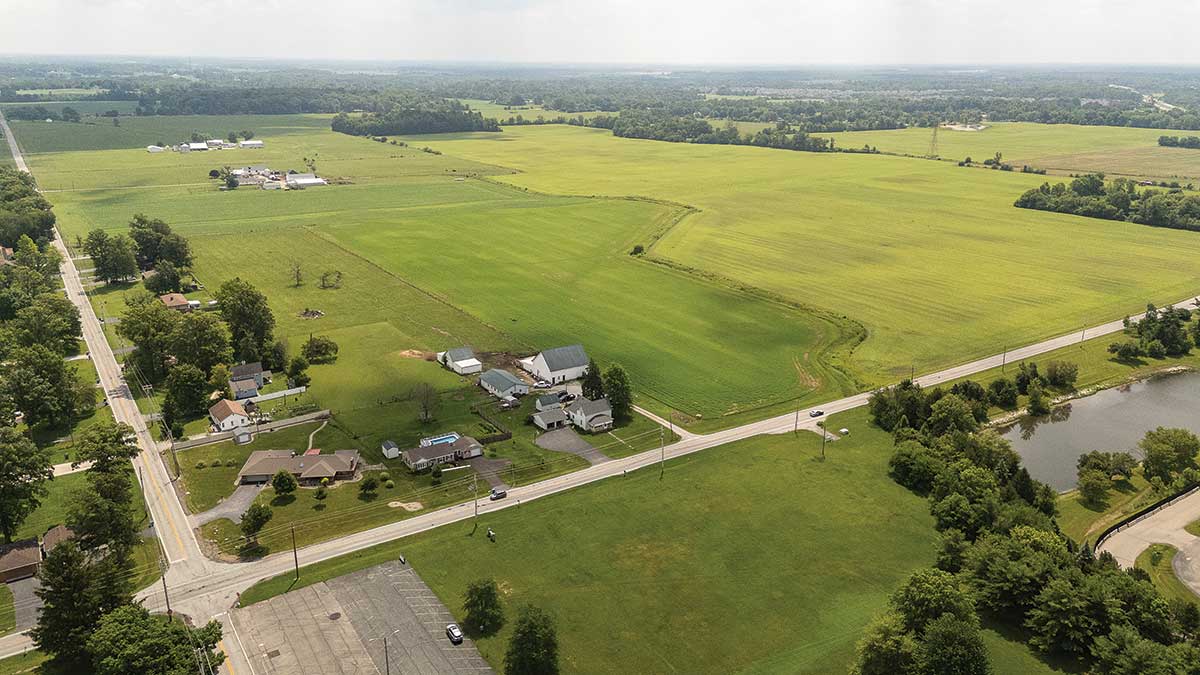
City-County Council members are currently mulling whether to grant zoning approval for a proposed billion-dollar data center in Indianapolis backed by Google. As the council approaches a Sept. 22 public hearing over the controversial project—which involves a 467-acre mostly agricultural site on the city’s south side—IBJ looked into some of the questions being asked.
What is a data center? What do they do?
Data centers are large warehouses filled with servers, cables and IT equipment that power internet applications and store information from the World Wide Web. Driven by a huge demand to power generative artificial intelligence technology, large tech companies are aggressively pursuing data center projects.
Although data centers are common, the recent headline-grabbing versions are “hyperscale data centers.” These colossal structures are owned by major cloud service providers such as Amazon, Microsoft, Meta and IBM.
How many data centers have been built by companies like Google?
Business Insider identified 1,240 data centers in American already built or approved for construction at the end of last year. That is nearly quadruple the number it found as of 2010, which was 311.
The same outlet identified Northern Virginia and Maricopa County, Arizona, as leading locations for these projects.
In Indiana, about 40 data centers are active or proposed, according to an estimate from Indianapolis-based advocacy group Citizens Action Coalition. That figure includes Google’s project in Franklin Township.
The Franklin Township property is generally bounded by South Post Road to the west, Davis Road to the east, Troy Avenue to the north and Interstate 74 and Vandergriff Road to the south.
Why Indiana?
In 2019, Indiana lawmakers passed a new type of economic development incentive specifically designed to attract data centers. The law offers significant tax breaks of up to 50 years for operators of qualified centers.
Indiana also offers relatively cheap land, labor and energy costs, and has relatively few instances of natural disasters. Those factors make it attractive for developers.
The Indiana Economic Development Corp. has approved tens of millions of dollars in tax breaks for data center projects. In fact, the proposed Indianapolis project—codenamed “Project Flo”—was one of four data centers to land a 35-year tax break specific for data centers that is valued at about $42 million. The credit could be extended for up to 15 additional years if the company meets its minimum planned investment of about $1 billion.
The agency is also awaiting a study on the pros and cons of incentives for call centers. The Boston Consulting Group will also provide a white paper report detailing the best way for the state to approach such proposals, according to a contract approved by the agency. Inside Indiana Business reported Thursday the cost of the study now exceeds $1.2 million.
What incentives are the city considering?
City officials are weighing a 10-year property tax abatement for the first building planned in the complex, which has an estimated cost of $314 million.
If approved, Google would see its estimated property tax bill of $5.4 million over 10 years halved to $2.7 million. The company has committed to paying at least $1 million in property taxes per year for 40 years.
Google would ultimately pay about $21.6 million in real property taxes on the first building over a 40-year period, according to city documents.
That concession includes a five-year commitment to make a supplemental payment of at least $730,000–even if it exceeds the tax liability—that could be used for community-oriented projects in Franklin Township.
The $1 million commitment is expected to start upon occupancy of the building. That threshold would likely only be exceeded if additional structures are built. The nine-figure investment in the first building is expected to increase the tax base by about $21 million in assessed value, according to the city.
The abatement must still be considered by the commission and presented for a public hearing on Oct. 1.
The company is also in the early stages of requesting a complete personal property tax exemption for 40 years, which would apply to an estimated $600 million in equipment for the data center’s operation.
The company plans to spend $75 million on personal property during the data center’s first year of construction, another $187 million in the second, $113 million in the third and $225 million in the fourth, ahead of the facility’s opening.
How much water will this data center use?
Representatives for the project told councilors in a private caucus meeting that the data center will use about 1 million gallons of water per day, Councilor Michael-Paul Hart told IBJ. Hart represents the district where data center would be built.
That’s down from previous estimates. In a June letter provided to the Department of Metropolitan Development, Citizens Energy Group said the project would use “two to three million gallons per day of water at peak times.”
A spokesperson declined to comment on the lower estimate.
The June letter also notes that Google will financially contribute toward any necessary improvements to satisfy the project’s water needs.
Usually, data centers are high-power users that rely heavily on water to power massive cooling systems. That’s because the facilities typical generate enormous amounts of heat, making it difficult to regulate temperatures that are conducive for equipment. But water-based cooling is generally preferred in data center development because it more efficiently dissipates heat–often requiring less energy than air-based systems.
How much would the Google project affect electricity bills?
It’s unclear. Advocates are sounding the alarm that the intense uptake of artificial intelligence—and thus proliferation of data centers—will overload systems and drive up utility bills, while economic development officials have said major utility users help subsidize power costs for residential consumers.
Utility providers are being asked by city development officials to certify that their systems can bear the additional load. The water and energy providers for Indianapolis—Citizens Energy Group and AES Indiana—will otherwise have to work with the company backing the data centers in order to build out the needed infrastructure.
In a letter of support, AES Indiana said it is “working to ensure that the costs of infrastructure upgrades required for large-load projects are fairly distributed” and “do not disproportionately impact our current customers.” The utility company said large-load customers, like data centers, will cover the cost of energy generation, transmission and distribution infrastructure.
Under an Indiana law passed this year, large load customers that consume the bulk of the energy created in new projects are required to reimburse at least 80% of the cost that could be reasonably attributed to the customer.
AES Indiana, the energy provider for all of Indianapolis, is already asking state regulators to allow a rate increase of about $21 per household by 2027. (The Indiana Office of Utility Consumer Counselor recommended denial of that rate increase on Wednesday.)
Advocacy group Citizens Action Coalition estimates that several of these projects will demand about 1,500 megawatts of energy. The largest proposed power user in Indiana is Amazon’s New Carlisle data center, which is anticipated to use 2,250 megawatts.
What guardrails has the city put on Google’s data center?
Google has made 35 specific commitments based on feedback from neighbors. Those commitments include things like the height of berms that could shield the view of the site, the locations of buildings within the site and level of noise that will be allowed.
The maximum noise level is 65 decibels—between the level of noise from a dishwasher and a vacuum cleaner—to be measured at the property line monthly. It may exceed that limit during emergency use of generators or periods of testing emergency generators.
The building also must leave open land for an eventual Southeast Trail, proposed as part of a 2014 Indianapolis greenways master plan. The developer will also have to leave the land north of the Ficher Ditch—a small slice of the 467-acre site—without any permanent buildings or structures.
Why did the project have to get approved by a city commission, and not just council?
In short: It’s part of the bureaucratic, technical process.
Anytime a property is either being rezoned or a variance for the existing zoning is requested, it requires approval from various bodies that are staffed by the city’s Department of Metropolitan Development.
That includes multiple boards of zoning appeals, the Metropolitan Development Commission hearing examiner, the regional center for most projects downtown, and the commission itself. (The Indianapolis Historic Preservation Commission is also involved in the approval of redevelopment plans for areas or structures that have been declared historically significant.
Consisting of nine appointed members–five by the Indianapolis mayor and four by the City-County Council–the MDC essentially serves as the legislative body to the Department of Metropolitan Development’s executive functions and oversees redevelopment, planning and policy surrounding land use.
DMD staff review submissions from developers and their representatives, then provide the commission with detailed reports and recommendations. For projects tied to economic development or those in which the city is directly involved, staff often work closely with the parties to evaluate and refine proposals—sometimes negotiating commitments needed to secure approval. That process can take several months.
Those recommendations are based on how a proposed modification to zoning fits with the city’s comprehensive plan, a collection of guidelines and stipulations related to the use of land for agricultural, industrial, commercial, residential and government purposes.
However, the recommendations from DMD staff are generally not seen by administration officials, including the DMD director, until after they are finalized and made public ahead of a hearing. City entities are even required to go through the same zoning process for projects, although the state is exempt from any such regulation.
Likewise, the Metropolitan Development Commission operates independently of the Mayor’s office and City-County Council, though the council has final authority over rezoning requests, such as the Google project. Under city code, the commission must base its votes on whether a proposal aligns with recommended land use and whether it would harm the surrounding area, while also considering staff recommendations.
Construction cannot start on a project requiring rezoning without approval from the MDC and a subsequent affirmative vote from the council. In many cases, the acquisition of land and other pre-development steps are also contingent on zoning approvals.
The current zoning discussion is entirely separate from the discussion on potential incentives for the project, as the abatement and exemption will only be taken up for consideration if the project is given a green light to build.
While most votes on projects are cast by voice ballot, they may also exercise a written ballot option at the discretion of the commission’s president–currently John Dillon, a local insurance executive.
What do neighbors think?
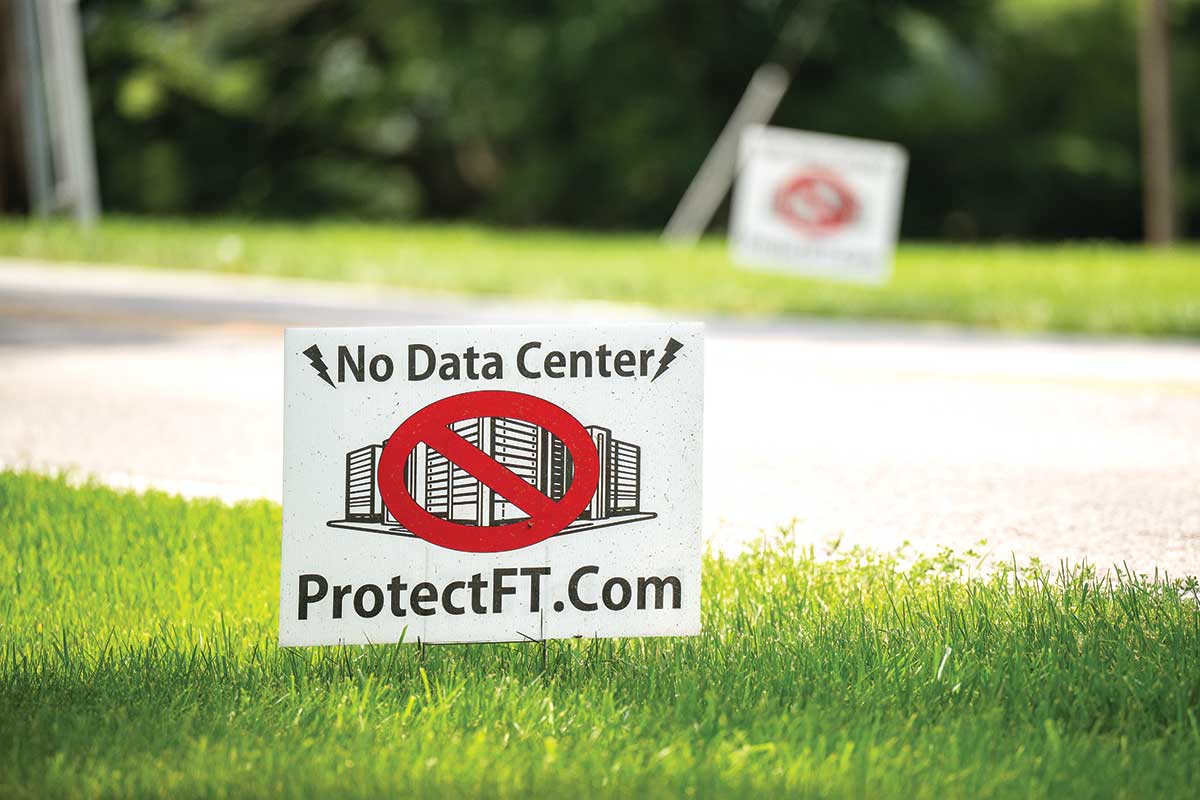
Neighbors concerned about the development’s potential environmental impact and utility use formed a group called “Protect Franklin Township.” That group has a petition opposed to the project that has netted more than 7,000 signatures and recently invested in digital billboard ads across Marion County.
Where does the City-County Council stand on everything?
A bipartisan group of 17 City-County councilors have committed to voting against the data center. Some have done so for environmental reasons, while others have attributed precedent in which councilors tend to support the district’s councilor in rezoning cases. The district councilor, Michael-Paul Hart, is opposed to the project.
The other five council Republicans—Josh Bain, Derek Cahill, Michael Dilk, Paul Annee and Brian Mowery—have all committed to voting down the project. Eleven Democratic councilors join them in opposition: Ali Brown, Nick Roberts, John Barth, Rena Allen, Jessica McCormick, Andy Nielsen, Keith Graves, Jesse Brown, Jared Evans, Kristin Jones and Frank Mascari.
One Democrat, Councilor Ron Gibson, has come out in support.
A public hearing has been set for Sept. 22. Just 15 council votes are needed to override the rezoning.
According to the Metropolitan Development Commission’s rules of procedure, the request is defeated if the council rejects it after a public hearing. It could be reintroduced after a year, in line with the commission’s rule for project reconsideration.
What does Indianapolis Mayor Joe Hogsett have to say about the data center project?
If the rezoning effort ultimately passes the council, it’s expected the Hogsett administration will become more involved, likely joining nonprofit group Indianapolis Economic Development Inc. in promoting the incentive package for the project.
“It says a lot about our city’s continued economic growth when a company like Google shows interest in Indianapolis,” a spokesperson for the Mayor’s Office said in an emailed statement.
But the administration has mostly stayed mum on the current process for the project, with the spokesperson indicating that it “does not intervene on zoning cases,” in line with historical precedent since the establishment of Unigov. It has also not weighed in on past contentious project proposals that went through the Metropolitan Development Commission, except in cases where the city was a direct participant.
However, the spokesperson said the administration is cognizant of the concerns expressed by some living near the property on which the Google data center would be constructed.
“We are committed to doing what’s in the best interest of our residents, especially those living in Franklin Township, and will continue to evaluate this proposal carefully,” the statement said. “It is important to know that multiple steps remain in the city approval process.”
IBJ reporter Susan Orr and IIB reporter Marek Mazurek contributed reporting.
Please enable JavaScript to view this content.
Taylor & Mickey – thank you for this article.
Given the tax abatements/breaks given to this project and all of the data centers in Indiana, and the highly distributed/remote nature of IT work, it would be helpful to understand the job numbers for those employed at the actual physical data center.
That those numbers are not loudly announced as part of these negotiations leads one to believe the job numbers are underwhelming from a quantity, quality, and salary perspective.
Is it feasible to design a closed loop system for water?
On the Monrovia data center, I saw numbers around 50 jobs per building at $100k per.job. they are planning 4 buildings.
Many people focus on the 50 year tax abatement, but that appears to be for equipment. The 10 year property tax abatement is standard and sounds like it would bring in more taxes than a residential development, 1,200 homes or more, or a warehouse which are the most likely alternative uses for this field. The demand for municipal services would be much lower for this than housing
Water and electricity are municipal services.
I had seen far lower IT job numbers for another data center (less than 10) with the bulk of the other jobs being security and maintenance, not making 100K.
Again, if the job numbers were blowing us away, they’d be repeating them over and over.
We need to come together and push back against the anti-progress, anti-science, anti-property rights NIMBYS who push back on building the essential infrastructure for our state and country. Build more apartments, build more data centers, build more energy capacity.
As a society we would get much further if we asked “how can we do this the right way” instead of “can we do this?” Or worse, a reactionary “No” because “AI is scary,” or other whataboutisms.
These developments will be around for decades after tax abatements burn off, providing millions of property tax revenue for schools, roads, etc.
Our political leaders should grow a backbone and make the case why this is absolutely essential.
They should have done that before implementing changes to our tax code. All they do is waive their hands and claim “it’s the future”. Explain the benefits. It’s been six years.
One is not a NIMBY if they ask why a large building that uses large amounts of electricity and water while employing a handful of moderately paid workers is worth nine figure tax incentives.
Lastly, be around in decades? How do you know that? Computer technology changes really quickly.
Good comments.
The Indiana Economic Development Commission – IEDC – is reportedly scheduled to release a “white paper” it spent $1.25M on Massachusetts-based Boston Consulting Group preparing on the benefits/burdens of economic incentives for data centers. I’m hopeful it will list “best practices” and which communities around the country have negotiated the “best deals” that benefit local communities not only on tax revenues/payments in lieu of taxes/community benefits received but also mitigating adverse impact on power and water sources. For $1.25M – let’s hope it’s a comprehensive study that can be useful to policy makers and elected officials all around our state who are grappling with these tough issues every single day.
Good article trying to make sense of it all. Still sounds like we get screwed on the tax income.
Also seems the only construction money to be locally made is the site work and some of the building construction. We also have to figure the $600M of equipment, I.e. servers and cooling systems, etc., will not be made locally or in Indiana. Most of the interior systems will be installed by high tech IT type folks, probably from out of town. My point here is of the first Billion Dollars invested, not much is actually spent here and does not help Indiana.
The only folks that really gain in these data centers are the likes of Google, Meta, Microsoft, etc., along with AES and Citizens. We the local tax paying citizens really don’t gain much.
Ironically, this article and our comments are using a data center to be stored in. I saw one person complain we don’t need data centers and it was sent from a gmail account. That would be Goog!e.
I don’t have a problem with data centers, or even data centers being located here for that matter. Until the case can better be laid out as to the costs and benefits, though, I just don’t think they’re worthy of the very large tax breaks we are giving them, or that in a lot of cases we are asking consumers to pay for the increased utility infrastructure. High risk of socializing the costs while privatizing the benefits to a couple out of state tech firms.
The current case for them appears to be “They gotta go somewhere” or “You’re just against progress” with maybe a dash of “we are going to miss the future if we don’t move fast!”
Heck, I understand the cost/benefit of distribution centers, solar panel farms, and even the Indianapolis Colts better than I do data centers right now.
Why is Develop Indy located at the Indianapolis Motor Speedway?