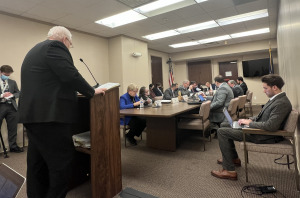
The Senate Health and Provider Services Committee voted to move the bill forward to the full Senate, after hearing testimony all in favor of the measure.
The federal government has resumed shipping all three monoclonal antibody treatments—including one made by Indianapolis-based Eli Lilly and Co.—that are authorized for early-stage COVID-19 to states despite evidence that two might be ineffective against the omicron variant.
As the raging omicron variant of COVID-19 infects workers across the nation, millions of those whose jobs don’t provide paid sick days are having to choose between their health and their paycheck.
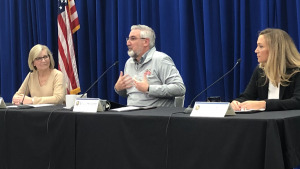
Indiana Gov. Eric Holcomb is moving forward with his bid to have the Indiana Supreme Court overturn a law allowing the Legislature to call itself into special session, arguing in a new filing that the law is akin to a constitutional amendment that must be voted on by Hoosiers.
The vaccine-mandate provisions of the bill would effectively force employers to accept any medical or religious reason to exempt employees from getting a vaccine, without question.
Indiana House and Senate Republican leaders appear to be at odds on how to handle legislation to address employer vaccine mandates and end the state’s public health emergency.
Reducing the business tax on equipment and modernizing tax incentives to attract more businesses to Indiana are among the top items on Gov. Eric Holcomb’s 2022 “Next Level Agenda,” which he announced Monday afternoon.
Many colleges hope that an extra week or two will get them past the peak of the nationwide spike driven by the omicron variant. Still, the surge is casting uncertainty over a semester many had hoped would be the closest to normal since the start of the pandemic.
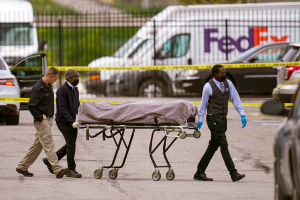
The mass shooting at a FedEx facility near the Indianapolis International Airport in April made national headlines and reignited debate over a state law designed to keep firearms out of the hands of those who pose a danger to themselves or others.
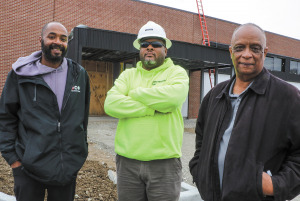
Hiring 100% diverse contractors to build a $15 million medical-device manufacturing facility was considered difficult, if not impossible, by many in the construction industry.
The warnings came shortly before the Indiana State Department of Health issued its latest COVID report, which showed 7,967 new cases of the virus—the highest number of cases in the daily report in more than a year.
The Patachou restaurants in Indianapolis and Carmel will not be able to recoup their financial losses from the COVID-19 shutdown in the spring of 2020 after a federal court found the insurance policy they held only reimbursed for damage to the actual brick and mortar structures.
The Indy Autonomous Challenge will be part of the splashy CES trade show Jan. 5-8 in Las Vegas, where Hoosier business leaders plan to use the racing event as a vehicle for promoting Indiana’s tech economy to a potentially worldwide audience.
Rep. Cindy Ziemke, R-Batesville, acknowledges that it will be difficult to persuade reluctant Republican legislative leaders to give the bill a chance. However, some political observers believe Ziemke’s interest in the issue could at least open the conversation in the GOP-dominated Legislature.
A final rule being issued Monday would raise mileage standards starting in the 2023 model year, reaching a projected industry-wide target of 40 miles per gallon by 2026