
Subscriber Benefit
As a subscriber you can listen to articles at work, in the car, or while you work out. Subscribe NowMarion County Prosecutor Carl Brizzi never seemed like an ideal fit to serve as a board member of a finance company.
“Math was never my strongest subject in school,” Brizzi said hours before FBI agents on Nov. 24 executed
search warrants and seized records related to Ohio-based Fair Finance Co., a business led and co-owned by his pal, Tim Durham.
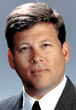 Durham
Brizzi, who said he accepted the Fair directorship in October because he wanted to learn more about finance, quit several
weeks later, after learning IBJ was working on a story raising questions about its business practices.
But his short stint reflects a larger pattern in Durham’s business dealings. He’s filled board slots with friends
and associates—not with truly independent businesspeople likely to stand in his way.
At least two other
men who have served or are serving as ostensibly independent directors at Fair, for instance, have deep personal or financial
ties to Durham.
And another company where Durham is a major investor and director,
Dallas-based CLST Holdings Inc., this year brought aboard a longtime Durham associate after prior director Manoj Rajegowda
quit to protest a controversial transaction.
In the deal, CLST, which was in the process of winding down after
selling its cell-phone distribution operations, purchased consumer-finance receivables from Fair, providing the Ohio company
badly needed cash.
A New York investment firm, Red Oak Partners, this year launched a proxy fight in hopes of
winning CLST board seats on the grounds that insiders have “knowingly or recklessly violated their fiduciary duties.”
Red Oak has balked at several CLST moves, including the appointment of Rajegowda’s successor, David Tornek,
a partner with Durham in Touch, a restaurant in Miami Beach, Fla. In a Securities and Exchange Commission filing, Red Oak
says it does not believe Tornek will provide “objective, unbiased scrutiny,” given that he “has done business
with Tim Durham for years, knows him personally and has been featured in news articles with him.”
Similar
ties abound at Fair. Brizzi’s director slot previously was held by Dan Laikin, another Durham friend. The pair was part
of a local group that nearly a decade ago teamed up to acquire control of National Lampoon Inc.
Durham stepped
in as CEO of the Los Angeles company a year ago, after a grand jury indicted then-CEO Laikin on stock-manipulation charges.
Laikin pleaded guilty to one felony count in September and is awaiting sentencing.
Laikin also was an investor
and board member at Obsidian Enterprises Inc., Durham’s Indianapolis-based leveraged-buyout firm. Obsidian was one of
the largest recipients of the related-party loans that have cast uncertainty over the viability of Fair, and Laikin himself
borrowed millions from the company. Securities filings show he pledged his $10 million Malibu, Calif., home as collateral.
So it’s hard to think of Laikin as a watchdog. But that’s the role he was supposed to fill on the Fair
board. Securities registrations listed him as an independent director charged with approving loans in which Durham and other
company principals had a financial interest.
In all, related-party loans now exceed $168 million—by far
the largest asset on Fair’s balance sheet. Repaying Fair’s investors, everyday Ohioans who purchased short-term
investment certificates, hinges on insiders’ making good on their debts. Fair owes purchasers of investment certificates
more than $200 million.
Investigators are swarming. In court documents, the U.S. Attorney’s Office in Indianapolis
alleged Fair operated as a Ponzi scheme, using money from new investors to pay what it owed prior investors, thereby “lulling
the earlier victims into believing that their money was being [handled] responsibly.” The SEC also is investigating
and has subpoenaed a mountain of documents from CLST, including the deal that spurred Rajegdowda’s resignation.
With Brizzi out of the picture, Durham has turned to another old friend to help carry Fair through its difficult times.
Filings with securities regulators show the new director is Scott McKain, a former WISH-TV Channel 8 reporter who now is a
professional speaker and principal of the Value Added Institute, a think tank focused on building client loyalty.
But that’s not all. McKain, who could not be reached, also serves as vice chairman of Obsidian Enterprises. And he
is forever grateful to Durham for providing money to help him and his wife deal with the financial devastation wrought by
her battle with ovarian cancer.
“Had it not been for the support and generosity of my best friend, Tim
Durham, I don’t know how we could have made it,” McKain wrote on his blog. “We lost all we had—but
without Tim we would have been bankrupt and wondering where the next meal … was coming from.”•
Please enable JavaScript to view this content.
Editor's note: You can comment on IBJ stories by signing in to your IBJ account. If you have not registered, please sign up for a free account now. Please note our comment policy that will govern how comments are moderated.