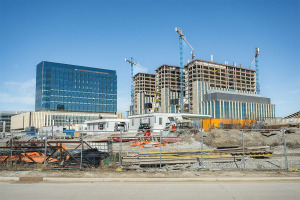
Several downtown development projects are in their infancy or just getting started. IBJ takes a look at a handful that could draw buzz throughout 2026.
Interestingly, while sports have been very, very good to the company, management didn’t set out to make arenas and fieldhouses one of their specialties. It just sort of happened.
The labor pinch has affected several developments across Indianapolis, with some builders shuffling projects to accommodate subcontractor availability, a few halting the start of work altogether and others forging ahead after securing additional capital to pay higher prices.
Skender’s focus on health care, office and municipal projects has reaped millions of square feet of work for the firm in central Indiana since opening its first local office in 2020.
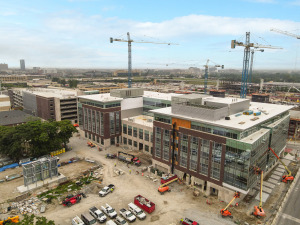
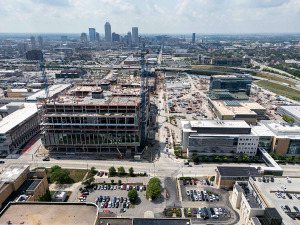
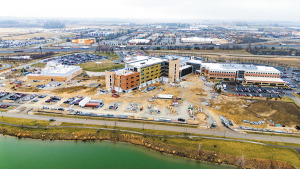
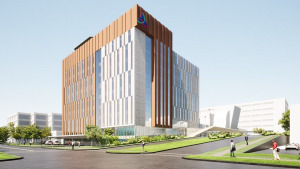
Work on Indiana University Health’s $4.3 billion downtown hospital campus, one of the most expensive construction projects in Indiana history, is set to be finished in late 2027.
Community Health Network’s announcement this month that it plans to open a $335 million campus near U.S. 31 and 196th Street in Westfield marks the latest entry into the crowded Hamilton County hospital market.
In a 35-minute speech at the Economic Club of Indiana, CEO Dennis Murphy made the case that IU Health treats some of the sickest patients in the state and needs the best hospital possible to continue doing that.
Former Indianapolis Colts Quarterback Peyton Manning on Thursday announced the Care for Tomorrow campaign has received nearly $24 million in donor funding since its launch a year ago.
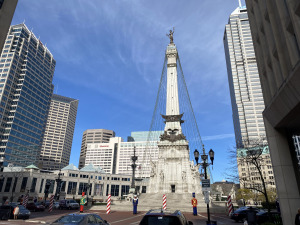
While most projects, such as Indiana University Health’s new hospital, Old City Hall and Pan Am Plaza, are efforts that will take years to come to fruition, other developments will begin to see substantive movement in the new year.
The city on Wednesday and Thursday sold $581 million in bonds for the development through the Indianapolis Local Public Improvement Bond Bank, consisting of $436.8 million in tax-exempt revenue bonds for the hotel portion of the project, and another $155 million for the convention center expansion.
The all-in cost for the redevelopment of Pan Am Plaza is now expected to be $751.6 million. The bond sales to cover much of that cost—creating significant long-term debt for the city—are expected to take place this week.
While incumbent Joe Hogsett says a broad use of incentives like tax-increment-financing bonds is often necessary to bridge funding gaps, Jefferson Shreve favors a moderated use of the city’s incentive toolbox.
The Department of Metropolitan Development staff is recommending approval if IU Health explains why it changed several items in the plan, including why it wants to build two surface lots for 291 cars on sites that were previously planned for structures.
With at least $9.5 billion in development projects in the downtown pipeline over the next decade, construction industry leaders are under pressure to find enough qualified workers to ensure the work gets off the ground.
The hospital system confirmed Monday that it priced the bonds at $726 million on June 6 and expects to close on the offering July 6. The bonds will help finance IU Health’s new downtown hospital.
Republican Jefferson Shreve said he disagrees with the decision by Mayor Joe Hogsett’s administration to take over financing and ownership of the $510 million Signia by Hilton—a key part of the city’s convention strategy.
Many parts of downtown are thriving—particularly neighborhoods, where rents are rising, people have to stand in line for a lunch table, and investments are flowing. Other parts—especially downtown’s central core, where many workers might come to the office only once or twice a week—are limping along, pockmarked by vacant storefronts, panhandlers and crumbling sidewalks.
Indiana University Health said Monday the cost of its new downtown hospital complex will now top $4 billion, an increase of 60% over previous estimates, due to higher construction costs and a major increase in the number of patient rooms.