
Subscriber Benefit
As a subscriber you can listen to articles at work, in the car, or while you work out. Subscribe Now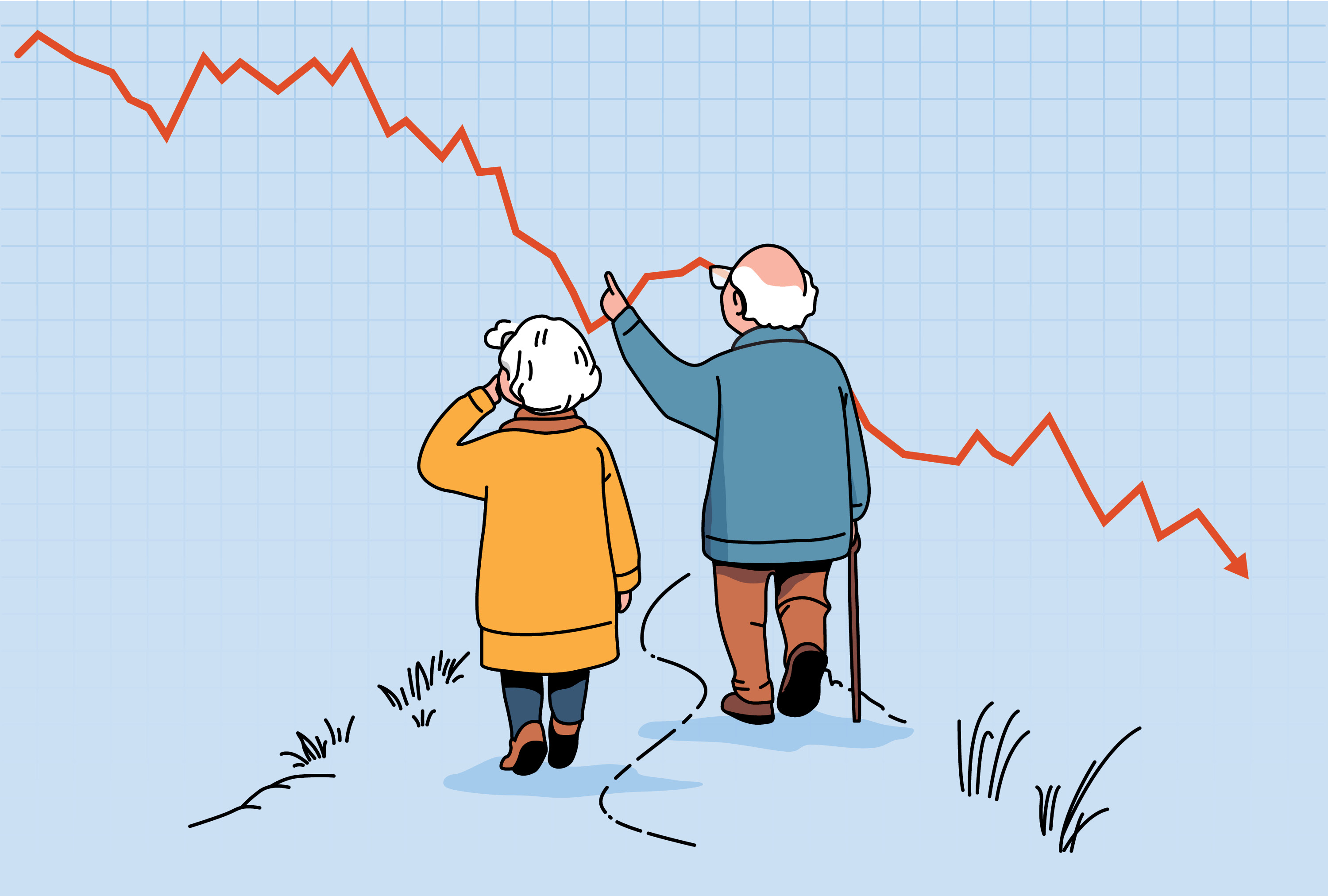
Financial advisers who build retirement plans typically face two tasks. The first is creating the plan itself. The second is spending years or perhaps decades diplomatically dissuading nervous clients from fiddling with that plan during periods of inflation, political turmoil and economic downturns.
Or in other words, periods such as now.

“Just in the recent past, I’ve had clients reach out to me after a day or two of poor performance in the equity markets and say, ‘Should I make drastic changes to the portfolio?’” said Dan Kurowski, senior vice president and regional sales manager of wealth advisors for PNC Investments.
“My response is always, ‘That’s a bit of a dangerous game to play, and none of us has a crystal ball that shows what going to happen,’” he said. “And frankly, if somebody had pulled out of the market at the beginning of April when it was down, they would have missed the recovery we’ve seen over the last few weeks.”
Unfortunately, retirees, the soon-to-retire, and their wealth advisers have far more to plan for and worry about these days than a mere stock-market dip.
Elon Musk, head of the Department of Government Efficiency (created via executive order by President Donald Trump), has called the Social Security Administration a “Ponzi scheme,” stoking worries that benefits might be cut and the full-retirement age increased again. Over several years, the federal government has been gradually increasing the age at which retirees can draw full benefits, from 65 to 67. This is the year that age 67 finally kicks in. The age to qualify for Medicare benefits hasn’t changed; that’s still 65.
Such uncertainties, along with the possibility of a tariff-triggered burst of inflation, or perhaps a cratering of the stock market—or both—has encouraged some of the soon-to-retire to consider retiring immediately, before things go south.
The Urban Institute reports that the Social Security Administration could see a 15% rise in retirement benefits claims this year over 2024—an increase five times greater than the average of 3% over the past 12 years.
Much of that increase is due to a surge in baby boomers nearing retirement age—about 4 million Americans turn 65 this year. That surge is expected to continue through 2027.
But while some people are thinking about retiring early, the vast majority of folks in their 60s are simply in no position to do that. While the average amount most people believe they need to retire hovers between $1 million and $1.4 million, the amount the average 60-ish person possesses actually stands at about $250,000.
“The average family is ill-prepared for retirement,” Kurowski said. “I don’t think it’s necessarily because they’re too optimistic about their future and what it will take to realize it. I think in a lot of cases it’s avoidance behavior. They don’t want to know the reality.”
The answer is to find an adviser and develop a plan. Obviously, it would have been better if you’d done this when you were 21, but there’s likely still time to assess your assets, distribute funds into appropriate stocks and bonds, and figure out how much money you need to live an acceptable post-retirement lifestyle.
“I would say in practice, we haven’t actually seen people change their retirement dates at this point,” Kurowski said. “But it’s certainly a topic that’s front and center for everybody.”
Don’t panic
One thing that’s certainly risen markedly is the amount of anxiety surrounding retirement.
“The financial risks to a retirement plan have always been there,” said Bryan Foltice, associate professor of finance at Butler University.
But today, “markets can shoot down based on a tweet, and we can see that sort of thing having adverse effects,” he said. “It can make people, especially people trying to transition out of work and into retirement, uneasy. And on the internet, our balances and our accounts are far more accessible and visible than they were [in the] past.”
The answer, Foltice said, is the same one planners have given for decades: Don’t check your balances every day. Or every week. Instead, put together a careful plan that reflects your retirement goals, then check in several times a year to see if you’re on track and if any adjustments need to be made.
“Try to throw out some guardrails around how often you do this,” he said. “I allow myself to look at my retirement accounts once a quarter. There’s no reason to jump in more often, because that’s only going to lead to bad, emotional decision-making.”
The problem, of course, is that while there’s plenty of time to recover from isolated events such as a stock dip if you’re 20 or 30 years from retirement, the situation can be dire if something happens just before or after you clean out your desk.
“When you’re retired, the name of the game is not to lose everything when we have a steep market correction,” Foltice said. “If, say, your bond portfolio gets 5% but inflation is at 8%, you’re upside down by 3%. That’s a time when you’ll want to reassess what your retirement income will be and how much you need and then recalibrate your portfolio.”
Kurowski said the most important thing for anyone approaching retirement is not only to have a financial plan but to ensure that it’s “stress tested” regularly. In other words, war-game what would happen if you or your spouse got sick. Or if the market crashed.
“If you’re nearing retirement, test that plan based on different volatility scenarios, like the ones we’re currently seeing,” he said. “If you test it for periods of over- and underperformance, you can conclude whether the portfolio you’ve put together is going to meet your actual objectives.”

These days, with company pensions mostly a thing of the past and rising uncertainty about what Social Security might look like in a few years, the key word for the soon-to-retire is flexibility.
“When you retire, it’s incredibly important to understand what [that’s] going to look like for you from both a financial and non-financial standpoint,” said David Gilliland, director of financial planning at Valeo Financial Advisors. “What levers do I have to pull if things don’t go perfectly right? Am I willing to go back to work? Am I willing to reduce my lifestyle spending or maybe my travel expenses? Things like that can make a world of difference in the success of a retirement plan.”
Flexibility
Indeed, many retirees these days face the need to either continue working full time or to grab a part-time job in the gig economy. The reasons for staying on the payroll can be quite compelling. For instance, a person who starts collecting Social Security at 62 will likely receive a lifetime payment 30% smaller than someone who punched the clock at age 67. Typically, your monthly payout increases about 8% annually until age 70.

“I see many people who want to step off the treadmill, but they don’t necessarily want to step away from work altogether,” said Jeff Rapp, partner and private wealth adviser at Heartwood Planning Group. “In some cases, that’s because they sense that maybe they’re not as prepared for retirement as they need to be. In some cases, they’re transitioning because they don’t want to put pressure on their financial resources too early. In other cases, they may not be 65 yet, so they’re not eligible for Medicare.”
Kurowski said a lot of people are lulled into a false sense of security about their retirement because so many of their assumptions about their future finances are based on best-case scenarios. For instance, they assume that inflation will stay low and equity market returns will remain relatively high. But as anyone who’s examined the last 50 years of economic history already knows, that won’t necessarily be the case.
Others don’t realize just how long their post-work years might last or know what to do if they get sick. That can be a major mistake, given that more than 40% of retirees or their spouses face chronic illness.
“One common pitfall we see is lack of planning for some type of long-term-care event,” he said. “That can become extremely expensive, and if you haven’t planned for that, it can blow up a financial plan pretty quickly.”
Again, don’t fret that it’s too late to start planning. Even if you have only a few years left before retirement, getting your ducks in a row will at the very least create a clear plan of action.
“All too often, people wait until they’re very close to retirement to start thinking about it,” Gilliland said. “But while the best time to plant a tree is 20 years ago, the second-best time is right now.”
And don’t spend a ton of time fretting about what you see on the news.
“I tell people all the time, ‘CNBC is not talking to you specifically,’” Kurowski said. “The recipe for successful long-term investing isn’t difficult to understand. It’s the execution that can be challenging.”•
Please enable JavaScript to view this content.
Is the problem Musk called SS a Ponzi scheme or that it’s actually going broke and unfunded at the proper level?
The economy is always uncertain for most of us that are not insulated Oligarchs.