
Subscriber Benefit
As a subscriber you can listen to articles at work, in the car, or while you work out. Subscribe Now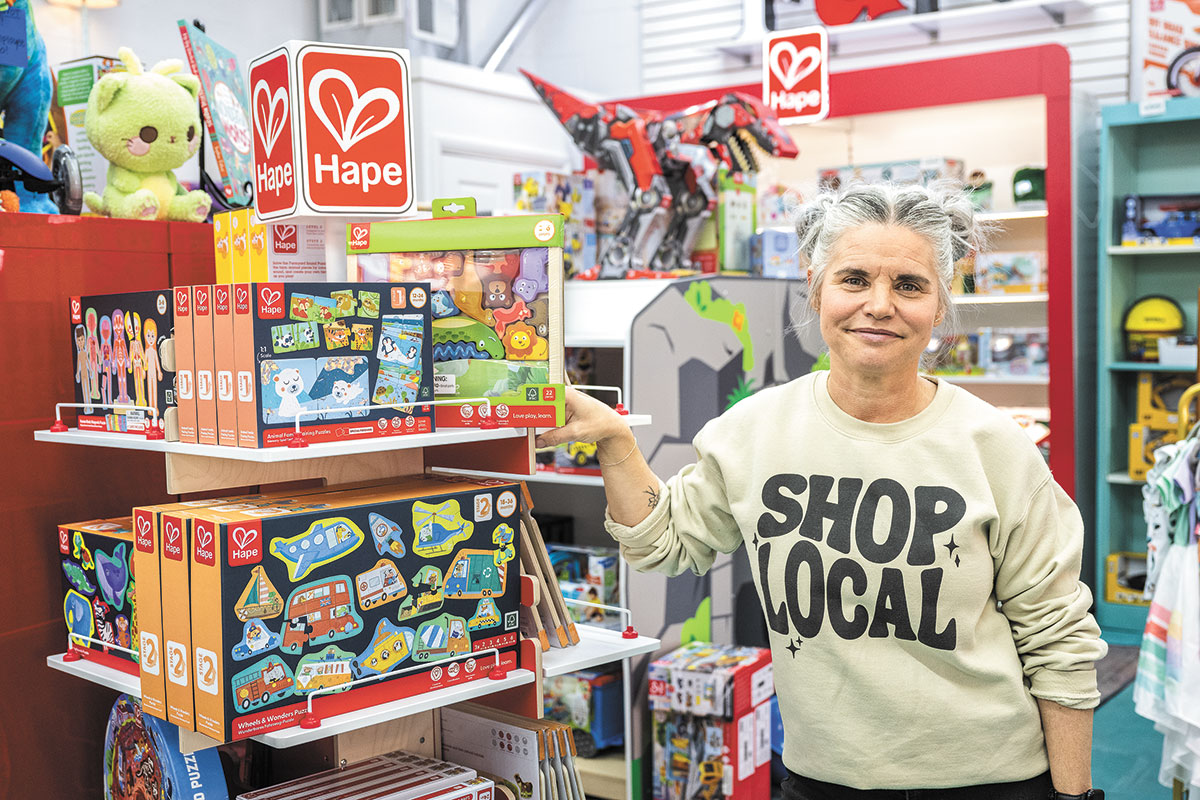
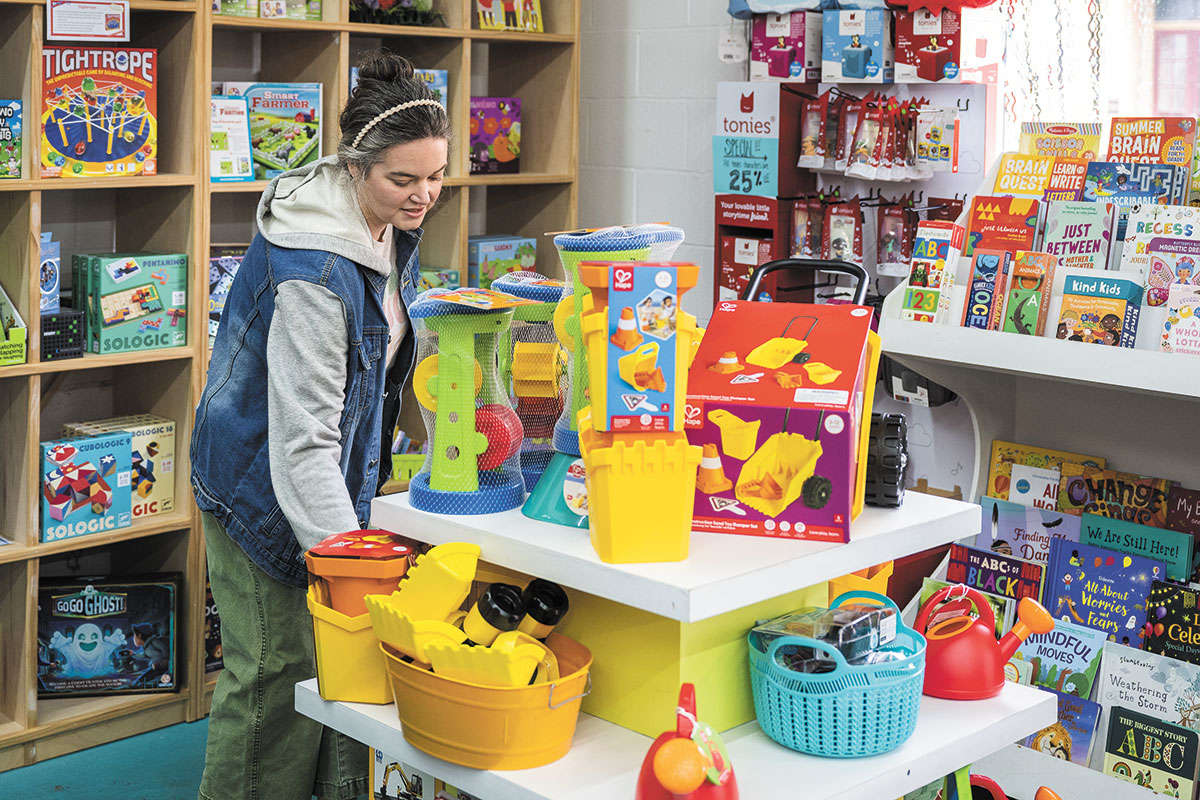
In the cheery, bright blue Toodleydoo Toys store in downtown Franklin, owner Debi Pierson is trying not to panic while waiting for the crush of Chinese tariffs to hit her small business and make it even harder to compete with big-box stores and online giants.
Pierson owns the toy shop at 1 W. Jefferson St. as well as a Shelbyville shop called The Poppy Boutique. She calls herself a “glass half-full” person and likes to take action in the face of adversity, but that makes the waiting and uncertainty caused by the tariffs worse.
So while Pierson and the staff are finishing up packing Easter baskets, they’re also unpacking an especially large wholesale order she placed before the tariffs took effect and thinking about how to talk to customers about higher prices.
Already, the store has received its first bill from a supplier that included a “tariff tax” for additional costs charged by the U.S. government at its port of entry.
Of course, Pierson isn’t alone. Retailers across the region and the country are bracing for the full impact of tariffs imposed by President Donald Trump.
The president argues that the moves will lead to a rebirth of American manufacturing and provide a long-term boost to the U.S. economy. But so far, many local owners see tariffs as an immediate threat to their businesses.
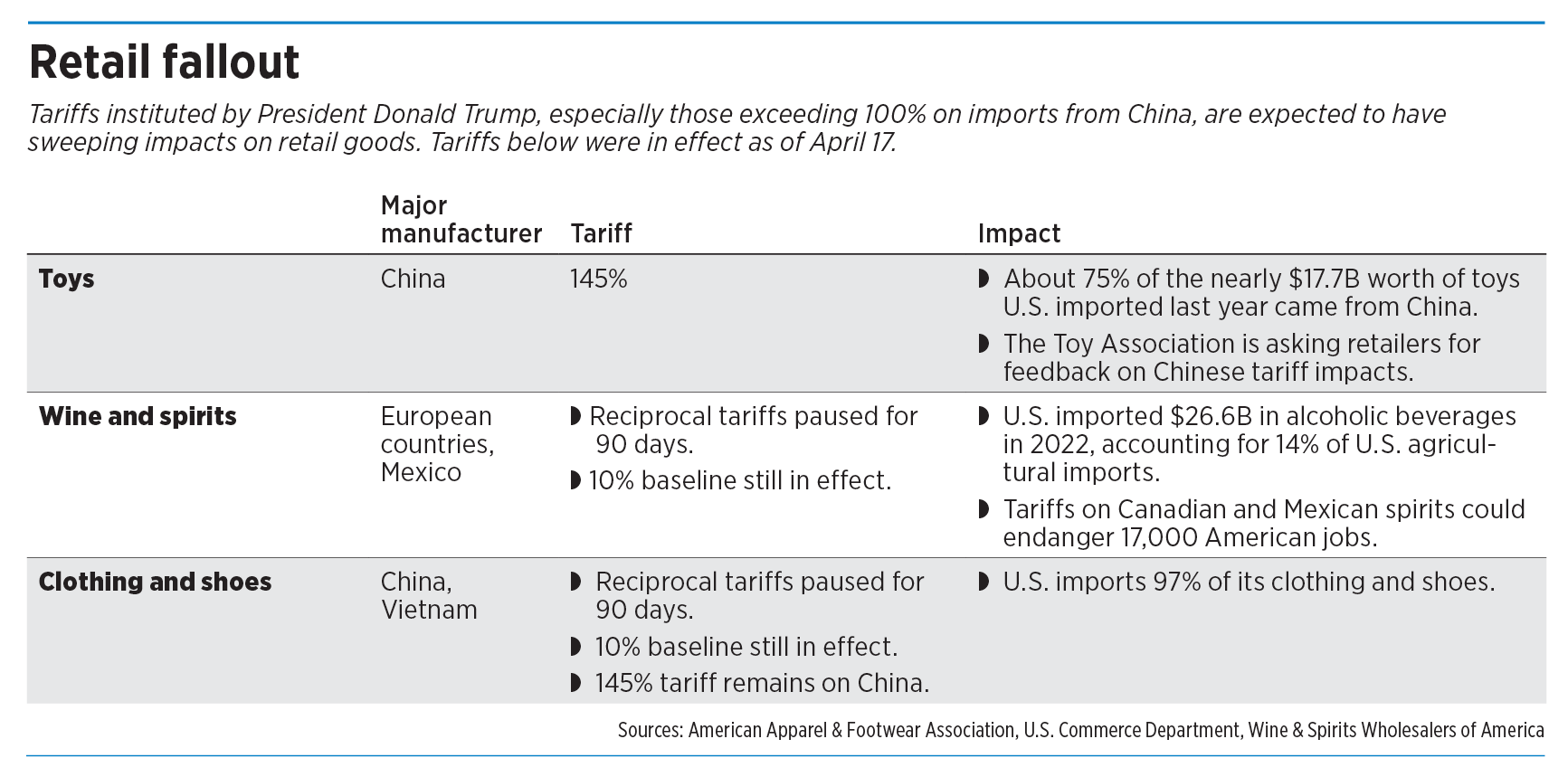
As a specialty toy supplier, Toodleydoo depends on loyal customers who care about quality and supporting local businesses. The shop’s customers already expect to pay a small premium for the ability to touch and feel toys and ask questions in person. But Pierson knows that the 145% additional tariff the Trump administration has imposed on goods from China means prices for many products will rise significantly, and others won’t be available at all.
“I am very worried,” she said. “We are just actively working on what our spin is for higher prices and when people can’t find things.”
Already, Pierson doesn’t take a regular salary, keeps retail prices as low as she can and provides free community story-time events. She ended last year with an overall loss after taking over The Poppy Boutique in September. More than ever, both stores need to hold on to current customers and attract new ones.
She fears the trade war and tariffs could be bad not just for her but for mom-and-pop businesses altogether.
“People want shops like Toodleydoo, but they won’t have Toodleydoo’s, they won’t have gift shops,” she said. “None of that will exist if this persists.”

The 140-year-old Stout’s Footwear isn’t likely to be a casualty of the recent tariffs, thanks to an associated real estate venture, said company President Brad Stout.
Also, suppliers have already delivered their spring shipments to Stout’s four Indianapolis-area locations, and many of Stout’s next orders will come from domestic warehouses. All of that means the disruptions—for now—are minimal.
Still, Stout said the trade uncertainty causes him anxiety. He scoffed at the nickname Trump gave to the April 2 date of his latest tariff announcement: “Liberation Day.”
“The only person who was complaining about unfair tariffs was Trump,” Stout said. “The average consumer was happy to get lower-priced products from other countries.”
And while it is only spring, retailers are already beginning to look toward the holidays. Stout, whose great-grandfather founded the business in 1886, anticipates price increases then.
The store’s suppliers don’t have answers for his questions about how the tariffs will impact their shipments and prices. Stout said that makes him anxious because most of the shop’s products are manufactured outside the country.
One major vendor, Spring Step, manufactures in China. Stout said the remaining companies have mostly transitioned to factories in smaller, poorer countries as the cost of labor increases in China. These countries include Vietnam, the Philippines and Cambodia. Some brands come from Europe.
Specialty products
In his April 2 announcement, the president said the United States has been “looted, pillaged, raped and plundered,” in the current global trade ecosystem. He accused other countries, where some U.S. companies have outsourced manufacturing labor, of stealing American jobs. These manufacturing jobs will “come roaring back,” he said.
But many products affected by tariffs are those that customers might not buy if they weren’t made outside the country.
At Kahn’s Fine Wines on Keystone Avenue, 60% of the wine sold is from foreign countries, including France, Italy, Chile, New Zealand and Australia. The Trump administration has imposed a 10% tariff on products from those countries.
Manbir Sandhu, the store’s general manager, said customers like the quality of wine from those places and the taste of grapes from specific regions.
He said 40% of sales are of domestic wines, including those made in California. But he said the prices of those bottles have been increasing above what customers are willing to pay. “In the last six years, I’ve seen prices double on wines that are not worth that money,” Sandhu said.
For example, Silver Oak Alexander Valley wines, based in California, doubled its price over six years, he said. Now, Kahn’s no longer sells the brand because customers weren’t willing to pay that price.
For now, the shop has instituted a 30-day pause on ordering products. Sandhu said the business will still restock existing products, but it currently isn’t entertaining offers from distributors to bring in new stock.
“People are coming in trying to sell their product, but we’re a little hesitant and wary of what’s happening,” he said. Mostly, the business is facing uncertainty: A distributor had told Kahn’s that prices would increase on June 1 because of tariff costs. Days later, the Trump administration axed that planned tariff.
If tariffs land at 10% permanently, he said, consumers will likely see a 5% increase in alcohol prices for Kahn’s to meet its profit margins.
In advance of those increases, Kahn’s hosted a “Taste ’em before they tax ’em!” event on Thursday.
“Join us for a one-night-only Tariff Tasting—a chance to explore an incredible lineup of European wines that may soon be impacted by the newly announced import tariffs,” Kahn’s wrote in advertising the event. “Whether you’re a seasoned sipper or just looking to discover something new, this is your moment to try (and buy) before prices could start to rise.”
Specializing in international
Global Gifts has about 40 countries represented at any given time in its stores on Massachusetts Avenue and on Indianapolis’ north side. The nonprofit, fair-trade shops primarily sell items from Guatemala, Nicaragua, Ecuador, Peru, India, Nepal and Mexico. Some products also come from Africa.

Christie Gillespie, a Global Gifts board member, said wholesalers have told her to expect a 10% to 27% increase in prices, which will be passed directly to shoppers.
The artisan-based shop does stock some American-made products. Gillespie said that includes vendors based in Elkhart, Denver and a small Ohio town. However, she expects those craftspeople to see an impact, too, because they might have parts or tools that are foreign-made.
“We’ve never really experienced tariffs or a trade war like this,” Gillespie said.
Establishing an infrastructure where these products can be fully made in the United States could take decades, retailers said. And even then, American-made products would likely cost more due to the higher labor costs and those associated with establishing a U.S. presence.
“Where does that leave me in the meantime?” Pierson, the toy store owner said. “I can’t wait 10 years for the price of blocks to return to something that people are willing to buy.”•
Please enable JavaScript to view this content.
Trump’s so-called “Liberation Day” is turning our economy toward recession. Then what?
Unemployment increases. Retail sales suffer. Small businesses go out of business. Less tax revenue for local governments. Reduced public assistance for those who live below the poverty line.
Buckle up folks, Trumpenomics is here.
The more you watch him work, the more you understand the litany of business failures.
But one should give him credit, he’s managed to get rich after taking over the Republican Party and instituting any number of pay-to-play policies. Sure, he’s running the country into the ground and we will all be screwed for decades, but hey, Trump’s finally achieved the personal wealth he’s struggled to get for decades. Surely he won’t screw it up this time, right?
This article highlights the real challenges that small retailers, like Toodleydoo Toys and Stout’s Footwear, are facing due to newly imposed tariffs, especially on goods from China. While these tariffs are meant to encourage a long-term rebirth of American manufacturing, they expose a much deeper issue: the United States no longer produces many of the essential goods we rely on every day.
During the COVID-19 pandemic, this overdependence on foreign manufacturing became a major vulnerability. Americans quickly learned that many critical items, masks, gloves, ventilators, medicines, and even basic electronics, were no longer made in the U.S., but overseas, particularly in China. When global supply chains collapsed, the shortages that followed weren’t just inconvenient, they endangered lives and crippled industries. As a Nurse and Supply Chain Managment leader I can tell you that everyone was scrabbling for anything they could get, there just wasn’t any to be had, and China wasn’t shipping them to the U.S.
China, in particular, has engaged in a long list of unfair trade practices with governmental support. These include heavy state subsidies for manufacturers, intellectual property theft, currency manipulation, and the use of low-cost, often exploitative labor to dominate global markets. American companies haven’t just been competing with Chinese businesses; they’ve been competing against the financial power of the Chinese government itself. See Lesley Weidenbener Commentary: Sewing-machine maker says tariffs are ‘worth a shot’
This combination of offshoring critical production and tolerating unfair competition has weakened America’s economic independence and national security. The lesson from COVID-19 was clear: relying on other countries, especially strategic competitors like China, for vital supplies is a major risk.
That’s why reshoring, bringing industries and manufacturing back to the United States, is so important. We need to rebuild domestic capabilities not only for national security, but also to create good-paying jobs, stabilize supply chains, and strengthen our economy. Sectors like pharmaceuticals, semiconductors, critical minerals, medical equipment, and consumer goods are top priorities for this effort.
Reshoring will not be quick or easy. As the article points out, rebuilding a robust American manufacturing base could take a decade or longer, and prices for goods may rise in the short term. However, the alternative of continuing to depend on unstable foreign supply chains poses a much greater risks for the future.
Ultimately, reshoring is not just about economic policy. It’s about protecting our ability to care for our people, defend our nation, and ensure that American small businesses, like Toodleydoo Toys, can thrive without being crushed by forces beyond their control.
The Current Administration is so afraid that China might decide to tighten its grip on our economy, that they decided they we should strangle ourselves instead.
When China joined the World Trade Organization (WTO) in 2001, the U.S. hoped it would open China’s markets, promote democracy, and integrate China into a U.S.-led global order. Economically, U.S. consumers and companies benefited, but American manufacturing jobs declined by over 4 million. Politically, China strengthened its communist system rather than liberalizing or moving more towards a democracy. China used WTO rules to its advantage, boosting its economy dramatically while resisting political reforms. The U.S. underestimated how China would shape globalization to fit its own model and that model does not bode well for us. So after 25 years of this experiment, it’s time to change course and begin a manufacturing revolution withing the U.S. If any country can do it, it is us!
Just means higher prices. Trumpers were told to blame the last bout of inflation on Biden – not covid (even though inflation was worldwide) – and I’m sure they will be told to blame this resulting inflation on Biden – not Trump policies – as well. None so blind as those who will not see.
Nobody seemed to care about importing for the 25 years prior to covid when we were all reaping the benefits of low inflation mostly resulting from shifts to off-shoring. Now we all could get the accumulation of what that pent up inflation would have been. Fact of the matter, tariffs are not permanent, they can be cancelled as quickly as they can be implemented. So will businesses be willing to invest tens or hundreds of millions of dollars to re-establish manufacturing in the US (which will take as long as it did to off shore) at the risk of being at a long term cost disadvantage or half pregnant if the tariffs are lifted? Either way, US consumers will pay either the increased tariffs or the higher cost of capital investment, labor, energy, and materials that will be incurred by moving manufacturing to the US. It’s a lose-lose situation for consumers.
Some industries as it relates to national security or critical supply chain requirements should be protected but Trumps broad blanket approach is going to dramatically increase the cost of the majority of goods that affect consumers daily lives (electronics, appliances, furniture, disposable goods, toys, sports equipment, clothing, footware, etc). All the stuff they buy at Wal-mart, Dollar Tree, and Target every day. But I guess if you are rich and never walk into those places it doesn’t matter. Not to mention, a lot of theTrump merchandise will go up in price when (or if) he decides to stop importing it himself.
BTW, the trade deficit increased 41% over the 4 yrs of the first Trump administration’s policies.
While it’s true that tariffs can raise consumer costs temporarily, President Trump’s approach was a strategic course correction after decades of dangerous overreliance on adversarial nations like China. COVID exposed how hollowed-out our supply chains had become — we couldn’t even make masks, PPE, or basic medicines without foreign help. Tariffs were a way to force the issue and begin reshoring critical industries to protect American security and jobs.
Under Trump, inflation stayed low because federal spending was kept relatively disciplined outside of COVID relief. In contrast, Biden’s administration injected $2 trillion into an overheated economy under the false name of the “Inflation Reduction Act” — which had almost nothing to do with inflation and everything to do with funding massive Green New Deal initiatives. Basic economics: flood an economy with money without matching production, and prices rise. Hence, Biden’s record-high inflation rates.
As for the argument about tariffs causing long-term uncertainty: yes, reshoring manufacturing is expensive and not instant, but the alternative, continued dependency on nations like China, who openly manipulate markets, subsidize industries, steal intellectual property, and engage in unfair practices with state blessing, is a national security risk. It’s not just about cheaper toys and TVs; it’s about whether the U.S. controls its future.
Finally, citing the trade deficit under Trump without noting the context, such as a booming U.S. economy, a strong dollar (which increases imports), and a global slowdown outside the U.S., is disingenuous. A strong economy naturally consumes more goods, including imports.
In short: tariffs were an imperfect but necessary tool to rebalance a dangerously tilted global system. Biden’s reckless spending, not Trump’s corrective actions, caused the inflation Americans are now suffering under.