NCAA asks Indiana regulators to ban prop bets on college sports
Indiana regulators are considering a request to ban all bets on the performances of individual college athletes.
Read More
Indiana regulators are considering a request to ban all bets on the performances of individual college athletes.
Read More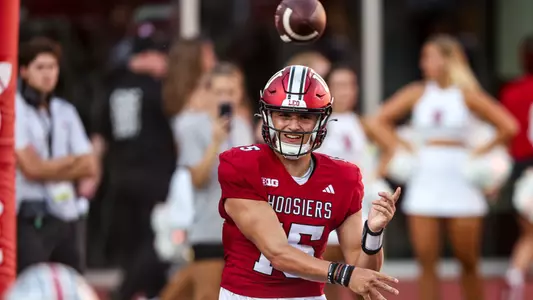
Even though the NCAA has ruled Sorsby ineligible, a recent injunction in a Texas court prevents the enforcement of that ban while the case plays out.
Read More
Since the 2018 Supreme Court decision that allowed states to legalize sports betting, Americans have wagered more than $520 billion on sports, researchers estimated.

Federal prosecutors charged 20 people on Thursday in what they called a betting scheme to rig NCAA and Chinese Basketball Association games.

This week’s split underscores a widening rift over the fast-growing world of prediction markets, a form of real-money trading that blurs the line between gambling and financial speculation.
The NCAA said last month that it had been investigating at least 30 current or former players for gambling issues.

The delay comes less than a week after an NBA coach and player were arrested in a takedown of two sprawling gambling operations that authorities said leaked inside information about NBA athletes.
In a memo sent to all 30 teams, the NBA said it believed “there is more that can be done from a legal/regulatory perspective to protect the integrity of the NBA and our affiliated leagues.”
The arrests of current and former high-profile NBA figures on Thursday for illegal sports betting and rigged poker games spurred fresh calls from lawmakers for federal regulation.

This doesn’t change the NCAA rule forbidding athletes from betting on college sports.
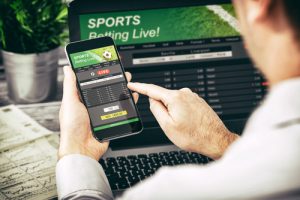
Bettors lose billions of dollars a year on parlays, the data shows, and operators bring in far more revenue for every dollar wagered on these bets than they do straight bets.
Despite the potential change, the committee emphasized that it doesn’t endorse betting on sports, particularly for student-athletes.
The Indianapolis-based NCAA said the three Division I players bet on one another’s games and/or provided information that enabled others to do so during the 2024-25 regular season. Two of them manipulated their performances to ensure certain bets were won.
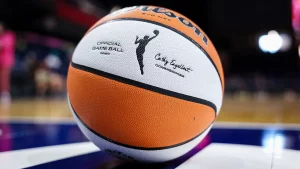
With fan interest in the WNBA exploding since Caitlin Clark’s rookie season, sportsbooks are eager to cash in. And the WNBA is courting gamblers more aggressively than ever.
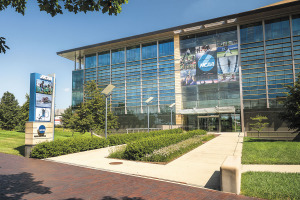
The organization’s once-icy relationship with the sports betting industry is beginning to thaw, but the Indianapolis-based nonprofit is still holding legalized gambling at arm’s length as it evaluates the impact on college sports.
The shift comes as the Indianapolis-based organization grapples with the growth of legalized gambling across the United States.
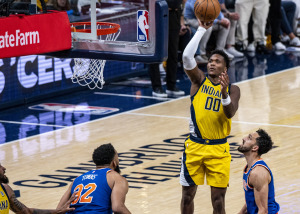
The Oklahoma City Thunder are such heavy favorites to win the NBA title that many bettors are looking for other wagers instead.
The NFL draft is the marquee event of the league’s offseason—and a nightmare for some sportsbooks.
The city of Baltimore accuses the sports betting companies of violating state and city law by engaging in “unfair and deceptive practices.”

The survey found that about one-quarter of Americans fill out a men’s March Madness bracket “every year” or “some years.”
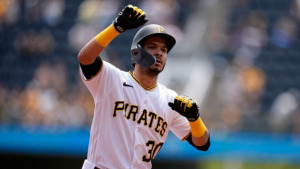
Four other players were suspended for one year by Major League Baseball on Tuesday in the game’s biggest gambling scandal in decades.
The American Gaming Association estimates $2.7 billion will be bet this year on the NCAA men’s and women’s basketball tournaments through legal sportsbooks.