
Subscriber Benefit
As a subscriber you can listen to articles at work, in the car, or while you work out. Subscribe Now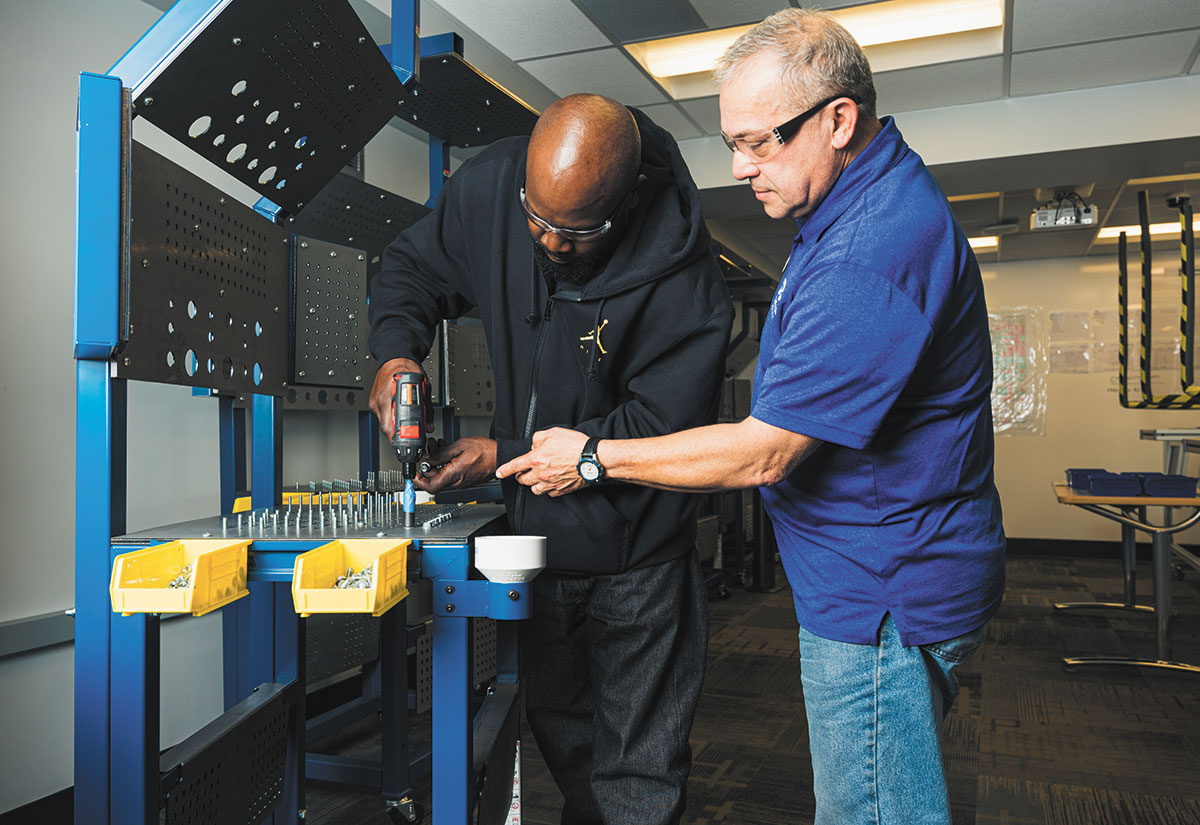
A nonprofit focused on fueling Indiana’s manufacturing industry plans to evolve one of its training programs to match employers’ newest needs.
Conexus Indiana, the advanced manufacturing and logistics initiative of the Central Indiana Corporate Partnership, trains high school graduates and underemployed adults for advanced manufacturing jobs in the state through a free, full-time, four-week curriculum called Catapult.
In its new six-year strategy, Conexus plans to incorporate into Catapult technology from Industry 4.0—the Fourth Industrial Revolution that’s already underway and that integrates digital technologies with manufacturing and industrial processes.
Conexus also wants to move Catapult programming on-site with manufacturers that want to hire Catapult graduates. And it plans to reduce its own role in the program.
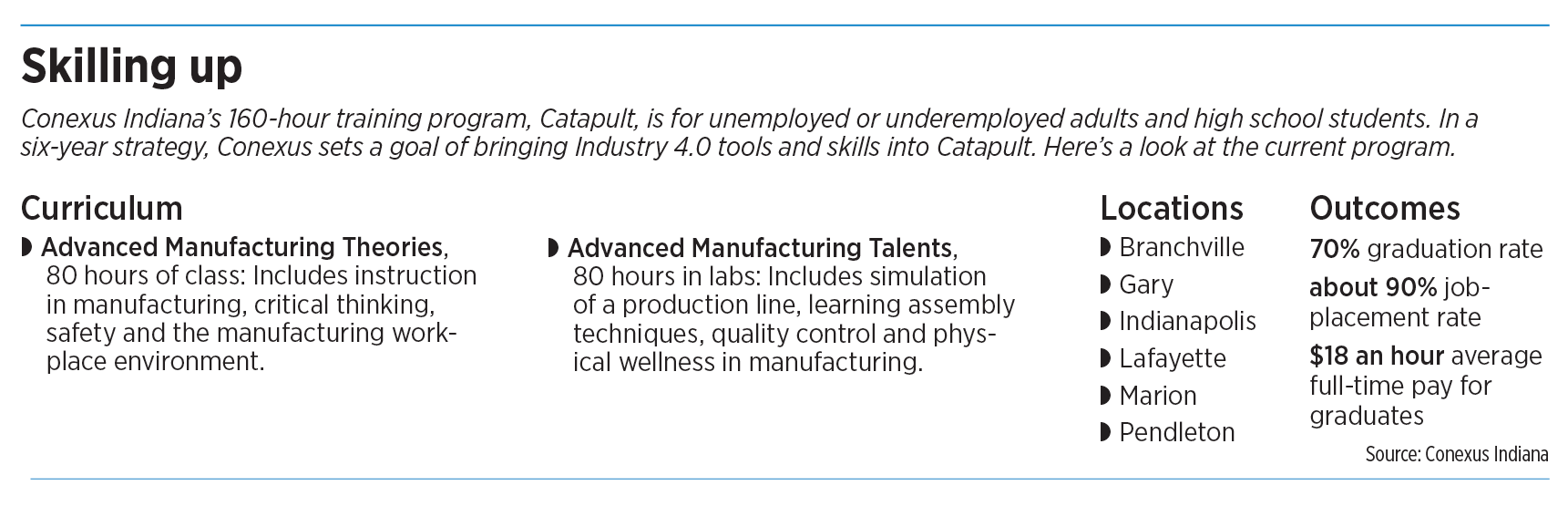
Launched in 2022, Catapult operates in six communities, with a total of about 700 graduates, at a 70% graduation rate. Students receive a stipend worth about $15 an hour for the time they spend training, and they receive six college credits through Ivy Tech Community College.
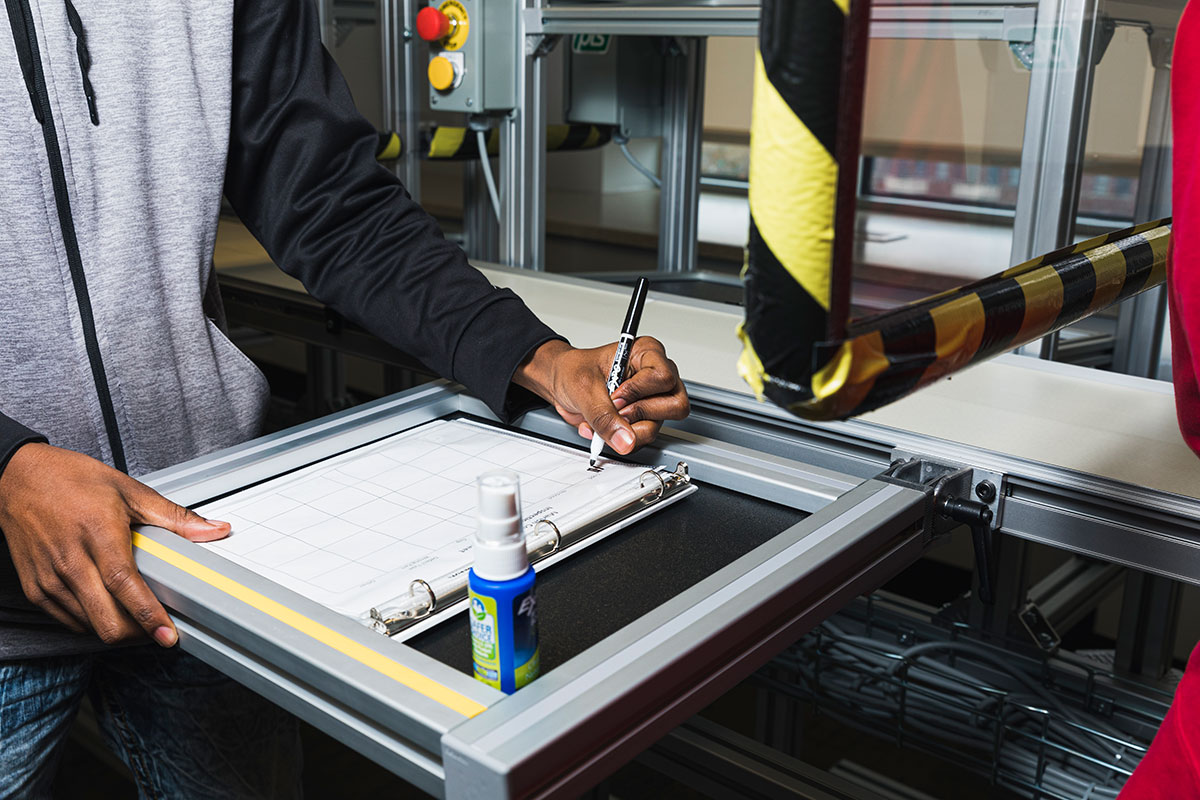
The program includes 80 hours of class time, through which participants learn advanced manufacturing theories, and 80 hours of lab time.
While Conexus leaders say the program has been successful—it has a 90% job placement rate for graduates—technology continues to transform the advanced manufacturing and logistics sector.

PJ McGrew, Conexus senior vice president of talent strategy and programming, said his goal over the next year is to determine “what’s next for Catapult.”
“As automation continues to ramp up and accelerate, we’re going to have to develop a deeper skill set with our students, either in Catapult or post-Catapult,” McGrew said. That might mean creating a second round of courses through Catapult. But it might also involve a different structure altogether.
McGrew joined Conexus in December after nearly a decade in state government. He had education- and workforce-related roles under former governors Mike Pence and Eric Holcomb. McGrew noted the state’s push toward work-based learning, including a 2023 economic development trip to Switzerland to study a Swiss apprenticeship model. He said Catapult’s future might follow some form of that model, but it’s unclear now what that would look like.
What’s clear is that Conexus plans to be less involved in Catapult. Currently, the organization oversees the program, providing training to instructors, who are either graduates of Catapult or retired from advanced manufacturing. Conexus employs some directly, while others are professors or teachers at Ivy Tech. Conexus employees provide advice to those leading the cohorts and conduct regular check-ins.
In Indianapolis, there are four programs. There are also programs in Branchville, Pendleton, Marion, Lafayette and Gary.
In Indianapolis, the programs are operated at Ivy Tech, Allision Transmission through The Arc of Indiana and 16 Tech Innovation District through Skilled US. Ivy Tech hosts two programs—one is open to the public and another is run by TeenWorks.
Conexus’ new six-year plan says it will become more of “a thought leader and partner, initial program integrator, and long-term accountability and improvement agent.” It hopes to move Catapult classes to manufacturing sites to let industry leaders customize the curriculum to their needs.
A peek at the program
In Branchville and Pendleton, the program is offered at Indiana Department of Correction facilities. Catapult is working to expand to another DOC facility this year, McGrew said.

Another iteration of the program operates at 16 Tech—a 50-acre innovation hub on the northwest side of downtown Indianapolis—where a separate career training organization, Skilled US, uses the Catapult framework in the Machyne Makerspace. Conexus is also headquartered in the complex.
The training program there is new; its ribbon cutting was in February. Still, 16 Tech CEO Emily Krueger said two cohorts have already completed the program and that she finds it special that the program is housed at the innovation district.
Other programs are run by community organizations, including Carey Services in Marion, The Greater Lafayette Career Academy in Lafayette and The Excel Center in Gary.
Also in Indianapolis, Public Advocates in Community re-Entry, known as PACE, offers Catapult training at Ivy Tech. The nonprofit supports people exiting Indiana’s criminal justice system.
There, Catapult is part of a larger workforce initiative. The most recent PACE cohort included 18 participants; 12 completed the curriculum, McGrew said.

Shaffon Browder, director of young adult services for PACE, said most Catapult participants are 18 to 24 years old. However, a newer program trains those 25 and older.
The younger participants are referred by career navigators in Employ Indy’s Youth Employment System, a Marion County workforce initiative that targets youth ages 16 to 24 who are no longer in school or working.
The program is 12 weeks long: There are four weeks of career readiness work, four weeks of curriculum, and a four-week internship period. The participants have eight-hour days to emulate a typical work schedule and are paid a $6,000 stipend. They also receive six college credits through Ivy Tech.
Browder said the program often inspires students to seek additional post-secondary education or training. Otherwise, it connects participants with employers for jobs. Indianapolis employers who have hired PACE Catapult graduates include Fastenal, Plastic Recycling, Kimball Electronics and Mi-Tech Tungsten Metals.
The program for adult students is just eight weeks long. It consists of two weeks of job-readiness work followed by four weeks of classes. Adult participants also receive six college credits from Ivy Tech and a stipend of $1,500.
The adult program is supported by PACE’s Launching Your Career initiative, which is funded by grants from the Indianapolis Urban League’s Indianapolis African American Quality of Life Initiative.
Browder said PACE’s Catapult classes consistently have a waiting list. Reviews from former participants say they largely found the program helpful. In one instance, the participant learned that manufacturing wasn’t for him/her but said visiting Ivy Tech through the program made him/her want to go back to school.
Investing in outcomes
Manufacturers throughout the state—including Indianapolis-based Allison Transmission and Coca-Cola Bottling in Speedway, have hired Catapult participants.
McGrew said the program also seems to have improved retention rates at companies that hire Catapult graduates. He said he thinks that is because Catapult helps workers understand how their work on an assembly line contributes to the company as a whole.
For adults, McGrew said, the key purpose of Catapult is to upskill Hoosiers in low-skill, low-wage jobs so they can join the manufacturing workforce and eventually pursue more schooling. The average pay for Catapult graduates employed in full-time manufacturing work is $18 an hour. Conexus brands Catapult as a program that doesn’t train students just for a job but rather for a career in a field whose average annual salary is $79,000.
But the positive outcomes don’t come free. Molly Zentz, a spokeswoman for Conexus Indiana, said the program costs about $50,000 per cohort. That covers expenses such as rent, instructor salaries and student stipends.
The program’s funding sources vary by site, she said, adding that Lilly Endowment is a key supporter, including for Catapult’s planned transition to Industry 4.0.
Partners like the Don Wood Foundation, JP Morgan Chase, the Department of Correction, the city of Indianapolis and PACE have provided funding for specific Catapult sites.•
Editor’s note: This story has been updated to correct that each Catapult cohort costs about $50,000 to operate. IBJ has also removed incorrect info from the story about how many Catapult cohorts there have been and how many Indiana employers have hired Catapult participants.
Please enable JavaScript to view this content.
Editor's note: You can comment on IBJ stories by signing in to your IBJ account. If you have not registered, please sign up for a free account now. Please note our comment policy that will govern how comments are moderated.