
Subscriber Benefit
As a subscriber you can listen to articles at work, in the car, or while you work out. Subscribe NowAbout 44% of Indiana voters consider themselves not solidly part of either party, or independent, according to 2025 data collected by the Independent Voter Project and L2 Data.
A newly-formed statewide political action committee supporting independent candidates, Independent Indiana, sees the state as fertile ground for growing that movement.
And as of this week, Indiana-based founder Nathan Gotsch has enlisted a national expert in Will Conway. Conway is a New York City-based veteran of multiple independent campaigns and movements, including that of Andrew Yang’s Forward Party and the work toward an attempted presidential bid from No Labels in 2024.
Gotsch, a former independent candidate for congress who writes the Fort Wayne Politics newsletter, said Conway’s name kept coming up as he started having conversations with people interested in independent politics.
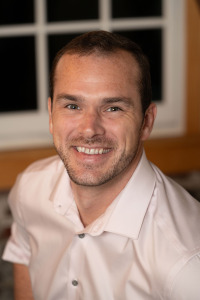
“As I started learning more and more about his experience, his story, I just became more convinced that he was the right person to help us here,” Gotsch said.
Conway’s career included time working on campaigns for Republican congressmen Bobby Schilling and Christopher Shays, as well as for the Connecticut minority caucus.
In Indiana, he says there’s a “groundswell movement of local people who are fed up” and want to see new, better leaders arrive. Independent leaders like Huntington Mayor Richard Strick and former Bedford Mayor Shawna Girgis fit that bill, he said.
IBJ spoke to Conway about his work. Read on for a transcript of the conversation, edited for length and clarity.
How did you come to the decision to join Independent Indiana? What will that work look like from your perspective?
It’s incredibly exciting. I’ve spent the last five or six years really supporting independent candidates, causes and movements and things of that nature.
I ran the national organizing team for the Forward Party for about two years. Later led a team of 10 at No Labels, which was really designed to build out the infrastructure, the technology, but also the human infrastructure and the movement side of their national presidential campaign. Built to help a race car, couldn’t find a driver.
As time has gone on, I’ve been more and more convinced that efforts like that—I think they’re incredibly useful—but I deeply believe that independent movements need to spring up organically from local communities. Really by the folks in the real world, feeling the pain of bad government, bad policy and bad politics.
To my eye, Independent Indiana is an effort that can do just that.
Are you seeing independent movements like this that are state-based pop up in other places?
Starting to. I think in the last number of years, there’s been a real national focus for efforts of this nature. There are local electoral reform efforts. There are national efforts, like the Good Party, which I think has been really, really successful at supporting and educating independent candidates.
There have been local parties that have sprung up in various places. Common Sense California, United Utah. But an effort that has been explicitly designed to raise all boats among independent candidates, and offer those candidates the tools and the education and the support for folks looking to run for office, both locally and statewide? I haven’t seen anything like this. It’s part of why it’s incredibly exciting to me.
What was it like working with No Labels in 2023 and that effort to find a candidate that would run for president?
Both incredibly tricky and it’s also really difficult. To my eyes, it’s indicative of everything broken with American politics right now. No Labels was—as was Forward Party, as are many of these movements—sort of cast as, if you’re listening to the right, they’ll tell you that this is the left in sheep’s clothing. And if you’re listening to the left, they’ll tell you this is the right in sheep’s clothing.
It’s very difficult to sort of get out of that, that national brush, especially on the national political level. You get sort of painted as a partisan when you aren’t. And so that’s by design. That’s to close the lane. Both major parties conduct themselves in that fashion, and it’s incredibly counterproductive.
But at the local level, independent candidates are running and winning across the state of Indiana. The most important thing we can focus on right now is putting more and better leaders in office and getting more and better candidates on ballots for voters all across the state, and then as those people perform admirably, figuring out ways to elevate them and support them as they advance in their career.
Is it difficult to bring this mission to a state like Indiana, or any state where one party sort of steers the ship, and not be pigeon-holed as a cloaked version of the opposition party? In this case, sort of Democrats in the shadows looking to get in on Indiana’s Republican rule?
You know, that’s what I would have thought coming in. That’s what I did think in 2021 when I joined the Forward Party. I was of the impression that we’re going to have a lot more success in purple states, like Pennsylvania or Michigan, states of that nature. We had a fair amount of success in states like that, but actually the biggest groundswell of support were folks in one-party rule states.
Whether the one party rule is Democratic or Republican, actually didn’t matter. What was happening was folks of the opposition party felt that their opposition party had long since deteriorated and atrophied. Folks in the majority party actually felt that the party was no longer representing their values in a straight line fashion, and folks in the middle just felt that the whole thing was broken. We were getting a lot of people in those states raising their hands.
So I’m actually of the mind that the one-party rule states like Indiana are the most ripe for this, because, yes, at the national level, you look at Indiana and you say it’s red, through and through. But the reality is, 44% of the state are independents. Another 25% of people are Democrats, and of the 31% that are Republicans, not all of them are loyal party-line Republicans. There’s two-thirds or three- quarters of the state that are really open to new and better leadership.
Policy-wise, are there clear barriers you’re working on in regard to independent candidates?
The fact that you have to raise $800,000 to run a statewide campaign as an independent in Indiana is bonkers. It’s absolutely wild and it’s undemocratic. You shouldn’t have to pay your way onto the ballot anywhere in the country. That’s counterproductive and anti-democratic.
To get to that $800,000 figure, you basically just take 37,000 ballot signatures—which is ballpark what you need, add on a little bit, because some of those signatures are going to get thrown out, so add on about 50%—multiply it by $10 to $15, which is roughly what one signature costs.
That’s broken. One-party rule is broken. Various requirements around who’s allowed to vote in party primaries and things of that nature actually don’t necessarily hurt independent candidates, but what they do is make it really difficult to stick to your guns as a Republican or as a Democrat, because you’re just trying to appease party primary voters, as opposed to the 90% of people who don’t show up for the party primary.
So to my eyes, those things all sort of come together to break the system. But there is actually another more cultural challenge that I think facing independents. One is this national rhetoric that independents can’t win, and more maliciously, that independents are universally spoilers for whoever your preferred candidate is. That is incredibly dangerous.
It sort of comes out of Ralph Nader and then Jill Stein and things of that nature. It’s less prevalent on the right than the left, but it’s prevalent on both sides. You hear this feedback a lot.
What that requires is changing the narrative about whether or not independents can win. There are two things that do that. One, at the local level in Indiana, independents are winning more than they’re losing. They’re winning 52% of the races. The natural follow-up there is, ‘yeah, they can’t win statewide.’ Well that points to other one-party rule states.
Look at Nebraska. Dan Osborn outperformed the Democratic Senate candidate by eight to 10 points. Evan McMullin in Utah outperformed any historical Senate candidate over the last, I think, 15 to 20 years. So you certainly see that around the country, independents actually can run and win and certainly outperform the minority party in that state. That’s what’s most important.
Please enable JavaScript to view this content.
Editor's note: You can comment on IBJ stories by signing in to your IBJ account. If you have not registered, please sign up for a free account now. Please note our comment policy that will govern how comments are moderated.