
For More Information
Most families approach financial planning with the right intentions.
They work hard, save regularly, and focus on preparing for retirement. But eventually, many realize that financial planning is more than saving and spending.
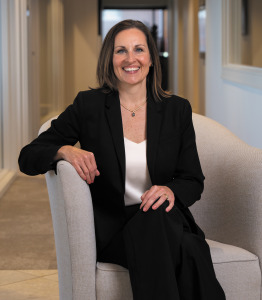
Kira Vaal, Partner and Senior Investment Advisor at Donaldson Capital Management, encourages families to start asking: What will these resources mean for my loved ones? How can I help my family without causing confusion? What values do I want to pass on after I’m gone?
At their best, legacy planning conversations turn uncertainty into clarity, especially when families have experienced guidance to help navigate them well.
“Part of our role is helping clients explore what matters to them and why,” Kira says. “We recommend and often facilitate family conversations about family history, values, and goals.”
Families who take the time to share the “why” behind legacy decisions create a different experience where wealth is not just transferred but understood.
Where Good Intentions Stall
One of the most common challenges in legacy planning is delaying important conversations that give plans meaning.
“Legacy planning can feel uncomfortable,” says Kira, “It can feel easier to postpone talking about money and long‑term priorities than to address them directly.”
When families put off these talks, they miss chances to create clarity, prepare heirs, and use their wealth with more purpose during their lives. Instead, many focus only on paperwork like wills, trusts, and instructions for passing on assets.
These steps are important, but a legacy is about more than documents. It is shaped by how well the next generation is prepared to carry it forward.
The Opportunity in Generational Transition
When approached intentionally, the transition of wealth can do more than provide financial support. It can reinforce values and strengthen relationships across generations.
Heirs who are included in conversations early have more opportunity to understand how inherited assets fit into their broader financial lives. They can begin to consider how to steward wealth, how it supports their goals, and how they want to carry it forward.
What Successful Families Do Differently
Families who build enduring legacies tend to approach planning as an ongoing process rather than a one-time event. They create space for open communication between generations. They share not only what they intend to pass on, but what they hope it will accomplish. Just as importantly, they invite the next generation to ask questions, express their own goals, and take an active role over time.
“Legacy planning can’t be a set-it-and-forget-it exercise,” Kira notes. “It requires attention, conversation, and follow-through so plans continue reflecting the people they’re meant to serve.”
Lasting legacies come from honest conversations and a willingness to revisit priorities as life evolves. This work is shared by the client, their advisor, and the beneficiaries.
“Walking alongside families through this season helps everyone move forward with greater confidence ahead of life transitions,” says Kira.
In the end, legacy planning is about helping the people you care about feel prepared, confident, and supported long after decisions are made.
Donaldson Capital Management
Indianapolis, IN | Columbus, IN | Evansville, IN | Alpharetta, GA
(812) 421-3211
dcmol.com
Donaldson Capital Management, LLC is an investment adviser registered with the U.S. Securities and Exchange Commission under the Investment Advisers Act of 1940. Registration does not imply a certain level of skill or training, nor does it constitute an endorsement of the firm by the Commission. This material is provided for informational purposes only and does not constitute legal, tax, or investment advice, or a recommendation of any security or strategy. Investment strategies discussed may not be suitable for all investors. Information from third-party sources is believed to be reliable but is not guaranteed. Opinions expressed are those of the author as of the date written and are subject to change. For additional information, including our Form ADV, please visit adviserinfo.sec.gov and search for our firm name. CFP Board owns the CFP® marks in the United States.