Solar power hits new milestones in US despite continuing coal push
In May, for the first time, solar supplied more of the nation’s electricity than coal, a report says.
Read More
In May, for the first time, solar supplied more of the nation’s electricity than coal, a report says.
Read More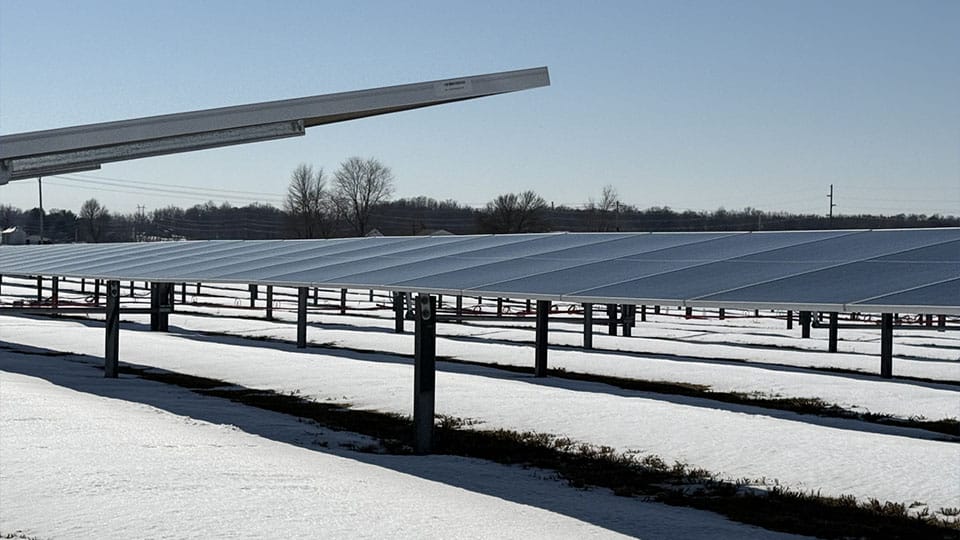
The project includes 250 megawatts of solar generation and 180 megawatt-hours of energy storage at the existing Petersburg Generating Station.
Read More
Solar and storage accounted for 85% of the new power added to the grid in the first nine months of the Trump administration. Experts say that’s because demand is high and the technologies can be deployed quickly.

The grant intended for renewable energy infrastructure work was committed to the airport more than two years ago by the Federal Aviation Administration, officials said Tuesday.
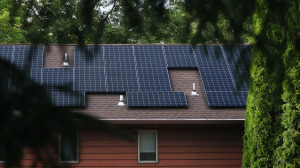
Nonprofit organizations in Indiana have spent two years preparing and were about to start putting up panels when EPA Administrator Lee Zeldin announced via social media that the program is being shut down.
Only $53 million of the $7 billion awarded has been spent, according to a tally by the research firm Atlas Public Policy. Several grant recipients this week said their programs were in planning phases.
Residents could have solar panels installed on their rooftops. Or a renter could subscribe to community solar “micro-grids” that can reduce their bills.

The project, which would see the construction of a new solar-covered canopy over a portion of a lot south of the airport’s parking garage, is expected to generate about 10% of the terminal’s total energy needs.
Several of the biggest American solar manufacturing companies say in a petition filed with the Commerce Department that firms in four Asian countries are illegally flooding the U.S. market with Chinese-subsidized panels.
The move would come as Virginia-based Hexagon Energy develops plans for a 3,000-acre solar farm north of Jamestown in western Boone County and Florida-based NextEra Energy Resources renews interest in building a solar farm near Zionsville.

A global developer of large-scale solar power plants and battery storage projects is expanding into southern Indiana, the Indiana Economic Development Corp. announced Monday.
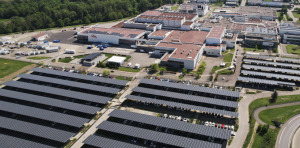
The solar structures are designed to help generate power for the company and reduce its carbon footprint.

The Singapore-based company on Tuesday announced intentions to renovate and equip an existing 150,000-square-foot space just south of downtown Indianapolis to serve as its U.S. headquarters.
Installing solar saves money, protects businesses from rising electricity rates and is a sustainable solution because it reduces business owners’ carbon footprint.
An Indiana Senate bill looks to provide incentives to encourage counties to adopt developer-friendly ordinances for solar and wind projects, but local objections persist.
Twenty-one states and the District of Columbia allow community solar projects. Indiana is not one of them, according to the EPA.
Some domestic producers say President Biden’s actions would help China’s state-subsidized solar companies at the expense of U.S. manufacturers.
White House officials said President Biden’s actions aim to increase domestic production of solar panel parts, building installation materials, high-efficiency heat pumps and other components like cells used for clean-energy generated fuels.

Solar- and wind-energy producers have long struggled with how to store energy for use when the sun isn’t shining or the wind isn’t blowing. But the storage sector might be ready for a giant leap.

Indiana ranks 32nd in the country in the amount of kilowatt hours produced by so-called small-scale solar systems. And the state’s ranking could fall, given changes coming this summer in state policies related to small-scale solar.
 Samm Quinn and
  John Russell
 Across the state, enthusiasm for sustainable energy is growing. And the state’s universities are leading the way with cutting-edge research and development projects related to solar, autonomous vehicles, nuclear power and more.
Stellantis officials said the clean energy requirement was a critical part of the agreement to locate the operation in Indiana.