
Subscriber Benefit
As a subscriber you can listen to articles at work, in the car, or while you work out. Subscribe Now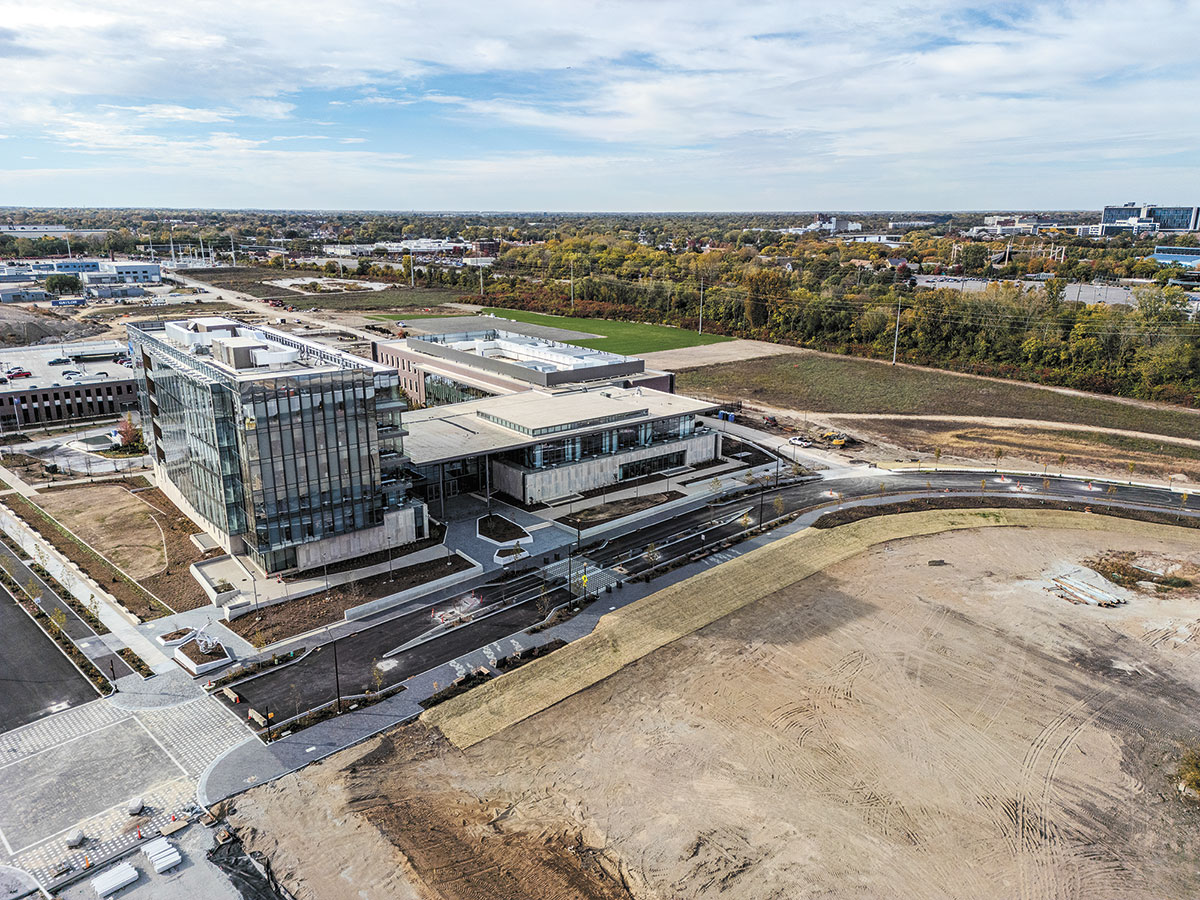
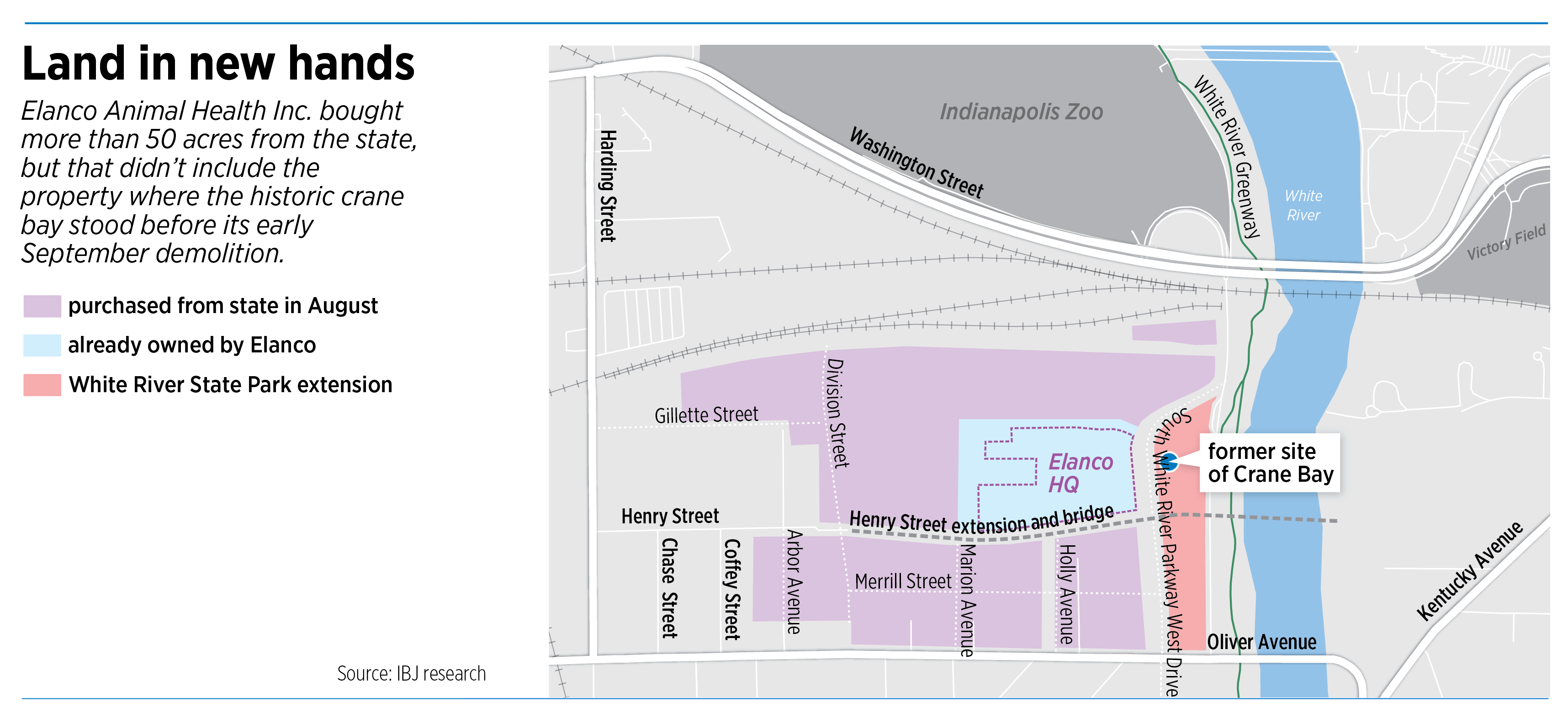
It took only a five-line clause in the state’s August land sale to Elanco Animal Health to bring down what was left of a nearly 100-year-old crane bay along the western bank of the White River.
The clause was tucked about halfway into the contract—between sections on existing development agreements and legal notification requirements—even though the crane bay wasn’t on parcels Elanco was buying. The provision gave the Indiana Economic Development Corp. less than four weeks to remove the structure on the former General Motors stamping plant property. It also gave the state just 90 days to clear the site entirely.
Demolition began just days after that 56-acre sale to Elanco closed in late August. And though the state announced the sale on Aug. 25 in a press release, it made no mention of the decision to tear down the steel frame of the historic crane bay.
Earlier plans, announced during Gov. Eric Holcomb’s administration, focused on making the crane bay a showpiece in a planned expansion of White River State Park.
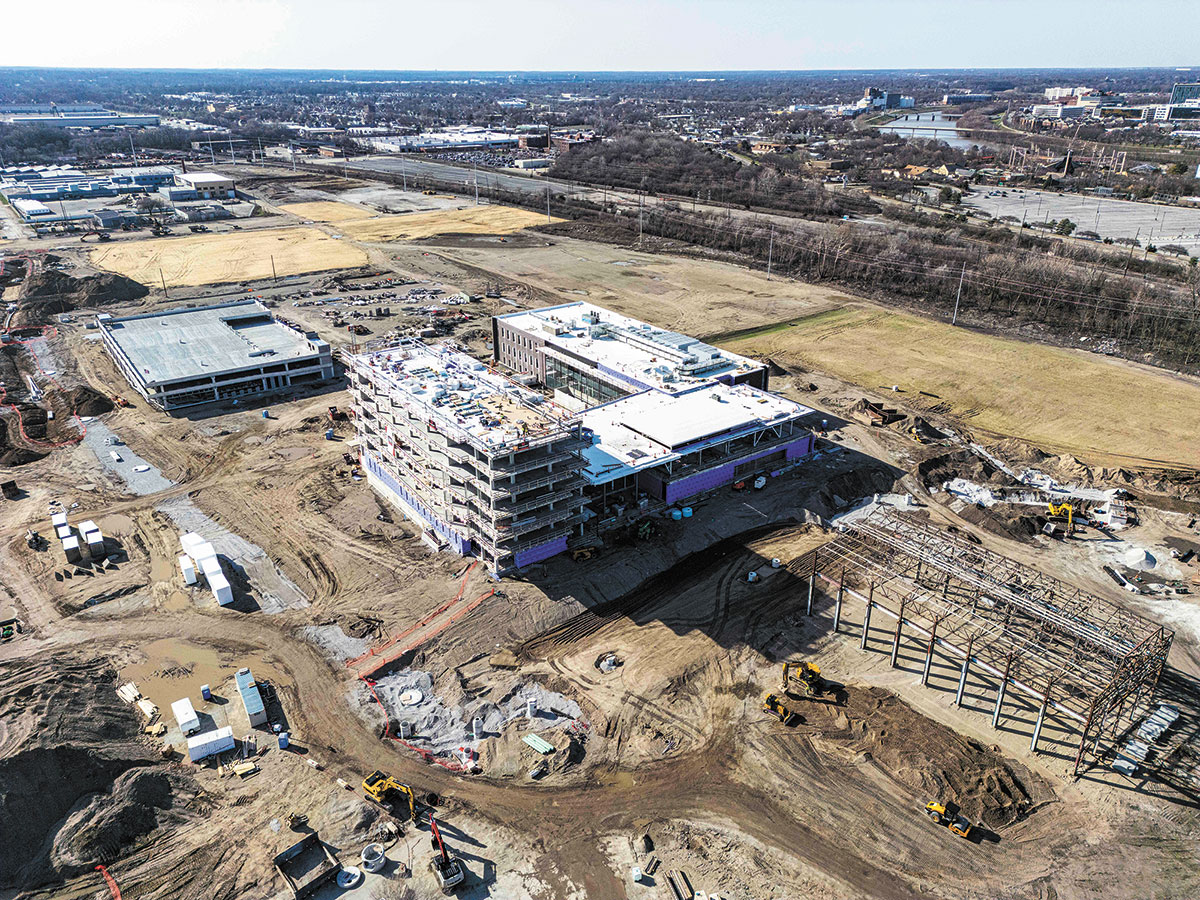
The land sale and the rush to tear the structure down came in the weeks leading up to Elanco’s Oct. 1 grand opening for its new headquarters, which was separated from the crane bay structure only by a newly rerouted White River Parkway Drive.
By the time Elanco employees fired off confetti cannons to celebrate the headquarters’ opening, all that remained of the bay was a handful of steel beams laid neatly atop the dirt where the structure once stood.
IBJ asked the Indiana Economic Development Corp. then for a copy of the sale agreement with Elanco in an effort to find out what led to the crane bay’s removal. The IEDC initially rejected the request, citing a broad confidentiality clause that had been included in the document. After IBJ asked the state to cite the law under which the contract would be exempt from open-records laws, the IEDC released the contract.
But neither Elanco nor the IEDC would tell IBJ who requested that the language about the crane bay’s demolition be included in the contract or who or what determined the timeline.
An ‘unfortunate’ removal
The demolition caught many city officials and neighborhood advocates off guard, as the crane bay had been expected to remain part of the redeveloped stamping plant campus, given its visibility and significance to the site’s history.
General Motors built the bay in the 1930s to house overhead cranes for large-scale manufacturing operations. It was designed by Albert Kahn, an influential industrial architect of that era. While the structure was not on the National Register of Historic Places, many Indianapolis architects and residents of the adjacent Valley neighborhood considered the structure historically significant.
But the loss hasn’t dampened the enthusiasm of many in the area for development that could come with Elanco’s taking control of the site. The animal health company—which moved from Greenfield to the $200 million campus—is partnering with Purdue University and the state to try to develop the site into what they’ve dubbed the OneHealth Innovation District.


“The tearing down of the crane bay was unfortunate, but I think it should not distract from the execution of the vision we are all setting out to create on the overall site,” said Dan Parker, chief of staff for Indianapolis Mayor Joe Hogsett. “The city looks forward to working hand-in-hand with the neighborhood to execute that vision, to make sure that it comes to fruition, so that all benefit.”
The city expects Indianapolis Economic Development Inc., a new not-for-profit that is serving as the city’s economic development arm, to play a hand in bringing new users to the site, Parker said.
Even so, the decision to remove the structure contradicted the original 2020 project agreement between Elanco, the state and the city of Indianapolis, which required it to be preserved and repurposed. That deal was negotiated for the IEDC by Jim Schellinger, who was the state’s secretary of commerce at the time and is now CEO of Indianapolis Economic Development.
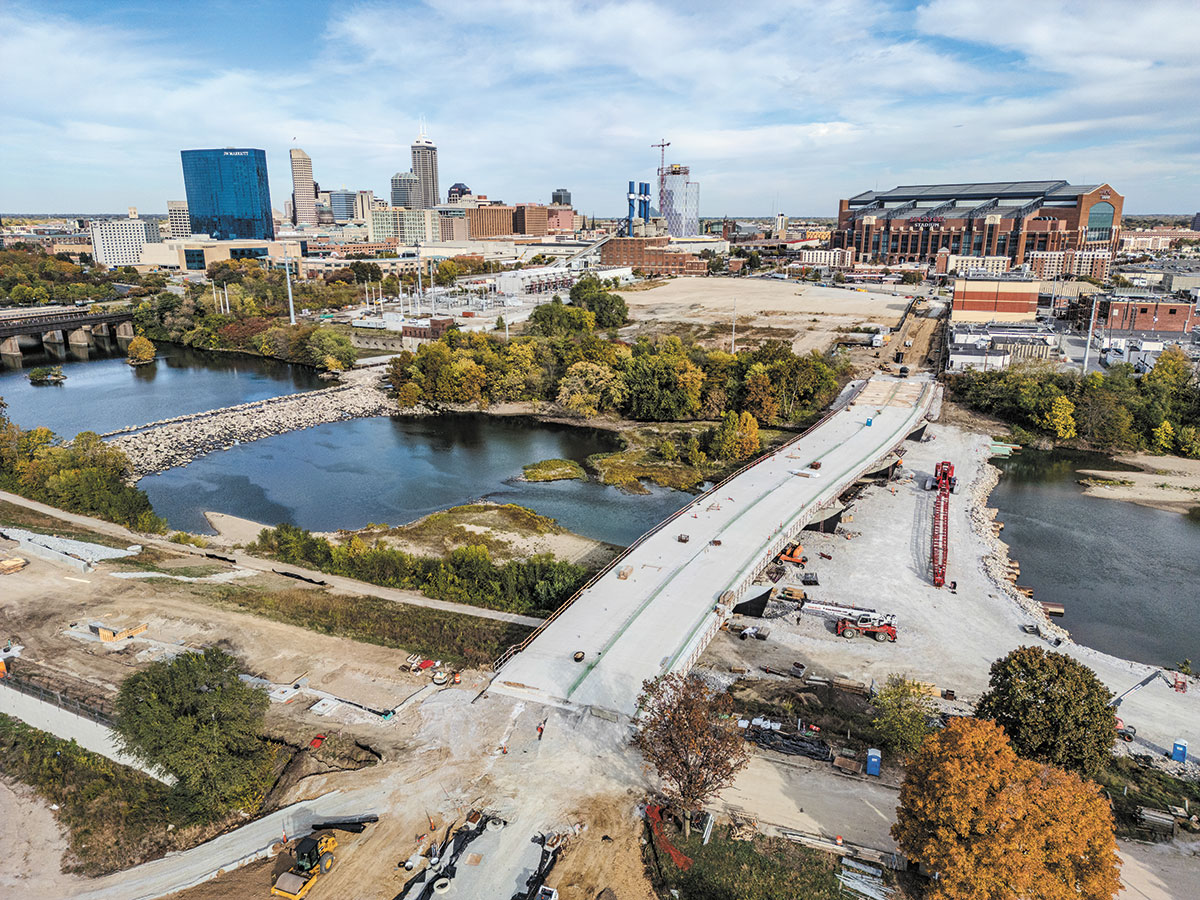
The 2020 agreement was quietly amended in July, releasing the IEDC from its commitment to repurpose the crane bay. That amendment, executed a month before the land-sale contract with Elanco, also addressed several other project modifications, including allowing two planned bridges across the White River—one for vehicular traffic on an extended Henry Street and a parallel pedestrian bridge—to merge into a single structure. That dual-purpose bridge is under construction.
A city insider—speaking to IBJ on condition of anonymity—said the crane-bay clause in the July amendment did not set off alarm bells within city government because there had been no indication from the state that the crane bay would be demolished. Instead, city officials viewed the language only as an indication that the state park, not the IEDC, would oversee the crane bay’s redevelopment. So the city signed off on the change.

Some neighbors have questioned the inclusion of the demolition clause in the agreement because it pertained to a piece of property that was only adjacent to, not part of, the transaction with Elanco.
But Doug Morris McCoy, the Al and Shary Oak director of real estate at Indiana University, said it’s common for those kinds of clauses to be included in a land deal.
“You have a seller who’s trying to sell a parcel, and for the buyer to move ahead on that parcel, they had an issue with something that the seller had on an adjacent parcel,” he said. “These are negotiated contingencies and provisions of contracts.”
Jay Napoleon, president of The Valley Neighborhood Association, acknowledged that the demolition has been frustrating for him and residents in the area. But he said residents will be able to move past that and focus on the site’s future.

“What we’ve envisioned here has never been to save the crane bay at all costs. It’s never been that, and I can’t put it any more plain than that,” Napoleon said. “It was survival of the neighborhood and how we can move forward with our overall plans.”
‘A strategic decision’
Before it was torn down, the bay had been in line for a $30 million overhaul funded by a Lilly Endowment Inc. grant, part of a long-planned expansion of White River State Park. State officials cited rising construction costs for their decision to scrap the reimagined crane bay and another $15 million portion of the park expansion.
But they did not alert the Lilly Endowment about the change. The endowment’s CEO, Clay Robbins, then asked the White River State Park Development Commission to return the grant money, which it did on Oct. 1.
The endowment did not ask the commission to return the interest it had earned on the money while it sat in an account—about $1 million, according to two sources who spoke with IBJ on the condition of anonymity for fear of retribution.

The state declined to make Secretary of Commerce David Adams available for this story. IBJ sent a list of questions to the state about the demolition, the transfer of that land and concerns from neighbors about future development plans. Adams said in a written response that the removal of the bay was “a strategic decision taking into consideration the best use of taxpayer dollars.”
Elanco CEO Jeff Simmons, meanwhile, told IBJ in written comments last month that the costs to renovate the crane bay outweighed the benefits.
“Even with strong support from the Lilly Endowment, the plans for the crane bay never gained traction,” Simmons said. “The cost and timeline to potentially transform it into useful space continued to expand. Supporting its removal was a difficult decision, but we believed it was the best, timely outcome for the community. We’re still hopeful the steel from the structure might be used in some way in the state park expansion as a way to honor this history.”

Simmons said the company remains “excited about working with our neighbors to bring vibrancy back” to the Valley neighborhood.
An IBJ source familiar with the now-scrapped crane bay plans said the state would have had no additional out-of-pocket costs for the renovation because the grant would have covered both finalized construction costs and a contingency, which could also have been used for landscaping.
Already, the state has spent nearly $5 million to design the expansion of the state park. But most of those designs are unlikely to come to fruition—at least for now. That’s because the Braun administration and state lawmakers declined to provide $15 million for the planned expansion.
In addition, the state has not transferred some 7 acres of land it previously promised to give to the White River State Park Commission for additional development. That includes the land on which the crane bay sat. Adams told IBJ in his statement that “details regarding the transfer of the property are still being worked out.”
That’s even as the White River commission continues $20 million of levee-focused projects that are part of the planned expansion.
‘This is so wrong’

Kristin Jones is city-county councilor for District 18, which includes the Valley neighborhood. She said she was disappointed by the state’s decision to demolish the crane bay, in part because neighbors were never informed.
In fact, Jones said, she learned of the demolition plans through a city employee who’d learned about them through an errant email.
“We’ve worked so hard for so many years to be partners with [state officials] in this,” she said. “And I was going to find out, the community was going to find out, the neighborhood was going to find out when [the crane bay] was demolished? That was the, ‘Thank you?’ That was the gratitude that we were going to get? That is so wrong … this is a slap in their face.”
Neither Jones nor state Rep. Justin Moed, who represents the neighborhood in the Legislature, attended Elanco’s ribbon-cutting, though both were invited and typically attend major economic development milestones in their district. Moed declined multiple requests for comment through a spokesperson.
McCoy, the IU professor, said he’s unfamiliar with the significance some neighbors have placed on the crane bay. But regardless, he said, residents should have been kept in the loop on the decision to demolish it.
“That gets them off on a bad foot together,” he said. “It seems like it’s something that could have been communicated.”•
Please enable JavaScript to view this content.
Elanco & the IEDC are no friends of Indianapolis.
Kinda like MAGA destroying the entire East Wing of the White House….
How about when Truman gutted the entire White House?
Russel – Truman did a necessary remodel to keep the building from falling down. And he had the proper approvals to do it.
But why would Elanco want to build the most grand ballroom ever?
Jay you need to seek help immediately for your TDS.
Rea – Thanks for the unsolicitied advice, but I’m good. TDS is a badge of honor showing someone cares about our country, our consititution, our honor, our morals and humanity.
A rusty skeleton that would have required millions of dollars to make functional. And for what? There are better ways to spend scare dollars.
This is really the loss of the last shred of trust the citizens of Indy had with IEDC. We paid the taxes to fund their infrastructure and we were promised this in return. They backstabbed us and we should be furious (and a lawsuit should be filed).
The hyperbole in the ibj comment section this year has been fantastic.
So has the insight from posters willing to do more than take snarky one line drive-by pot shots.
This was all about Elanco not wanting to look at the structure. The streets would be lined with gold in this development if Elanco had its way, so long as taxpayers paid for it.
Bingo.
The only thing missing was the investigative reporting on the front end of this decision to demolish. We usually have insiders and whistleblowers feeding some media investigation. All 5 tv and half a dozen print-digital outlets never took a deeper look.
After you finish reading this, read Item 4 in the email which relates to the Historic Preservation Commission decision on the Holy Cross Church property. The Commission ought to be funding the impact of their decisions, rather than the Diocese in that instance. Who should be funding the preservation of the crane bay? Everybody has an opinion as long as it doesn’t cost them any money.
The Lilly Endowment was paying most of the cost. The State (actually the White River State Park Commission) would have owned and controlled the pavilion.
The crane bay was not historically significant. Its presence presented an obstacle for further improvements at the site. It was appropriate to demolish the crane bay.