
Subscriber Benefit
As a subscriber you can listen to articles at work, in the car, or while you work out. Subscribe Now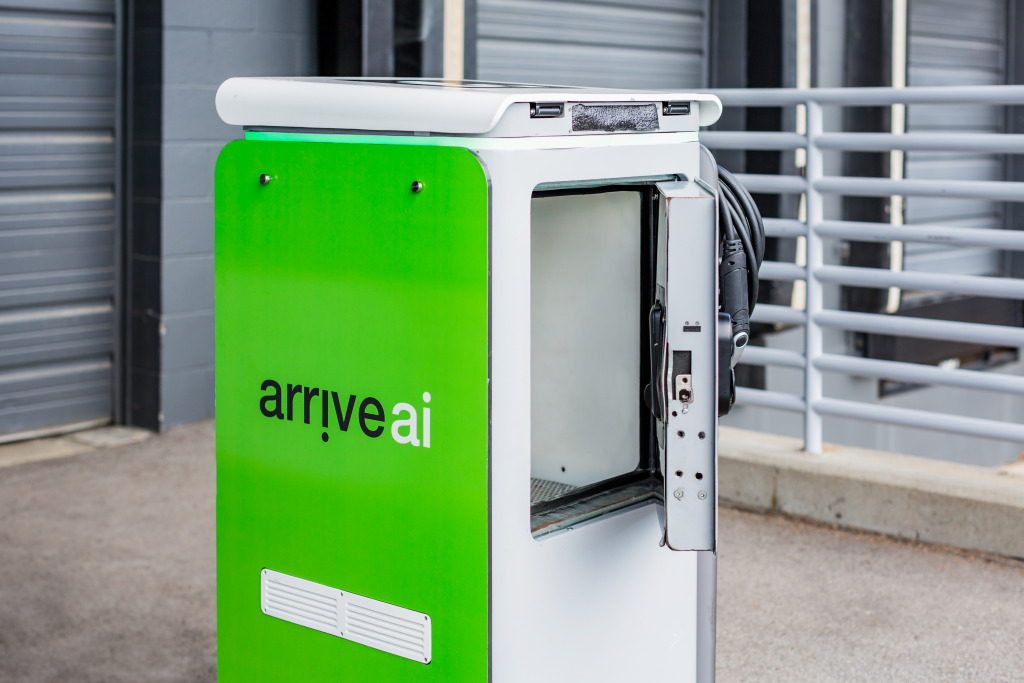
Fishers-based smart-mailbox startup Arrive AI Inc., which filed its first patent in 2014 and launched as a company in 2019, booked its first-ever revenue during the second quarter.
In its second-quarter financial report, released Thursday afternoon, Arrive said it earned $90,725 in revenue during the quarter, most of that from Greenfield-based health system Hancock Health.
This week’s quarterly report is the second that Arrive has issued since it became a publicly held company in May.
Arrive has developed a smart mailbox—a climate-controlled, secure receptacle—for human, robot or drone-based pickup and delivery. Arrive’s platform also provides tracking data, smart logistics controls and other information for shippers, delivery services and autonomous delivery networks.
During a call with investors, Chief Strategy Officer Neerav Shah provided some details about how Hancock Health is using Arrive’s smart mailboxes, which Arrive calls Arrive Points.
In what he described as a multi-year project, Shah said the health system is testing the use of robots and Arrive Point receptacles to deliver biological specimens within Hancock Regional Hospital. Shah said multiple delivery routes are being planned: One such route will involve robots delivering specimens between the hospital’s cancer center and its laboratory.
“We are confident this trial will prove important cost and time savings, enabling medical professionals to focus on patient care rather than ferrying samples around the hospital,” Shah said. “Hancock Health is tackling a true problem in hospital logistics.”
Plans for growth
Arrive is unusually small for a public company. As of Dec. 31, the company had seven full-time employees and another 15 part-time contract employees. Last month, the company announced its plans to hire another 40 or so employees, tripling its current employee count.
During a Thursday call, executives also provided the broad outlines of the company’s five-year growth plan.
Arrive is currently focusing on next-generation product development, to be followed by large pilot tests with strategic partners in coming years, said Chief Operating Officer Mark Hamm.
“By year four, we plan to produce and install 10,000 units annually and scaling up to 100,000 units annually in year five—and we have bigger plans beyond that,” Hamm said.

Arrive posted a quarterly loss of $4.69 million, or 15 cents per share. The company said this loss came primarily from the approximately $3 million in one-time costs associated with going public. Excluding those costs, Arrive said, its second-quarter loss would have been comparable to the $1.46 million loss that it recorded during the same period a year earlier.
During Thursday’s call, Arrive founder and CEO Dan O’Toole also touched on a proposed federal rule for drone flight which he believes will unlock huge potential for the industry.
That rule, which is popularly called the “beyond visual line of sight rule,” provides standards for the safe flying of drones that travel beyond the operator’s line of sight. Currently, such flights are only permitted if the operator secures a waiver.
The drone industry generally favors adoption of a beyond visual line of sight rule because it will enable things such as drone-powered parcel delivery, infrastructure inspections and other uses.
“This new regulation will safely integrate drones into our national airspace, allowing Arrive AI to deploy our solution for the $191 billion U.S. package delivery market,” O’Toole said.
Arrive released its financial report after the close of trading Thursday. The company’s shares closed the day at $6.40, later dropping to $6.35 in after-hours trading.
Please enable JavaScript to view this content.

Editor's note: You can comment on IBJ stories by signing in to your IBJ account. If you have not registered, please sign up for a free account now. Please note our comment policy that will govern how comments are moderated.