
Subscriber Benefit
As a subscriber you can listen to articles at work, in the car, or while you work out. Subscribe Now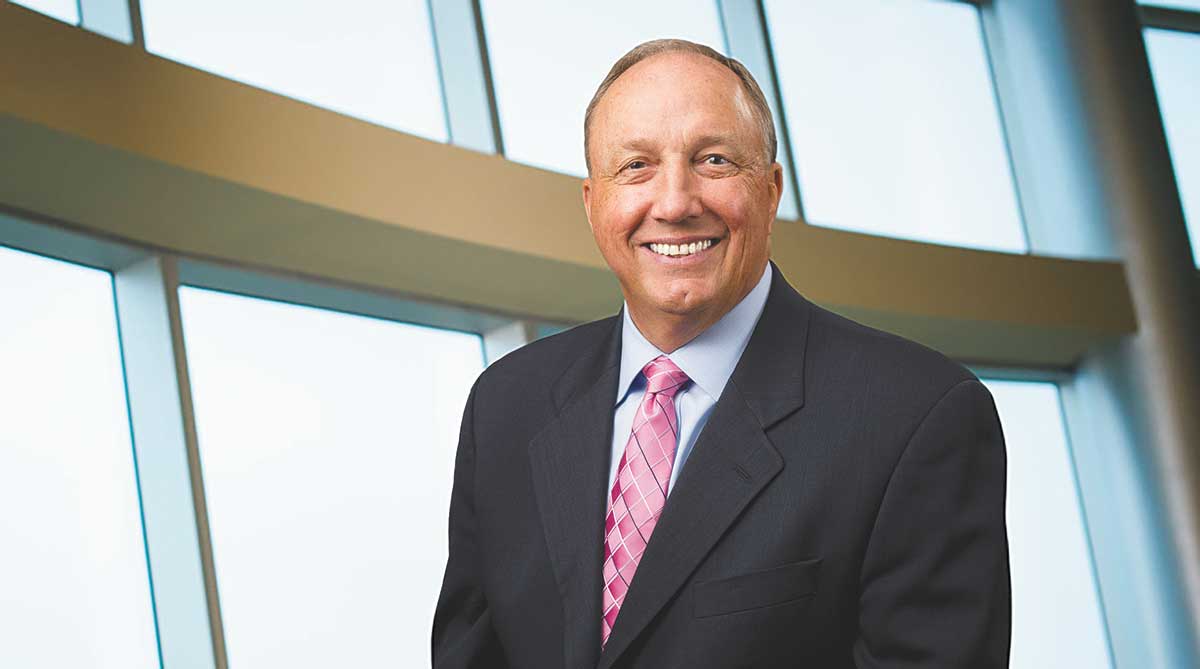
Mike Schrage was in his 20s and living the grad school life in Colorado with dreams of becoming a wrestling coach.
He didn’t think he would want to return to Whiting, to lead Centier Bank, which has been in the family since its founding in 1895 by his great-grandfather Henry Schrage. But he eventually discovered his passion for banking and returned home to northwestern Indiana.
When Schrage joined the bank in 1972, it had three locations and $33 million in assets. He was elected board chair in 1982 and represents the fourth generation of family ownership. Today, the bank has more than $10 billion in assets and operates locations in its home base, as well as in the Indianapolis, Fort Wayne, Lafayette and South Bend markets.
Schrage, now 77, sat down to talk with IBJ about his 53-year tenure with Centier Bank, the future of the company, his philosophy on leadership and his love of reading. This conversation has been edited for length and clarity.

Was there ever a question for you whether you would work in the family business, or did you ever consider another line of work?
As I was approaching getting out of college, there were a lot of factors that influenced my judgment, along with the Vietnam War and lots of other things. But when I did not get drafted, I said, “Well, let’s give it one try.” You know, have some fun in Colorado and Boulder, ski, have a good time, be a hippie. I went out there and got a degree in finance and marketing, and once I got into the specifics, rather than the generalities, of economics, I thrived.
Up to that point, I wanted to do my passion, and I thought my passion was going to be in sports and being a [wrestling] coach either at the high school or college level. When I landed on [banking] and came to agreeing with my dad after my first year, I said, “Dad, if we can expand this place, because Whiting is too small for me, if you’re willing to do that, I’ll give it five years and see what we can do, and I’ll still be young enough to pursue my passion in sports and wrestling.” He was agreeable, and a year later, I joined on. We started putting branches up, and I thrived with it going forward.
Centier has expanded into the Indianapolis, Fort Wayne, Lafayette and South Bend markets in recent years. Why did you decide that expansion was the right move for the bank?
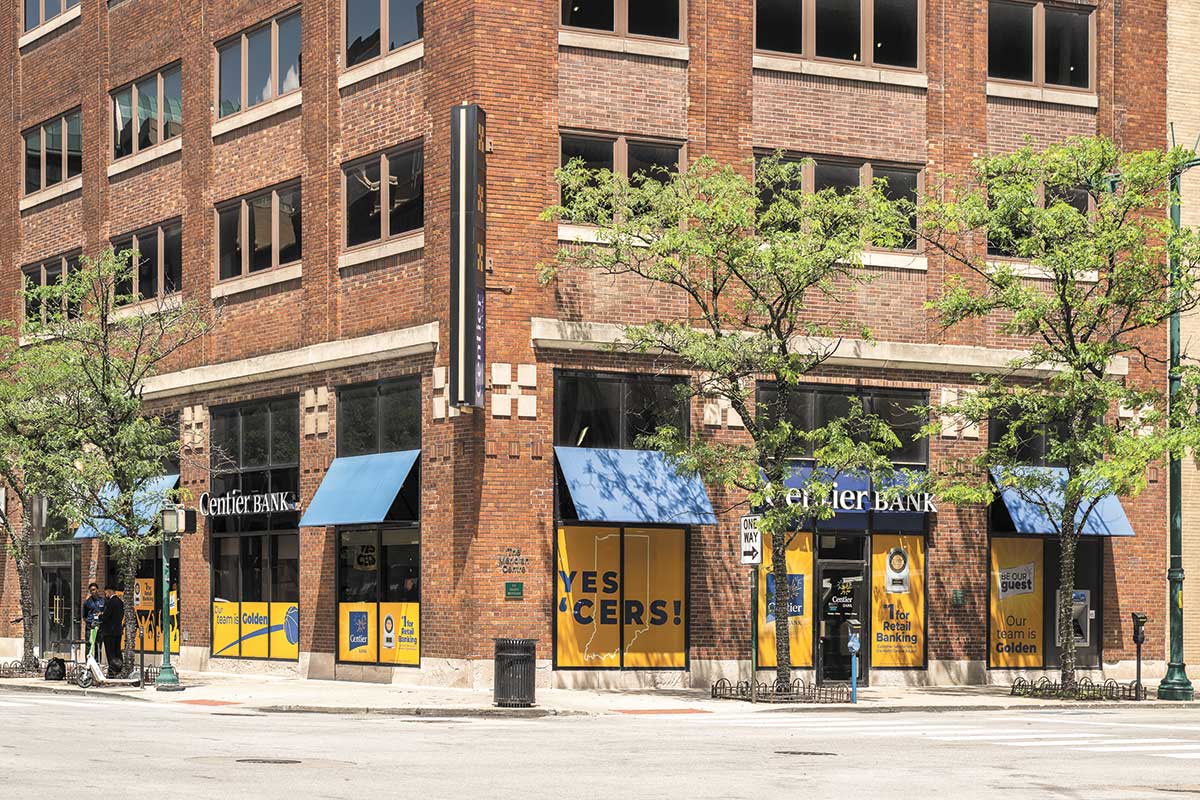
We made a conscious decision between the family and board of directors and management leadership that we had somewhat exhausted the greater northwest Indiana area, having conquered Lake County, Porter County and a little bit in LaPorte County. We’re not an agricultural bank, and as we looked to the contiguous counties, especially to the south, they’re pretty agricultural. They’re pretty small communities, and we didn’t feel that banking’s future was in the small communities as we’ve seen those communities—not close up—but board up a little bit. We said, “Let’s take on four population centers.” We’ve been building that plan out now for decades and continue to take on some pretty big environments there. And so far, so good.
Have you ever considered growing through bank acquisitions?
The only acquisition we made was in 1982, the Crown Point/Lowell banks, and it went so miserably, I said I’d never do one again, and I haven’t. We did it all wrong. Didn’t know what we were doing going into the teeth of a recession, so it was kind of a perfect storm back then.
What are you working toward for the future of Centier Bank?
Part of the Holy Grail here is to stay a private, family-owned bank. We’re not going to compromise that for any shiny bling that’s out there of opportunities. You’re not going to find us, even though we’re $10 billion, buying another $2 billion bank just to expand. We’re fine with a methodical office-by-office penetration, growth and inculcation into communities. We’re not looking to be nationwide. We’re not looking to go multistate. We’re going to stay in Indiana. Our focus is in the communities that we establish and call home.
How would you describe your leadership style?
I’m very methodical, yet opportunistic. Always looking to be the “Uncola of Banking,” as I call it. Being able to say and make a commitment that we’re not for sale and being able to back that commitment up for the last 40 years. It’s been just a matter of being opportunistic, in being a good-hearted person that has a deep caring for others, others being people, communities, businesses, whatever. Those things represent what a servant heart is. I try to practice that. I do that through extensive reading.
I probably read 60 books a year and have for the last 30 years. I’m shifting a little more to podcast now, but it’s been a source of inspiration. It’s been a source of my learning outside of going to graduate school back in the 1970s. I haven’t really been to banking schools or leadership schools or other things. It’s been through my own individual study in talking to people and things like that.
Do you have a favorite book?
Out of 60 books for 30 years, that’s a lot of books. It’s hard to say one, but most recently, where we are in our journey, in my journey, in our leadership movement, especially in hospitality, there’s a book called “Unreasonable Hospitality” by Will Guidara just out not long ago. But those are recent ones. I get asked that a lot. What’s the most influential book of my life? I’d have to go back and say it’s the Bible. And I didn’t reach that conclusion until I went through a health crisis when I was 45 in the ’90s. But it is something that has been influential in my leadership style. We’re not all religious, but it has certainly got me through a lot of the ravines in life that everybody hits.
A lot of good books out there, a lot of good material. I try to encourage our people that your education isn’t over, and don’t just go to banking school. Go to a broader spectrum of learning.
What is the succession plan for Centier after you retire?
We have three daughters. None of the three of them really wanted to grab the mantle, not at least at this point. They’re in their 40s. Don’t know that they’re going to do that. But I do have two sons-in-law, and one is president of the bank who has been with me 19 years, Chris Campbell, and the other is Anthony Contrucci, and he’s been with me maybe 12 years, and he does a lot with the community. It’s his passion. The [Centier Museum] up in Whiting was his idea, and he was instrumental in that creation.
The total commitment that I and the family and others have made to following through on our private, family-owned, not-for-sale promise, and I feel good about the opportunity of handing it off in the not-too-distant future. I’m sometimes asked, “How many more years are you going to work?” Well, a couple more anyway, but I’ve got a great satisfaction in succession there.
What is the legacy you want to leave with Centier Bank?
After 53 years, the legacy I want to leave is not how big the bank is, number of offices, number of employees, profits, any other statistical things, but it’s the culture of Centier. The culture of a servant heart, of servant culture, to be there to serve the communities, the small businesses, the underserved communities. People say, “Well, why did you put three offices in Gary?” Well, it’s one of our communities, and it’s a big community. It needs banking services. It’s that there’s more to life and to satisfaction and rewards than wealth and stock price and all the other tangibles that are out there.•
—Daniel Bradley
Please enable JavaScript to view this content.
way to go Mike