
Subscriber Benefit
As a subscriber you can listen to articles at work, in the car, or while you work out. Subscribe NowDuring his speed metal days, Nate Olp relied on electricity to amplify his vocals and bass guitar.
He toured relentlessly with Demiricous, an Indianapolis-based band that made two albums for Metal Blade Records, a company known for issuing early recordings by rapid-fire icons Slayer and Metallica.
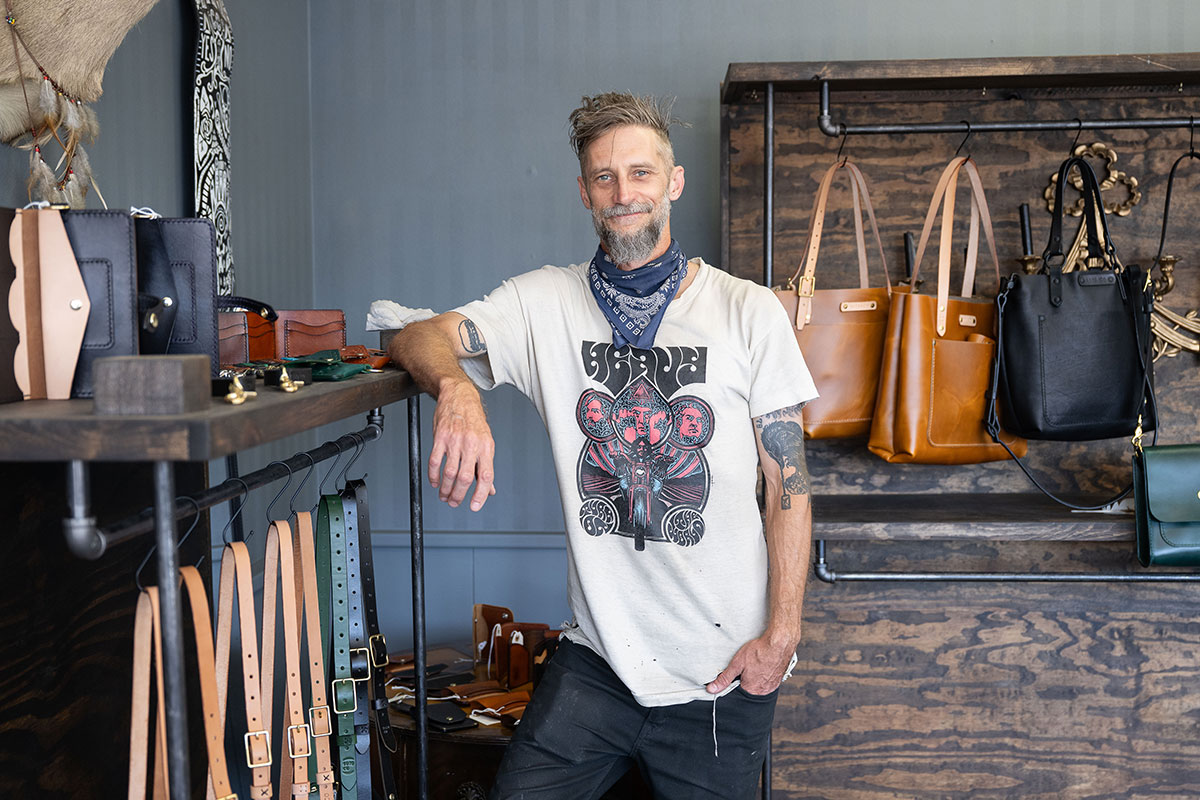
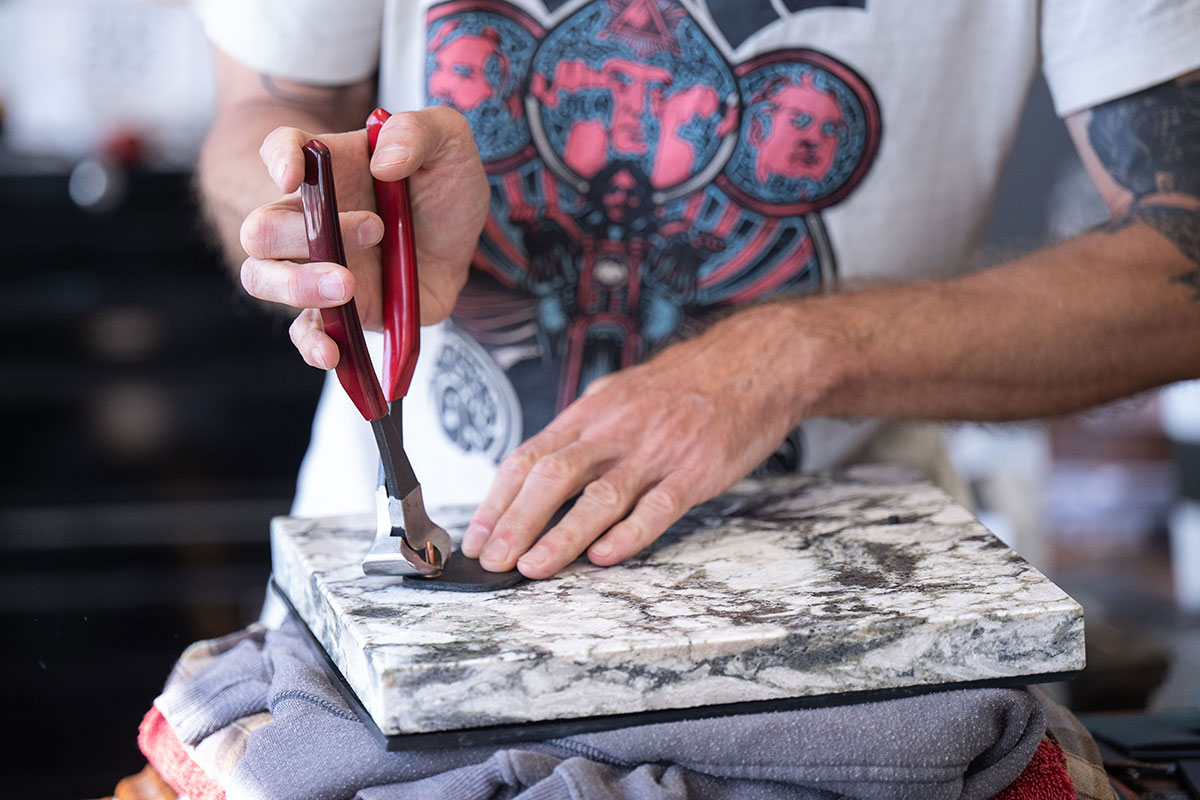
Today, Olp works in a shop where electricity is a nonfactor. The founder of leather goods business 1979 Co. cuts material by hand, stitches bags and wallets by hand, and hammers rivets and ornamentation by hand.
The pace is more measured than in the world of thrash metal, but it’s still possible for things to get hectic.
Olp, formerly a passionate skateboarder who studied graphic design at the Herron School of Art & Design, moved 1979 Co. this year from a storefront in Irvington to a studio at Factory Arts District, 1125 E. Brookside Ave.
A major factor in the move was Olp’s need to focus more on creating and less on fixing the work of others.
“Having the store and being the only person there tends to overwhelm you,” he said. “It will take all of your time, to the point where I was doing repairs instead of my designs. Being open to the public, you start taking on anything that comes in to make money. There was so much of that, and I was no longer doing what I set out to do.”
His business, which lists wallets from $40 to $160 and bags from $280 to $375 on its website, is now open on First Fridays and by appointment.
Olp spoke with the IBJ about his path to becoming a small-business owner and how customers know they’ve purchased a one-of-a-kind item from 1979 Co. This conversation has been edited for length and clarity.
You made your name as a musician. How did you become a leather craftsman?
Jesse Corbett, an old skater friend of mine, was doing this 20 years ago. He brought wallets and gave them to people just for fun. We would say, “You made this? That’s what you’re doing?”
Then I saw what he was doing, sort of like a caveman. It’s literally just hand tools, and they’re relatively cheap. Then I saw online what people were doing. I had a lot of ideas, as far as colors and shapes of things. I knew I could do it on a design level. Then it was just a matter of buying the tools.
I was inspired by seeing that craft, and I knew I didn’t have to spend thousands of dollars on machinery.
At what point did you determine your work was good enough to give to friends and sell to customers?
Immediately, really, because I started making things from my mind instead of making a copy. It was just small wallets in the beginning.
The way I wanted it to look was classy but tough. If you ever look at Tom Hardy [an English actor and musician], you think, “That man is pretty tough, but he’s kind of beautiful.” I enjoy that in motorcycles, too. It looks tough, but it’s beautiful at the same time.
I feel like I achieved that pretty quickly. It wasn’t the best construction or craftsmanship yet. But it looked like something I hadn’t seen before, and it was functioning well. I gave them to friends, and they enjoyed them. I felt like, ‘OK, I’m onto something here.”
How do you set prices for your items?
That is a hard one. I think all artists struggle with pricing because you don’t know your value.
When you’re starting to make stuff, you don’t know how well they’re going to perform and how long they’re going to last. I still sell items way below market level. Everything I have is almost half of market value. I just priced them at what I thought I would pay if I were a customer, with consideration for how long it took.
But the longer I do this, I realize that to survive you have to do it the traditional way where it’s “materials times two” or whatever that math problem is. But my whole thing has been to try to be reasonable. I don’t think leather goods need to be exclusive. A Louis Vuitton that’s priced at $3,000 is not worth $3,000.
Where do you source your leather?
A couple of different places. Actually, there’s a place downtown called Landwerlen Leather Co. that’s been there for about 125 years and hasn’t changed at all. It’s the same original wood floors, no air-conditioning, dark as hell. It’s been owned by the same family since day one. I get a lot of leather there, as well as a lot of the materials like dyes and finishes and some tools. It’s awesome that we have an old-school leather shop that’s family-owned in the Midwest. It’s very crucial to what I do.

What can you tell me about the cattle brands you incorporate into your work?
I work with full-grain leather. A lot of people don’t understand that “genuine leather” is horrible. It’s the particle board of leather, because a bunch of [stuff] is mixed in. Full-grain leather is leather all the way through.
So when I buy leather, it’s in the shape of an animal. You can see where its legs were and where its back was. The pieces are huge, more than 20 feet long, and you’re working with a piece of leather that has no straight edge on it. You have to make a straight edge.
Anyway, that leather has the brand where the cow was marked, and it stays there through the whole tanning process. For folks who don’t know, tanning is the process when it goes from rawhide to leather. A lot of people think tanning has to do with the leather’s color. It’s not. It’s based on tannins and the process that makes leather good.
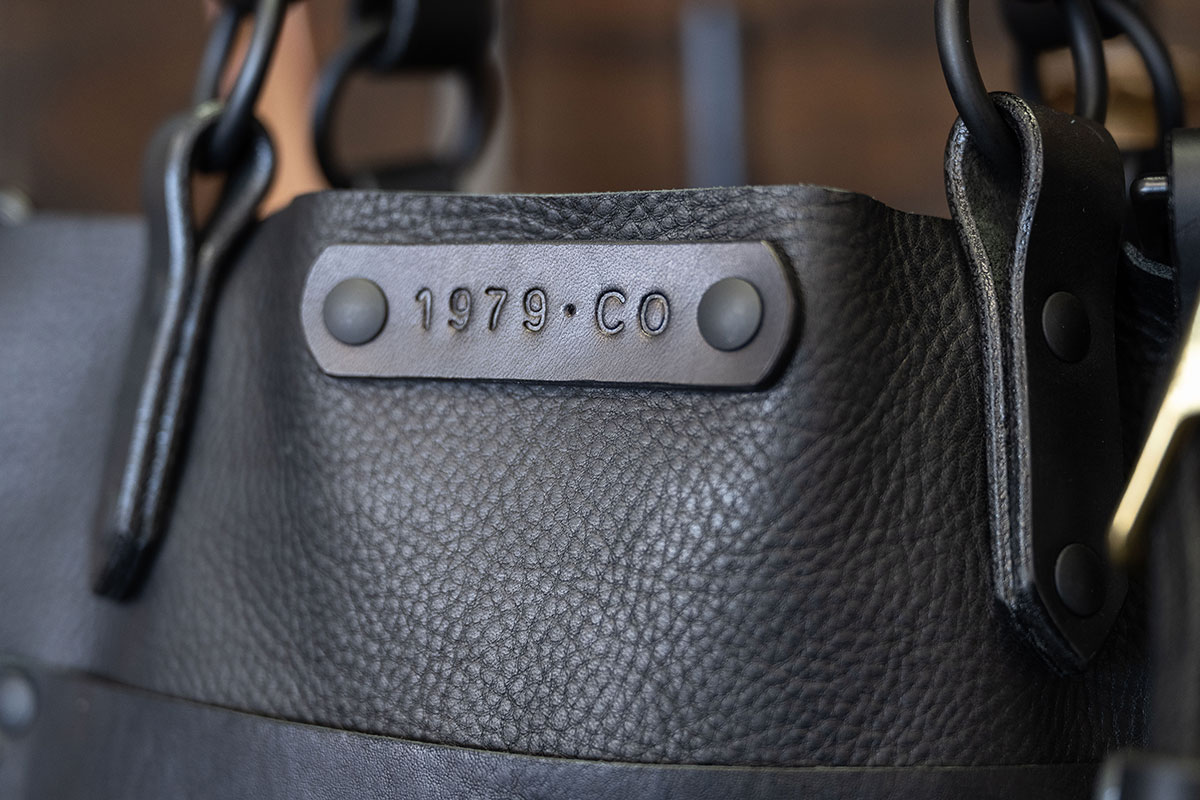
But it’s the same as anything else: There’s a bunch of [poor-quality] full-grain leather and everything in between. The brand is literally what was on the cow, and if it’s in good shape, I try to use that somewhere on a bag. The reason for that is because everything I make is a one-off. Everything is different. Some things might look similar, but they will be different. I’ll use that brand to reinforce that you can’t reproduce this bag ever.
I’ve heard you talk about putting fear aside to leap into a business and say, “OK, this is what I’m going to do.” What allowed you to do that?
It comes from skateboarding, where you’re trying something you can’t do—that you haven’t done—over and over all day. If you’re a real skater, you do it until you make it, no matter what. That’s how I grew up with my friends. After 40 years of that, it’s not that scary.
I don’t have any loans. I’m self-funded. I think part of the allure of this was, “Let’s see what happens. See what a risk is really like.”
I started this with about $15,000. I knew I could live for about three years on that. I know I can get by. Plus, why not? It was just time to find something to make a career and carve my own path.
Do you have thoughts on why people in our society aren’t inclined to do something similar?
They want to be comfortable. I would argue that every business owner has to accept not being comfortable almost all day. We all wake up at 3 a.m. thinking about this [stuff]. You can’t stop.
It’s a lot of weight when all the responsibility is on you. But it’s equally fulfilling.
To me, it was a question of what is worse—risking this or working for somebody else with no fulfillment forever? That’s the way I am.
I understand that plenty of people aren’t like that. I think about my dad and how lucky he was to take a job at GE forever and be fine with it. I don’t think I could do that. To me, it feels like slavery to make somebody else way more money.
It might sound selfish, but it comes down to, “Are you spending the time doing what you want to do?” Now I am. It’s kind of like, the stress equals the fulfillment at the end of the day.
It’s working for me. I haven’t had a day off since 2018. It’s kind of [messed up], but it’s awesome.•
Please enable JavaScript to view this content.
I recommend this guy to whoever I can… I have a belt and wallet from him that I wouldn’t be surprised if they outlive me.