
Subscriber Benefit
As a subscriber you can listen to articles at work, in the car, or while you work out. Subscribe Now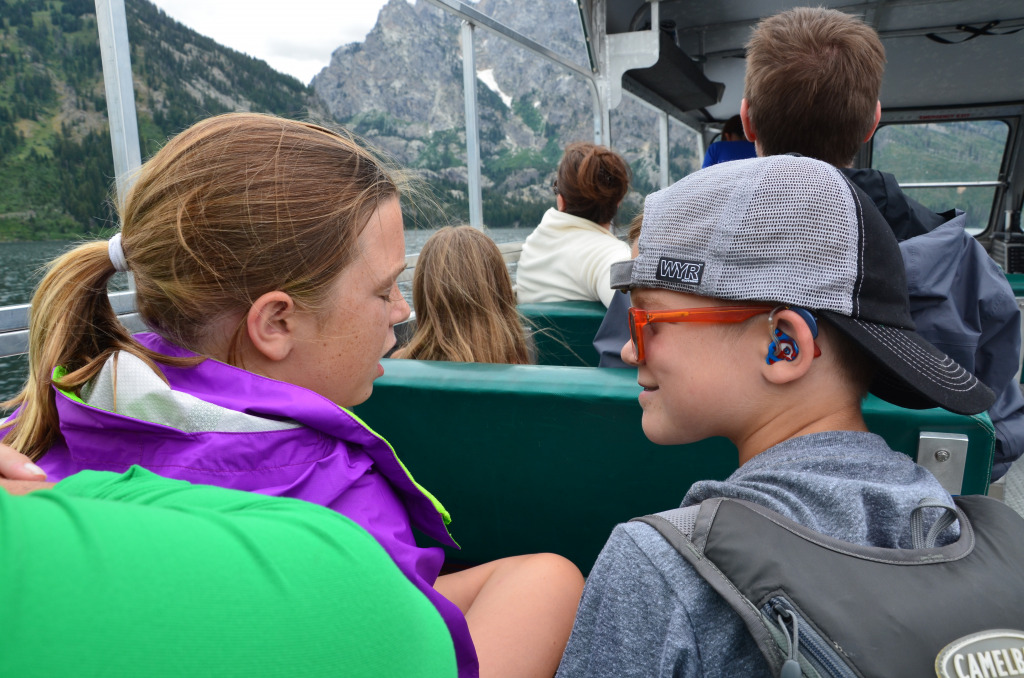
Recent Butler University graduate Ellie Howe has secured a patent for a custom foam insert that allows people with cochlear implants to wear helmets for biking or other activities comfortably—and without risk of damaging the expensive technology.
The product, called Deaf Lids, began as a high school business project, inspired by seeing how her younger brother, Bart, had to remove his cochlear implants—impacting his ability to hear—while snowboarding, scootering or cycling.
Deaf Lids is not yet in use. But the 22-year-old Howe, a 2025 Orr Fellow, said she’s planning to see her project through to create a usable product available for the roughly 118,100 adults and 65,000 children with cochlear implants in the United States.
“You have kids who are not participating in sports they want to or hanging out with friends,” Howe said. “That was the big inspiration.”
How Deaf Lids was conceptualized
Her idea began in her high school DECA program in St. Paul, Minnesota. She then honed it into a business plan as part of Butler’s entrepreneurial program, winning second place at the 2022 Big East Startup Challenge. This year, she earned a patent.
Cochlear implants are electronic devices that can help people with profound hearing loss. They have an external portion that includes a microphone, processor and transmitter, and internal parts—implanted by a surgeon—that include electrodes and a receiver, according to the Cleveland Clinic.
The idea of cochlear implants is to bypass the damaged portion of the ear, unlike hearing aids, which raise the volume of surrounding sounds or voices.
The sophisticated internal and external technology, however, can present problems when a person with cochlear implants straps on a helmet, which is designed to fit snugly against the skull to provide impact protection for activities such as football, baseball, and softball, skiing and riding horses.
The pressure from the helmet can damage the technology, and altering the foam in the helmet can lessen the helmet’s protection. And if users remove their implants, they reduce their ability to hear, which can affect safety as well as social aspects of activities.
The grassroots Bicycle Helmet Safety Institute posted on its website: “Hearing aids and cochlear implants can be hard to accommodate under a bike helmet, and sweat can cause problems as well. We have suggestions, but do not recommend ever reducing the liner foam and the protection of the helmet.”
With Deaf Lids, users would receive a special mold to create a shape for their cochlear implants, which is then used to create a custom foam insert for a helmet. The insert would accommodate the implant but still allow the helmet to fit snugly, designed.
‘An opportunity to make an impact’
Howe is living in Indianapolis as she participates in the Orr Fellowship, named after former Gov. Bob Orr, for post-undergraduates, where she continues to work on Deaf Lids receiving help and resources as a fellow.
“She’s passionate about making the world around her a better place, seeing a problem not as a roadblock but rather an opportunity to make an impact with Deaf Lids,” Catherine Mazanek, senior director of engagement for Orr Fellowship, said in an email.
Howe estimates that the Deaf Lids insert, now in rough prototype form, would cost $500 to $700 on the market.
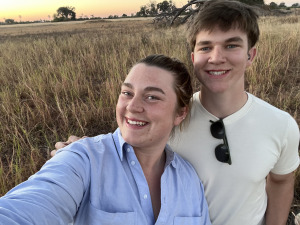
She said her family has been hugely supportive, with about $25,000 contributed to help advance the project this far. She estimates it will take $50,000 to $100,000 from investors, grants and other sources to make it a viable product. She’s looking into tactics including licensing agreements with helmet makers.
Howe said it still seems a bit unreal that she holds a patent, but she added that much more testing is needed.
Howe added that getting to know the hearing-loss community and seeing how helpful and close-knit they are to one another has been an inspiration.
Her brother, Bart, now 19 and attending Auburn University, is still her first inspiration, though.
“He is probably one of the most resilient people I know,” she said.
Please enable JavaScript to view this content.

Didn’t Bill Simpson and Chip Ganassi do this same thing wit SG Helmets years ago?
I love this! Congratulations, Ellie!