
Subscriber Benefit
As a subscriber you can listen to articles at work, in the car, or while you work out. Subscribe Now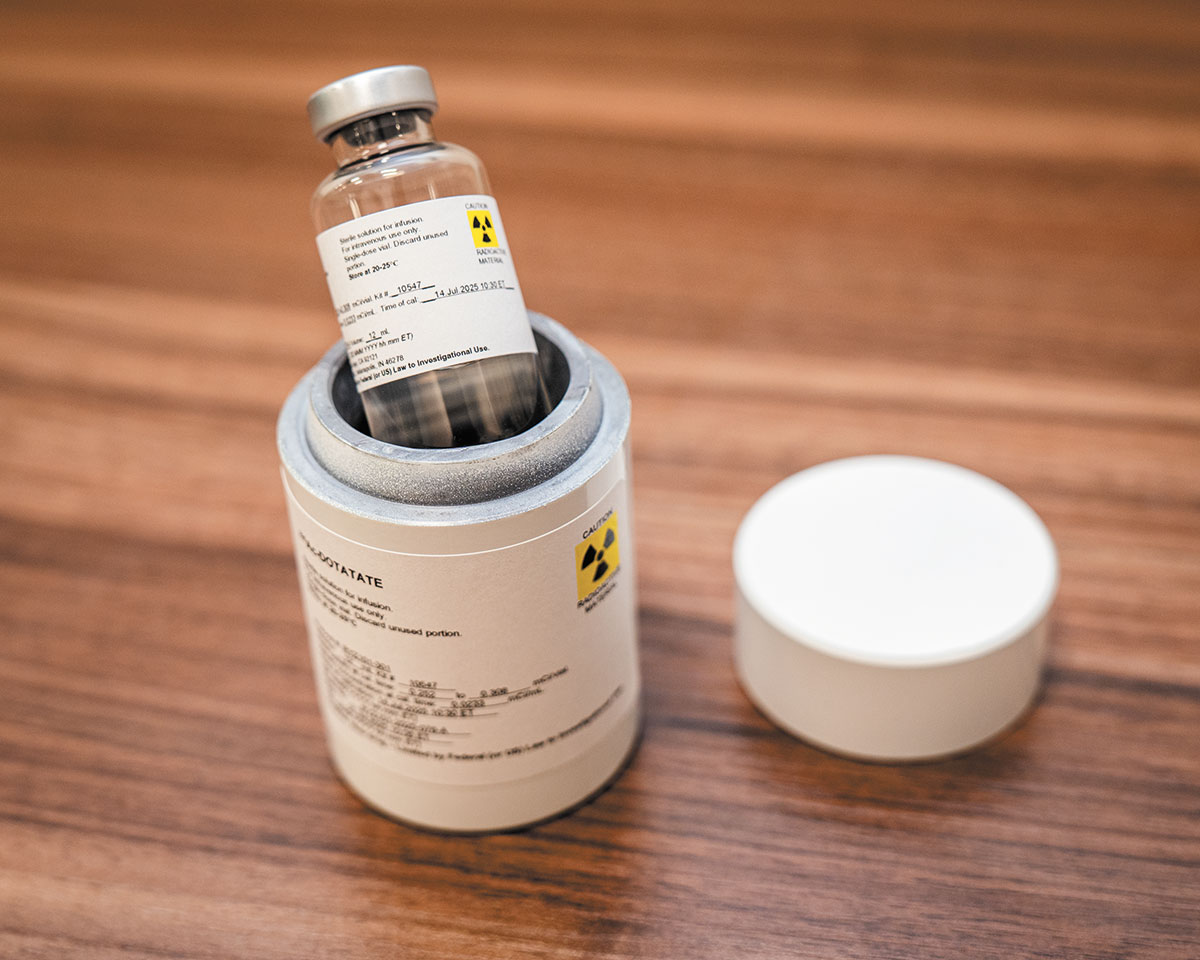
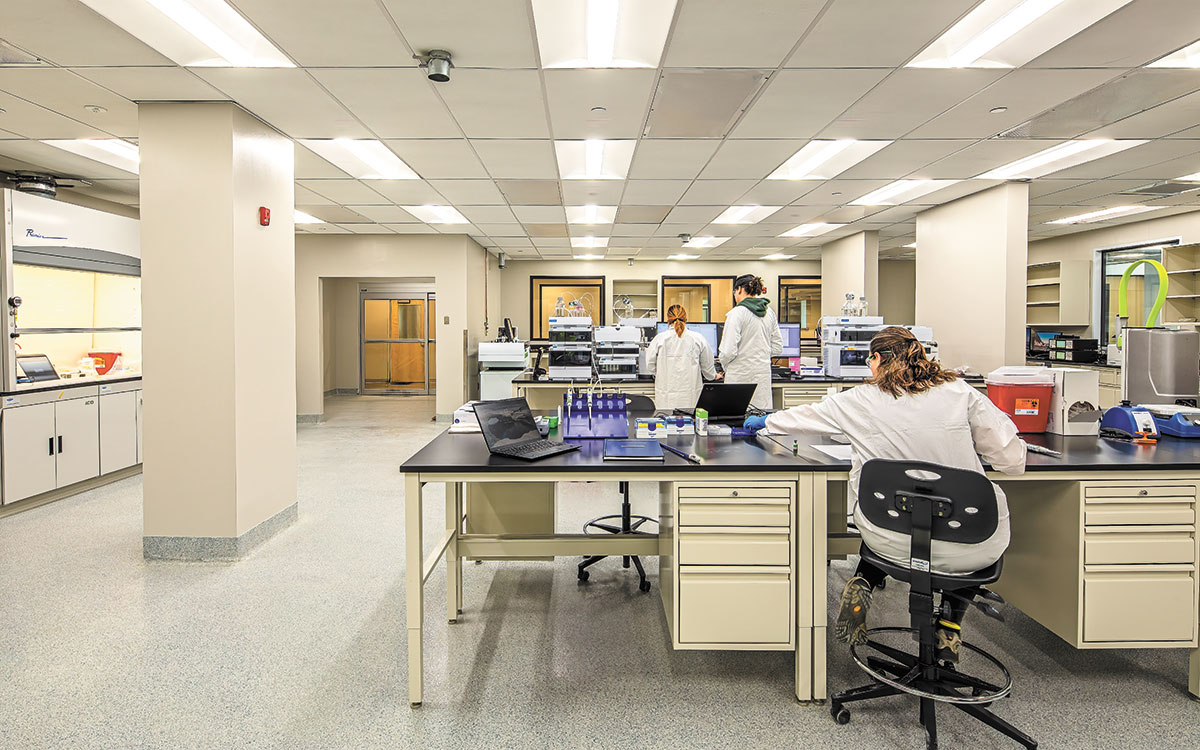
New Jersey-based drugmaker Bristol Myers Squibb this month dedicated its only production facility in Indiana, a former north-side warehouse transformed with $160 million into a clean-room manufacturing site for radiopharmaceutical cancer therapies.
The treatments produced at Bristol Myers Squibb unit RayzeBio’s factory in Indianapolis are for clinical trials and are not yet FDA-approved. But the company is banking on the medications as more effective cancer treatments than traditional chemotherapy—precision medicine capable of delivering a fatal blow to cancer cells while sparing organs and healthy tissue.

“These are alpha particles which have this, like, wrecking-ball effect in terms of smashing the tumor. But they are only focused on the tumor cell,” RayzeBio President Ben Hickey said. “You’re not only hitting the cancer cell really, really hard, you’re not actually hitting healthy tissue.”
Radiation has been used to treat cancer for generations. But as a new class of drugs, radiopharmaceuticals are designed to deliver the treatment directly to cancer cells through a radioactive molecule, a targeting molecule and a link that joins the two, according to the National Cancer Institute.
Hickey described such radiopharmaceutical therapies as a marriage of precision oncology medicine and internal radiation.
San Diego-based RayzeBio, which Bristol Myers Squibb acquired for $4.1 billion in 2024, works with an alpha-emitting isotope called Actinium 225, which is about the size of a grain of sand. It’s packaged in a vial as an injectable. But because of its radioactivity, the vial of medicine is placed in a lead container called a “pig” that weighs several pounds for distribution.
The new facility is making clinical doses of RayzeBio’s RYZ101, which is in a phase 3 clinical trial for treatment of gastroenteropancreatic neuroendocrine tumors, which form in the pancreas or in other parts of the gastrointestinal tract.
RayzeBio also has clinical trials to treat breast cancer, small-cell lung cancer and liver cancer, as well as a preclinical trial for kidney cancer.
The high-tech 77,000-square-foot RayzeBio isotope production center on West 80th Street is a facility that has evolved with economic eras. It started as a salt processing plant in the 1970s and much later was an Amazon warehouse.
Bristol Myers Squibb, or BMS, said that it and RayzeBio have invested more than $160 million in the facility, which has about 100 employees. BSM is planning an additional $50 million investment in the coming years.

“Radiopharmaceutical therapies, or RPTs, [are] an example of one of the most exciting new areas in oncology research and development,” BMS CEO Chris Boerner said during the July 11 ceremony at RayzeBio to mark it as fully operational for clinical orders. “RayzeBio is a leader in actinium-based radio pharmaceutical therapies, and we have a vision to be a global leader across multiple platforms.”
Such treatments are expected to boom in the coming years. The worldwide market for radiopharmaceuticals is expected to grow from $10.3 billion in 2024 to $21.9 billion by 2029, according to market researcher BCC Research.
What’s more, Indianapolis already is established as a hub for radiopharmaceuticals, thanks to factors that include a foundation of expertise and its geographic proximity to much of the country and logistics industry.
While visiting Indianapolis, Boerner noted that RayzeBio was a first-of-its-kind facility for RPT.

One thing is certain: RayzeBio at least has a community of rivals in the Hoosier state. Health care companies with sites for radiopharmaceuticals in the Indianapolis area include Cardinal Health, which produces prostate cancer drug Xofigo in the United States for Bayer, and Novartis, which produces Pluvicto.

Both of those medications are FDA-approved. But Brian Stemme, CEO of the nonprofit Hoosier Cancer Research Network, said many of the radiopharmaceuticals manufactured in the Indianapolis area are, like RayzeBio’s medications, still in clinical trials.
In 2023, Eli Lilly and Co. bought Indianapolis-based Point Biopharma Global, which had built a nearly 80,000-square-foot manufacturing plant off Georgetown Road to develop radioactive compounds.
Purdue University is another important link. This month, the school announced it is launching a master’s degree in radiopharmaceutical manufacturing in the spring semester. Purdue also said it will partner with Indianapolis-based pharmaceutical manufacturer SpectronRx to build a radiopharmaceutical manufacturing training facility at company headquarters to be close to key industry players.

Kara Weatherman, clinical professor of pharmacy practice and director of radiopharmaceutical programs, said the industry demands expertise in two areas the school seeks to bring together.
“Purdue has a really strong program in pharma manufacturing, and we have a strong program in radioactivity and handling radioactive material safely,” Weatherman said. “But the problem is that you can’t just assume you’re great in both, right? There’s a unique thing that—when the two of those come together, there’s just some very unique components.”
New employees often face three to six months of onboarding, she said, adding that the on-the-job training could be reduced through specialized education.
According to the university, Indiana is home to 15 nuclear medicine companies, mostly in the Indianapolis area, in various stages of growth and development.
Despite the excitement and investment, plenty of challenges remain to help radiopharmaceutical therapies reach more patients.
Time is of the essence when it comes to radiopharmaceuticals.
RayzeBio’s Hickey said the actinium-based medicines have a five-day shelf life—they must be shipped quickly to be administered to patients in the appropriate dosage. BMS said it can deliver medicine from RayzeBio Indianapolis to patients around the world in three days.
BMS notes that Indianapolis is a logistics hub and is within a 10-hour drive of 50% of the United States. “We can ship literally around the world from here,” Hickey said.
Purdue’s Weatherman said in traditional medications with long shelf lives, a drugmaker can make a million doses to be stored and sold. Radiopharmaceuticals are in the most literal sense just-in-time manufacturing that must be carefully planned out.
“This is probably the closest that we have right now to patient-specific manufacturing,” Weatherman said.
The Hoosier Cancer Research Network’s Stemme sees other challenges for radiopharmaceuticals, including specialized equipment, safety procedures and training for care providers to make the medicines widely available. But, in an email, he added: “Radiopharmaceuticals have been well received in the oncology community. The benefits include less toxicity than chemotherapy and less side effects than radiation.”
Stemme said RayzeBio’s acquisition by BMS allowed it to quickly build its commercial team for tasks such as sales and marketing as it moves toward regulatory approval.
BMS CEO Boerner said the company left the RayzeBio team and name in place to let the business unit operate as a biotech pioneer within a large, established pharmaceutical company.
“Their sole objective,” he said, “is to continue to evolve this technology.”•
Please enable JavaScript to view this content.
Bristol-Meyers Squibb had a long history in Indiana prior to RayzeBio. They owned and operated Mead Johnson in Evansville from the 1960s to 2009.