
Subscriber Benefit
As a subscriber you can listen to articles at work, in the car, or while you work out. Subscribe Now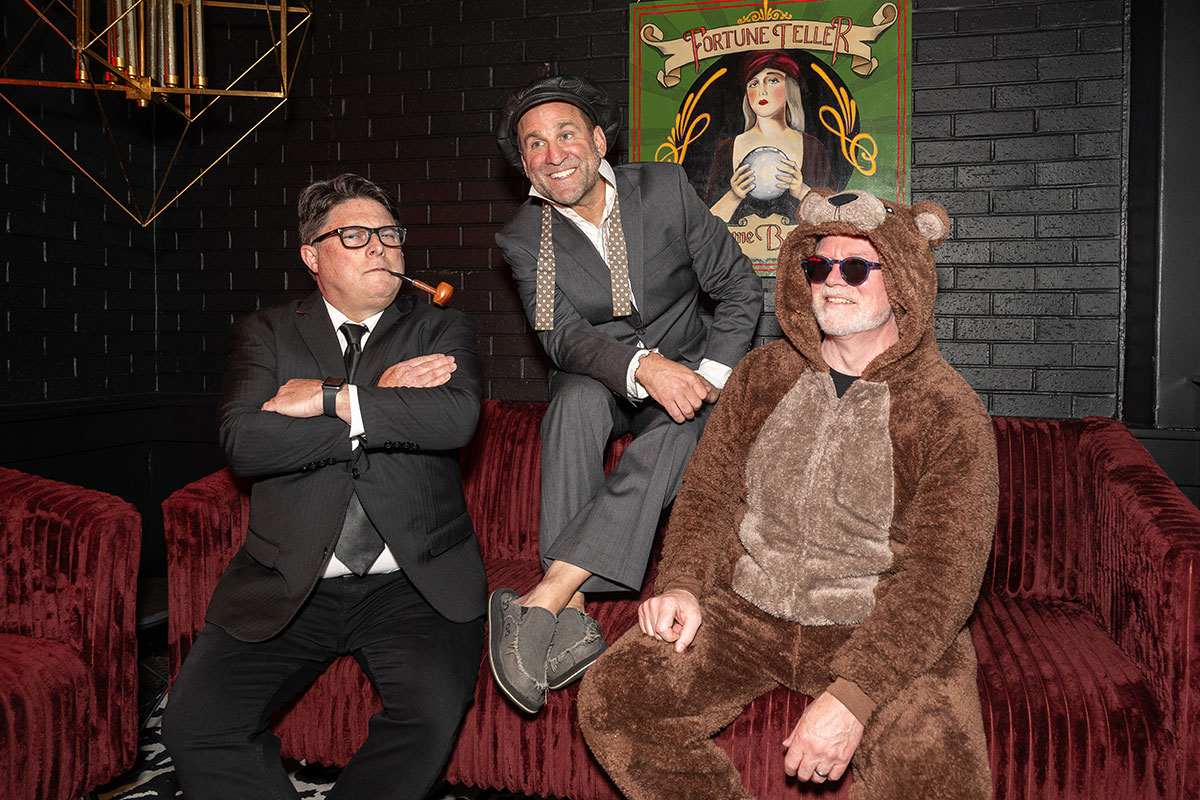
In the 1990s, ska-rock band Johnny Socko presented live performances like no other.
You could catch the seven men of Socko onstage—at times accompanied by a life-size cutout of David Hasselhoff—wearing cow costumes, banana suits, lederhosen and dresses. Shows frequently included a rendition of the “Sanford and Son” theme song, and vocalist Mike Wiltrout kept things unpredictable by heckling audience members.
Fans loved all of it, packing Broad Ripple’s Vogue and venues from coast to coast. Based in Indianapolis and Bloomington, Johnny Socko played more than 250 shows a year and racked up 345,000 miles on a 1992 GMC van.
The band managed to mix mirth and musical integrity. But the top priority, Wiltrout said, was for the musicians to “crack each other up.”
“I think the thing that made us special was that we were always able to communicate joy,” Wiltrout said. “I feel like you can’t fake joy to an audience. On some level, they always can see through it if there’s some conceit. Probably the thing I’m proudest of with this band is that the joy was never manufactured.”
A happy surprise arrived for the members of Johnny Socko in 2023, when original master tapes from recording sessions in 1995 resurfaced.
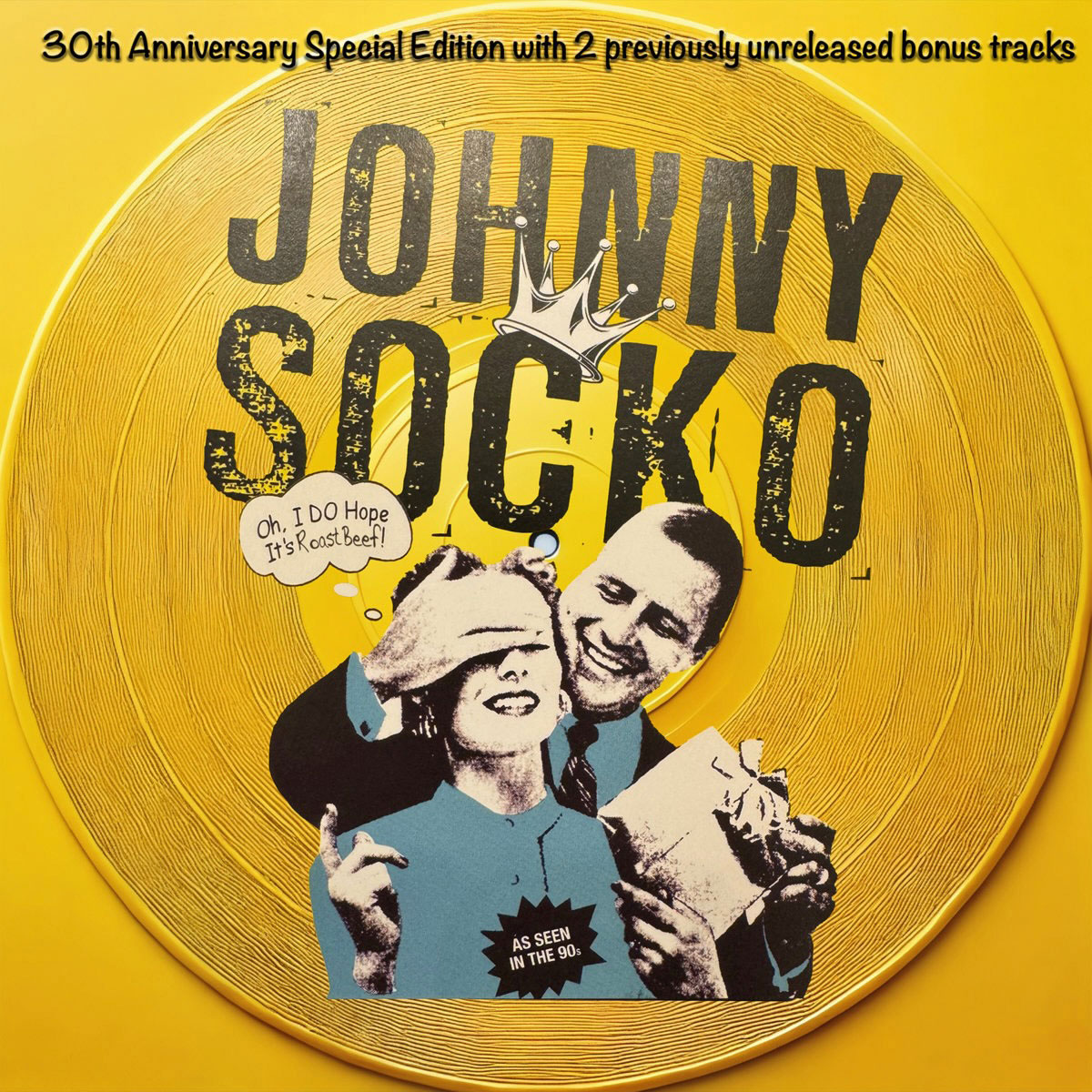
Thanks to a rescue effort by Indianapolis-based audio engineer Ryan Adkins and tape restoration by famed producer Steve Albini, a 30th-anniversary edition of Johnny Socko album “Oh, I Do Hope it’s Roast Beef!” is scheduled for release Aug. 1.
The album will be available on vinyl for the first time and will feature two previously unreleased songs. Most important, guitarist Joe Welch said, the tapes thought to be lost forever allowed a remixed sound that represents what the band hoped to release three decades ago.
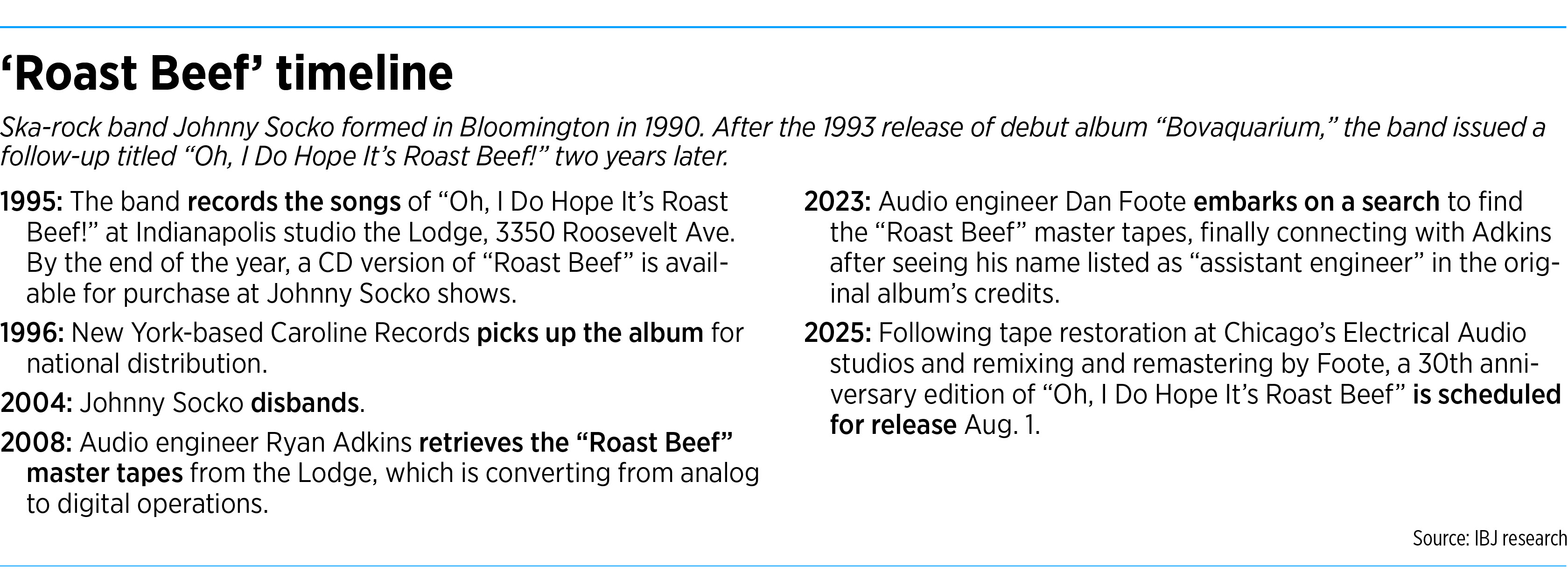
Johnny Socko recorded its “Roast Beef” project, the follow-up to 1993 debut “Bovaquarium,” at the Lodge, a studio that occupied a former Masonic Hall in the Martindale-Brightwood neighborhood. Paul Mahern, vocalist in iconic Indianapolis punk band Zero Boys, served as recording engineer and the producer’s credit was assigned collectively to Johnny Socko.
Welch said he and Mahern planned specific sonic details for the final version of “Roast Beef,” but both men were absent when work on the album concluded. Welch decreased his involvement in Johnny Socko to care for his infant son, and Mahern headed to Maryland to accept a lucrative offer to record an album by Brett Kimberlin, the convicted “Speedway Bomber” released on parole in 1994 after serving 13 years in federal prison.
“I really owe a debt of gratitude to Ryan Adkins for pulling out these tapes,” Welch said.
Adkins owns Indianapolis-based Azmyth Recording, where artists such as Snoop Dogg and Migos have worked while visiting Indianapolis. In 1995, Adkins was hired by the Lodge in an entry-level position, and he assisted Mahern during Johnny Socko’s “Roast Beef” sessions.
“I remember thinking, ‘Wow, what a cool band,’” Adkins said. “I was floored by their originality. I was pretty new in the studio game, and I thought I would probably run into a lot of bands like this. But I really didn’t.”
After spending a few years as lead engineer at the Lodge, Adkins opened Azmyth in 1999. When owners of the Lodge phased out analog recording to become a fully digital operation about a decade later, they contacted Adkins to give him a chance to claim any master tapes before they were trashed.
He collected six boxes of 2-inch Ampex 499 Grand Master Gold tape marked “Johnny Socko,” which then had a home in Azmyth storage for about 15 years.
Rock stars
Johnny Socko formed on Indiana University’s Bloomington campus in 1990. With a name inspired by similarly named 1960s Japanese TV series “Johnny Sokko and His Flying Robot,” the band embraced absurdity in songs such as “(This Is Your) Vasectomy” and “If I Didn’t Have a Goiter.”
Wiltrout and Welch were founding members, alongside bass player Steve Mascari, trumpet player Eric Evans and drummer Dylan Wissing.
Johnny Socko’s horn section, a prominent component of the band’s ska identity, included saxophone player Josh Silbert, trombone player Charlie Krone and trumpet player Demian Hostetter through the years.
To celebrate the anniversary reissue of the “Roast Beef” album, an online listening party is planned for Wednesday. A live performance, which would be the band’s first since 2013, also is in the works, Welch said.
More than a dozen musicians rotated through Johnny Socko’s lineup by the time the group disbanded in 2004.
As noted in a 1997 postcard sent to subscribers of Johnny Socko’s mailing list, “Touring makes you sacrifice a lot of things: friends, family, dentists.”
When the band takes the stage again—details have yet to be announced—the lineup will include Evans, Krone, Mascari, Silbert, Welch, Wiltrout and guitarists Chris Smail and Matt Wilson.
Four former members of Johnny Socko—Smail, Silbert, Krone and Wilson—presently make music together in Indianapolis-based band Coolidge.
Wiltrout, who grew up in South Bend, performs in the Leisure Kings and the Impalas. Cathedral High School alum Welch enjoyed post-Johnny Socko success with the Born Again Floozies, a band that also featured Krone in its lineup.

David Barajas, a bass player, guitarist and vocalist known for his work in Indianapolis bands State, Extra Blue Kind, Bullet Points and Cheap Suitors, said he caught his first Johnny Socko show at Rhino’s all-ages venue in Bloomington.
As a teenager from Columbus, Indiana, Barajas said he was wowed by Wiltrout’s charismatic stage presence, Mascari’s “game-changing” bass skills and Johnny Socko’s sophisticated horn arrangements.
“I’d never seen anything like it,” Barajas said.
At 18, Barajas moved to Bloomington and co-founded the party funk band Danagas. Ryan Lott, who later founded Son Lux and earned Academy Award nominations for his work on the film “Everything Everywhere All at Once,” played keyboards in Danagas.
Barajas said Danagas served as a supporting act for Johnny Socko on multiple occasions.
“To now call those guys friends is really weird,” said Barajas, who lists “Roast Beef” as his favorite Johnny Socko recording. “I thought they were rock stars. Now here I am running over to Josh’s house to record a bass track. It’s pretty cool.”
A successful bake
In liner notes accompanying the “Roast Beef” reissue, Welch writes that a conversation with Indianapolis-based audio engineer Dan Foote prompted speculation about the original master tapes of “Oh, I Do Hope it’s Roast Beef!”
Because the Lodge studio closed a few years ago, Welch assumed the tapes were “gone forever.” Foote, however, said he wanted to try to find them.
After several dead ends, Foote connected with Adkins after seeing his name listed as “assistant engineer” in the original album’s credits.
Adkins happily ended his era as caretaker of the tapes. The next step was to determine if the music survived.
“Most of the 2-inch tape in the ’90s was made by Quantegy or Ampex, and they used the type of glue that over decades starts to break down and get sticky again,” Adkins said. “It soaks up moisture and gets sticky. So when you play the tape, it sticks to itself. The iron oxide becomes soft and scrapes off on the tape head. After playing a tape for 20 seconds, you have a head full of iron oxide.”
The solution to this problem is to “bake the tapes.” To remove moisture, audio engineers place tapes in a 130-degree setting for eight to 10 hours, Adkins said.
In terms of “having a guy” for this task, Welch was connected to an industry leader. The Born Again Floozies made three projects with Steve Albini, an engineer known for his work with iconic bands Nirvana and the Pixies.
“He had the right equipment, and he was the quintessential engineer,” Welch said of Albini, who died in May 2024 at age 61.
At Chicago’s Electrical Audio studio, Albini and Taylor Hales digitized more than 200 individual tracks from the “Roast Beef” tapes for a complete remix by Foote.
‘What’s with all the hats?’
In addition to the seven songs that appeared on the 1995 edition of “Roast Beef,” the reissue features two previously unreleased tunes from the era.
The vocals for one of the songs, “Latkes,” were deemed unusable. The members of Johnny Socko decided to make “Latkes” an instrumental, enlisting an old friend from the Bloomington scene for a cameo appearance.
Keyboard player Mark Bencuya now performs with Yacht Rock Revue, the Atlanta-based band that headlines large venues throughout the United States and features four members who attended IU.
In the ’90s, Bencuya was a member of Fambooey, a Bloomington-based funk band and a peer of Johnny Socko.
“Mascari’s bass playing on [‘Latkes’] is just fabulous, and it seemed like an injustice that nobody had heard that,” Welch said. “I always considered Bencuya a kindred spirit with Socko. He was always a big Socko fan, and he’s a fabulous musician.”
The footnotes of Johnny Socko and Fambooey history each include shows in which Kid Rock performed as the supporting act.
As Welch notes, the members of Johnny Socko never took themselves too seriously.
“We always dressed up in ridiculous clothes,” he said. “I remember Eric Evans coming down the stairs into our horrible basement for our first rehearsal ever. He looked around and said, ‘What’s with all the hats?’”
Mascari said he’s eager to perform the songs of “Roast Beef” once more.
“It’s interesting to hear this record, because it was definitely the last time the original group of guys were in the same place at the same time,” Mascari said. “That was always a special thing for me. But really the thing I’m excited about is that I’ll get to be back in the same room with this group of guys.”•
Please enable JavaScript to view this content.

Editor's note: You can comment on IBJ stories by signing in to your IBJ account. If you have not registered, please sign up for a free account now. Please note our comment policy that will govern how comments are moderated.