
Subscriber Benefit
As a subscriber you can listen to articles at work, in the car, or while you work out. Subscribe Now
Finding ways to financially support arts and culture was a hot topic this week at a pair of conferences in central Indiana.
Pattern Inc., a nonprofit focused on supporting creative entrepreneurs, innovators and founders, presented the third annual Indiana Creative Economy Summit on Monday and Tuesday in Fishers.
On Wednesday and Thursday, the music-focused National Independent Venue Association hosted its Live Policy Summit at Fountain Square’s Hi-Fi venue.
Speakers at both events emphasized the importance of data in efforts to convince policymakers and/or funders to steer money toward organizations, venues and artists.
Kendall Gilvar, strategic communications and project manager for the National Independent Venue Association, shared statistics published this year in “State of Live,” billed as the first economic impact research study of the independent live entertainment sector.
“It’s not just a business issue,” Gilvar said. “It’s a policy issue that we’re faced with. The goal is to show, ‘This is what we’re doing, this is how we’re doing and this is why you should pay attention to us.’”
Nationally, the State of Live report lists $153.1 billion in annual economic output by independent venues and more than $19 billion paid in federal, state and local taxes.
For Indiana, the report lists $1 billion in annual economic output by independent venues and more than $97 million paid in state and local taxes.
At the Indiana Creative Economy Summit, Ball State University alum Ty Stratton presented Wesley’s Project, the creative economy dashboard he assembled to integrate and visualize a wide range of information.
The goal of this online tool is to transform raw data into something accessible.
“Wesley’s Project is supposed to get all of us on the same page,” Stratton said. “That’s educators, that’s small business owners, that’s creatives, as well. It’s for everybody.”
For arts and culture stakeholders, concrete numbers help in the argument frequently made by Polina Osherov, Pattern’s executive director: “Music, film, design, digital media and the visual arts aren’t side benefits but economic engines and quality-of-life drivers.”
Gilvar said the State of Live document is paying dividends.
“I’ve already heard from people who have used the state-level data and this federal data,” Gilvar said, “to get grants, get approvals, to have discussions with zoning boards, to speak with legislators and to actually shine a light on all of the owners and operators who are both plunging the toilets and keeping afloat the economy of the United States.”
The National Independent Venue Association presented its event in partnership with the Indiana Independent Venue Alliance, a group made up of more than 50 performance spaces, including the Butler Arts Center, the Vogue and The Jazz Kitchen in Indianapolis as well as the Bluebird in Bloomington, The Clyde Theatre in Fort Wayne and the Morris Performing Arts Center in South Bend.
According to the State of Live report, 64% of independent stages were not profitable in 2024.
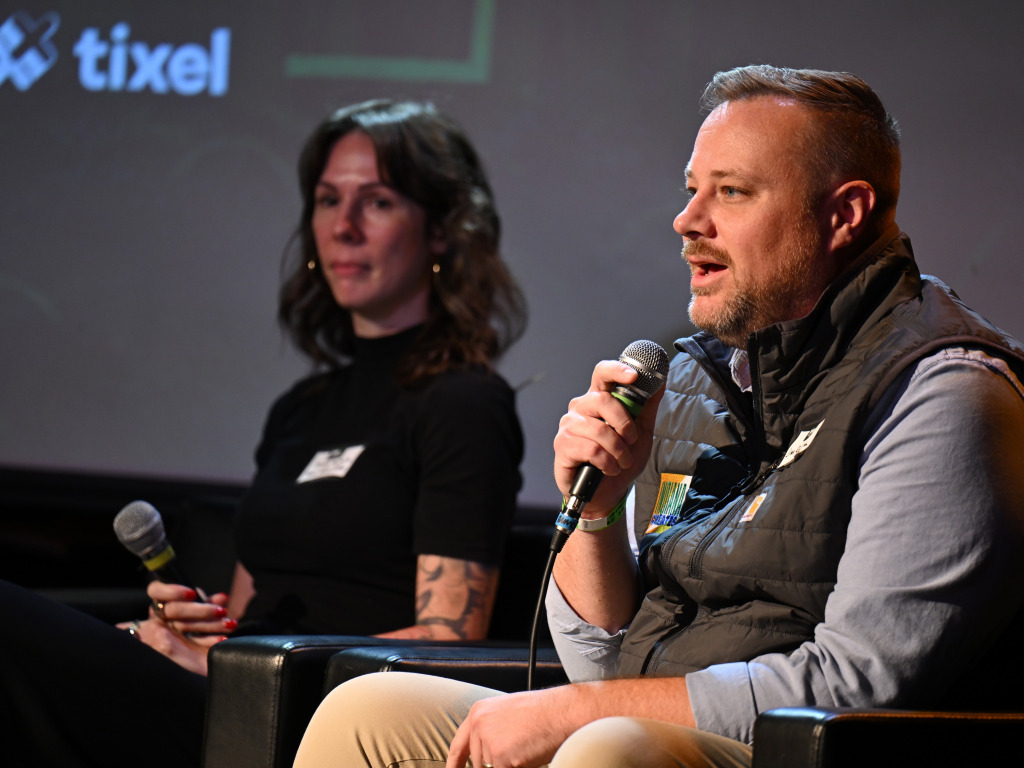
The venue groups want state legislators to follow the examples of Texas and Tennessee, where laws have been established to support music venues.
Jaclyn Zapata, who administers the Texas Music Incubator Rebate Program, traveled to Indianapolis to participate in one of Wednesday’s panel discussions.
Zapata explained the program, which allows qualifying music venues and festival promoters to receive up to $100,000 each year in a tax rebate associated with alcohol sales.
She also mentioned being grateful that her work is part of the governor’s office in Texas.
“That was done intentionally to protect us,” Zapata said. “As mentioned previously, arts and culture are kind of the first things that get cut from funding. We’re in the office of the governor to make sure the program stays open.”
Please enable JavaScript to view this content.
The reliability of the data that cities create is abysmal.
Until we put concentrated effort into creating good consistent data – there’s nothing we can do with all of the chunk data that’s currently being created