
Subscriber Benefit
As a subscriber you can listen to articles at work, in the car, or while you work out. Subscribe Now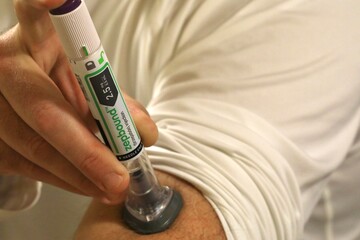
Some obese Americans on Medicare and Medicaid could get access to expensive weight loss drugs under a five-year experiment being planned by the Trump administration.
Under the proposed plan, state Medicaid programs and Medicare Part D insurance plans will be able to voluntarily choose to cover Ozempic, Wegovy, Mounjaro and Zepbound for patients for “weight management” purposes, according to Centers for Medicare and Medicaid Services documents obtained by The Washington Post.
It’s a strong signal that the administration is open to more broadly covering GLP-1 drugs—lauded by many as a miracle solution to Americans’ long-standing struggle with weight—through government insurance programs. Medicare covers the drugs mainly for patients with Type 2 diabetes, even as some private insurance plans cover them for patients with obesity.
The experiment is expected to start in April 2026 for Medicaid and January 2027 for Medicare plans, according to the documents. It will be conducted through a testing lab called the Center for Medicare and Medicaid Innovation, or CMMI, which tries new ways for paying for health care with the goal of lowering costs and improving care.
The project is an alternative way to get anti-obesity drugs to Medicare and Medicaid patients, after the administration said in April that neither program would cover GLP-1s for weight loss. In doing so, it scrapped a Biden administration proposal last year for the programs to start covering GLP-1s for patients with obesity.
Chiquita Brooks-LaSure, who led Center for Medicare and Medicaid Services, or CMS, during the Biden administration, said the experiment would be a “game changer” if it leads to increased coverage of treatments for obesity.
“Increased coverage of anti-obesity medications in Medicare and Medicaid coverage was a priority during my tenure, because scientists and clinicians increasingly believe that obesity is a serious health condition that should be treated accordingly,” she said.
The proposal isn’t final and could—but doesn’t have to—go through a formal process where the administration solicits public feedback before finalizing it.
Trump administration officials have offered mixed messages about GLP-1s and whether they should be relied upon for weight loss by obese and overweight Americans.
CMS Administrator Mehmet Oz called them “a big help” on his Instagram page and in 2019 promoted them for weight loss on his television show. But Health and Human Services Secretary Robert F. Kennedy Jr. has raised concerns about their steep costs and stressed that they shouldn’t take the place of diet and exercise.
Asked about the experiment, a CMS spokeswoman said: “All drug coverages undergo a cost-benefit review. CMS does not comment on potential models or coverage.”
Congress’s official scorekeeper has estimated that covering the drugs for obesity would cost Medicare about $35 billion from 2026 to 2034. Ozempic and Wegovy are among 15 drugs Medicare is negotiating lower prices on for 2027.
Top influencers in the “Make America Healthy Again” movement are also skeptical of GLP-1s for weight loss. Jillian Michaels and Mark Hyman have suggested the drugs change patients’ metabolisms in a manner that causes people to regain the weight they lost or make it more difficult to lose wait again if they stop taking the drug. Such concerns are echoed by researchers trying to find ways to prevent weight regain after people stop using GLP-1 medications.
GLP-1 injections cut cravings for food, slow digestion and keep people feeling full for longer periods of time as the drugs mimic a hormone the body produces to regulate hunger and blood sugar.
David Rind, chief medical officer for the Institute for Clinical and Economic Review, which has studied the cost-effectiveness of GLP-1s, said the drugs are priced reasonably for the enormous health benefits they deliver to individuals. A typical treatment plan costs between $5,000 and $7,000 per year.
The problem lies with the sheer number of obese Americans—around 100 million people—who would likely need to take GLP-1s for their lifetime to see continuing benefits, he said.
“In the aggregate, this is terrifying,” Rind said. “I just don’t know how our nation is going to pay for this.”
It’s unclear how many states and drug plans might choose to participate in the experiment. Insurers heavily pressured the Trump administration to walk back the Biden-era plans to cover the drugs in Medicare and Medicaid, citing steep costs.
Thirteen state Medicaid programs have chosen to cover GLP-1s for obesity. But many states are deeply concerned about an anticipated loss of federal Medicaid funds stemming from the tax overhaul bill President Trump signed on July 4.
The goal of the administration’s experiment is to improve the metabolic health of patients by covering GLP-1s and providing “a healthy lifestyle support system,” according to the CMS documents. To participate, Medicare plans and state Medicaid programs will also need to provide patients with diet and exercise coaching. Participating Part D plans will have to offer the drugs to all eligible enrollees.
“The model aims for broad national participation to maximize impact,” the documents say.
The GLP-1 agonist Orforglipron will also be included if it’s approved in 2026, according to the documents.
Even as thousands of people have been laid off from HHS amid widespread government staffing cuts, the administration has signaled it wants to boost CMMI, which is running the experiment on funding GLP-1 medications. That center was largely spared from staff cuts earlier this year and is now hiring roughly 100 new workers, according to Politico.
Asked to comment on the CMMI experiment, a spokesperson for Novo Nordisk, which makes Ozempic and Wegovy, said “we believe that comprehensive coverage through government and commercial insurance plans is critical to affordable health care and treatment options.”
Eli Lilly, which makes Mounjaro and Zepbound, did not respond to a request for comment.
Please enable JavaScript to view this content.
These morbidly obese people just need to shove their butt away from the food trough.