
Subscriber Benefit
As a subscriber you can listen to articles at work, in the car, or while you work out. Subscribe NowThe WNBA season tips off Friday, but some of the most important action this summer will happen off the court.
Last season, the league experienced record attendance, TV viewership and merchandise sales after a 2024 draft class headed by Indiana Fever superstar Caitlin Clark produced unprecedented enthusiasm for the WNBA.
An exclamation point was put on the WNBA’s season in July when the league announced a new 11-year media rights deal with Disney, Amazon Prime and NBCUniversal. The deal is valued at $2.2 billion, or $200 million per year. The WNBA also has media rights deals with CBS and Ion.
Momentum carried over into the preseason this year. The Fever, which set a WNBA attendance record by drawing 340,715 fans last year, an average of 17,035 per game, played a homecoming exhibition game this month for Clark at the University of Iowa against the Brazil National Team. An average of 1.3 million viewers watched the game on ESPN, which marked a 13% increase compared with last season’s average viewer count, according to the network.
Now, the WNBA’s players want a piece of the financial pie, and they see a rare opportunity for transformational change in a league where many of the game’s players play overseas during the offseason to supplement their income.
Last October, the WNBA Players’ Association announced it would opt out of the league’s current collective bargaining agreement two years early at the end of this season. The collective bargaining agreement, which was signed in 2020 and expires Oct. 31, sets the terms of the WNBA’s salary cap, free agency, roster sizes, player eligibility, length of season and other factors.
The association president, Nneka Ogwumike, called the decision “a defining moment, not just for the WNBA but for all of us who believe in progress.”
“The world has evolved since 2020, and we cannot afford to stand still. If we stay in the current agreement, we fall behind,” Ogwumike, who plays for the Seattle Storm, said in a statement. “Opting out isn’t just about bigger paychecks. It’s about claiming our rightful share of the business we’ve built, improving working conditions, and securing a future where the success we create benefits today’s players and the generations to come.”
At the WNBA Draft last month, Commissioner Cathy Engelbert told reporters that the league and players are working on a new deal.
“We want to have a fair deal for all, but it has to be within the confines of a sustainable economic model that goes on for 10 years,” she said. “I’m very optimistic that we’ll get something done, and it’ll be transformational.”
A league spokesperson told IBJ in an email that the WNBA “remain[s] committed to working with the WNBPA on a new collective bargaining agreement that is fair for all parties and lays the foundation for growth and success for years to come.”
A spokesperson for the Indiana Fever declined to make players and team executives available for this story, saying that any inquiries about collective bargaining agreement negotiations should go through the WNBA and players association.
People who study sports business told IBJ that the negotiations represent an important moment for the WNBA. They compared the opportunity to the one realized by the U.S. Women’s National Soccer Team, which signed a collective bargaining agreement in 2022 with the U.S. Soccer Federation that provided equal pay with the U.S. Men’s National Soccer Team.

“The WNBA has never been more popular than it is today, and that’s driven by the players,” said John Holden, who researches sports law at the Indiana University Kelley School of Business. “In a lot of ways, the stars in the WNBA might be more noteworthy than some of the stars in the NBA, and that’s fantastic for the sport. But the league needs to recognize that, as well.”
Raising salaries
The WNBA’s rapid growth is evident in endorsement deals, league expansion plans and construction blueprints for new practice facilities, such as the $78 million Fever Performance Center that is expected to open in two years on the former Marion County Jail I property. But it is yet to be recognized in the salaries paid to its players.
The WNBA, which is adding a team this season in San Francisco and two more in 2026 in Toronto and Portland, Oregon, has a hard salary cap this year of about $1.5 million per team. The maximum salary is $249,244, while the minimum salary for rookies is $66,079.
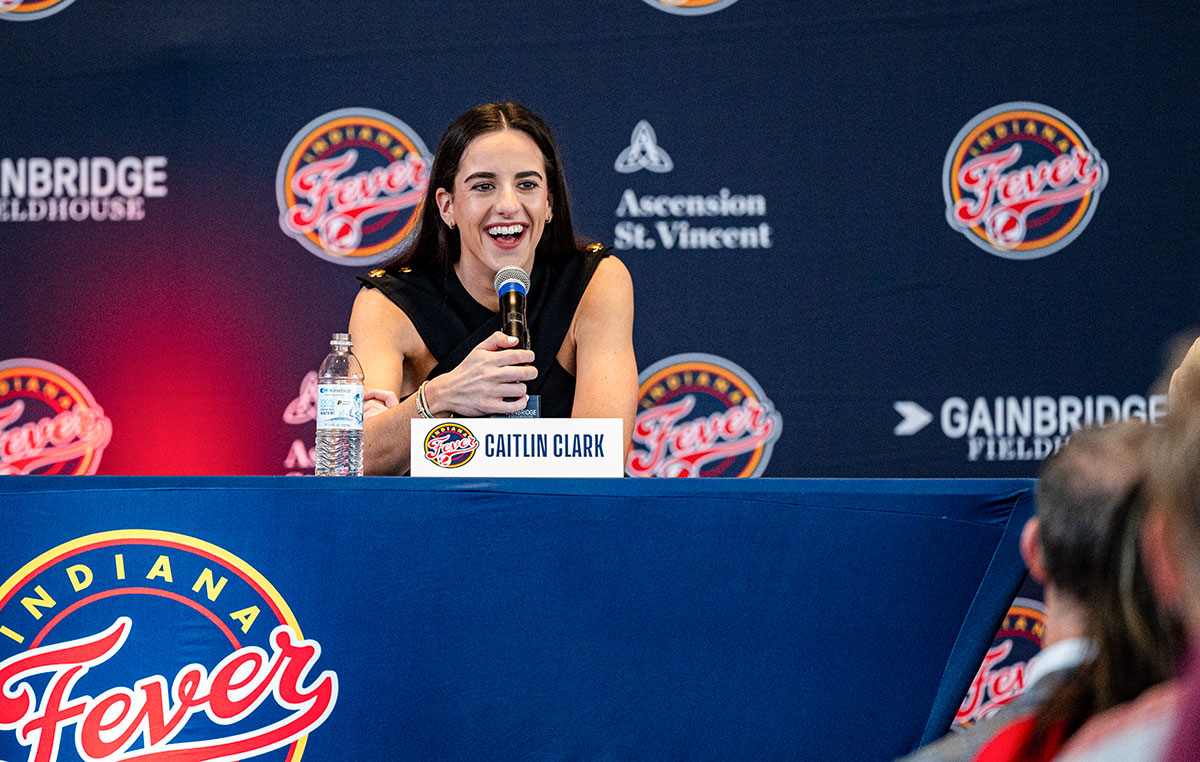
Last year, Clark earned $76,565 in the first season of a four-year, $338,056 contract that she signed after the Fever selected her with the No. 1 pick in the 2024 draft.
Before her rookie season, Clark signed a $28 million contract with Nike that spans eight years and includes a signature shoe. She also has partnerships with Wilson Sporting Goods, Gatorade, State Farm, Hy-Vee, Xfinity, Gainbridge, Eli Lilly and Co. and Panini. The sports business website Sportico reported that Clark’s WNBA salary represented 1% of her total earnings last year.
This season’s No. 1 draft pick, Paige Bueckers, will make $78,831 in her first season with the Dallas Wings. Her four-year contract is worth $348,198, which is reportedly less than she will earn in one season when she plays next winter in the 3-on-3 women’s basketball league, Unrivaled, that was established by WNBA players Napheesa Collier and Breanna Stewart.
Clark declined an offer to play in Unrivaled, but her Fever teammates Aliyah Boston and Lexie Hull played in the league when it launched in January.
Holden said new leagues like Unrivaled will put pressure on the WNBA to come to the table with a deal that makes sense for the players.
He noted the disparity in scale between the WNBA’s media rights deal and its salary cap. He expects the salary cap will rise significantly under a new collective bargaining agreement, and he is also watching for provisions that will increase revenue sharing and create salary cap exemptions for star players.
The WNBA’s players anticipated their union would choose to renegotiate its contract with the league, and most veteran players have signed short-term contracts that expire after this season, which will set up a free-agency bonanza under a new salary structure.
“If this were any of the four major men’s sports leagues, this would be a front-page story all the time,” Holden said. “And so it’s good that women’s basketball has grown to the point that we’re in this position to have this conversation. … This has been an issue for some time, but it’s really sort of coming to the forefront now because Caitlin Clark is really this transcendent star.”
Ken Ungar, principal at Indianapolis-based sports marketing firm Charge, said sponsorship revenue for all women’s sports has increased 22% since 2022. And he said that represents a sort of “tipping point” for the WNBA in terms of investment in players, facilities and more. The construction of new practice facilities, for example, represents “five- and 10-year decisions that are going into investment around women’s sports,” Ungar said.
“This is not the time where everybody is going to cash in on this particular contract,” he said. “This is the beginning of the great contracts. If all the parties can set themselves up for success, that’s the cycle you want to enjoy.”
Gaining leverage
The WNBA players believe the league’s success has provided them with a strong case in negotiations.
“We have the most leverage we’ve ever had as WNBA players, and we have to use it to our advantage,” Collier, who is vice president of the association, said in March on ESPN’s “First Take.” “The time for change is right now.”
Many of the league’s young stars, like Clark and Angel Reese of the Chicago Sky, experienced a wave of change in college basketball when players gained opportunities for compensation through name, image and likeness rights and sponsorships.


“The fact that they have been through a similar experience in college probably strengthens their commitment to what the union wants to accomplish,” said Michael LeRoy, a labor law professor at the University of Illinois.
Richard Ash, a professor at the Indiana University Kelley School of Business who researches negotiations, said this is a “moment” for WNBA players.
“These things only come along every so often, and there are some pretty good lessons they can learn from other sports,” he said, citing the U.S. Women’s National Soccer Team. “The leverage shouldn’t just go to the stars. If the players are smart, they’ll use Caitlin and A’ja Wilson [of the Las Vegas Aces] to raise all of the boats for the players, and I think that’s probably an easier sell.”
LeRoy said attendance and TV viewership numbers this season will determine how strong a hand players have as negotiations proceed. He said it is important that the players association has indicated that it is prepared to strike if it does not receive an offer that it deems appropriate.
LeRoy also believes the WNBA is in a position that’s similar to where the NBA was in the 1980s, before stars like Larry Bird, Magic Johnson and Michael Jordan raised the league’s profile.
“The women are basically 40 years behind the men on the collective bargaining continuum,” he said. “The men have gone down this road with the idea of having the league share more of its profits with them.”
One advantage the WNBA players have in negotiations, LeRoy said, is the size of their social media followings. On Instagram, Reese has nearly 5 million followers, while Clark has 3.1 million.
“They have a way of reaching fans that no league can match,” LeRoy said. “And it sort of is the superpower that negates the league’s built-in advantages of having capital and controlling a schedule and all of these things, so I think that’s an interesting new piece of it.”•
Please enable JavaScript to view this content.
Is the league turning a profit for the first time ever? Hard to negotiate against a job where the company is actively losing money
Much like soccer, the players will continue to expect the men’s league/teams to subsidize their new paychecks.