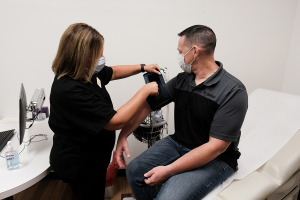
Hoffmann spends 75% of her time on the road traveling across Indiana leading classes with community partners, including the state chapter of the American Foundation for Suicide Prevention.
HB 1399 seeks to carve out more than 5,000 “forever chemicals” from being defined as such by the state and its environmental rules board. That means chemicals deemed harmful in other states would no longer carry the same designation in Indiana.
Indianapolis-based Marathon said the merger will extend services to 2.5 million eligible patients and more than 630 U.S. employer and union-sponsored clients.
Thirty-four Indiana companies landed $287 million in venture capital in 2023 to help finance a wide array of technologies, from medical isotopes to stem-cell therapies, according to BioCrossroads, an Indianapolis-based group that promotes and invests in the state’s life sciences sector and tracks the funding.
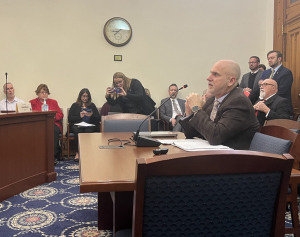
Author Sen. Scott Baldin, R-Noblesville, said he saw Senate Bill 10 as a way to reduce public safety expenses by creating programs for non-emergency calls often routed to first responders.
The EPA opened nearly 200 criminal investigations this year, a 70% increase over 2022, the agency said in a report. It completed nearly 1,800 civil settlements, a 9% increase over 2022.
In March, Eskenazi Health launched a fundraising campaign to help it move the needle on health disparities. As of last month, its foundation had raised $57 million.
Martin University will receive $1 million over three years to renovate the Andrew J. Brown building and offer enhanced programming through the Community of Health Practice program.
Fifty-three of Indiana’s 92 counties have a shortage of primary health care providers, federal data shows. And nearly all counties falling into that category are considered rural or partially rural.
The research published by the IU Richard M. Fairbanks School of Public Health found that one in five Indiana residents with mental illness do not receive the treatment they need.
Paul Halverson, the founding dean of the Indiana University Fairbanks School of Public Health, is a longtime advocate for a stronger role for public health across the state.
The report credits increased insurance coverage in Indiana to an enrollment uptick in public health insurance options, such as Medicaid, rather than any significant change in private insurance plans.
The two-year-old startup that provides professional services in the health care and life science industries has sharply cut how much it expects to raise in its upcoming initial public offering.
With the new multimillion-dollar conference that kicks off on Tuesday, Indiana is trying to position itself as a globally known innovation hub. And health care will figure prominently on the agenda.
Business interests ranging from individual companies to investment funds are seeking legal advice on the drafting of internal compliance policies related to environmental, social and governance issues.
Hoosiers are in desperate need of increased health care access. Indiana was a shocking 35th overall in the latest United Health Foundation’s America’s Health Rankings, which cites a high prevalence of multiple chronic conditions among state residents.