
Subscriber Benefit
As a subscriber you can listen to articles at work, in the car, or while you work out. Subscribe Now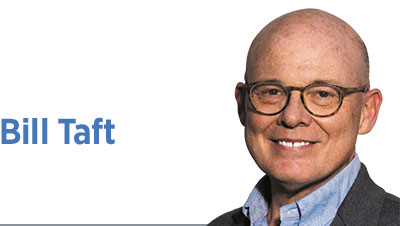 Economic development is one of the few government programs on which Hoosiers seem comfortable spending big money.
Although exact numbers are hard to pin down, Indiana state and local governments each year spend an estimated $2 billion on economic development programs. The government revenue waived through tax abatement is about $8 billion.
For comparison, Indiana spends $340 million on parks and $30 million on housing.
Every county in Indiana is served by a professional economic development organization assigned the task of increasing the number of jobs and the tax base in their communities.
Despite this investment, leaders in Indiana’s small and disinvested communities often feel like economic development funds are not used in ways that address the challenges that prevent their economies from growing.
The greatest challenge these communities face is people. Many communities don’t have enough working-age residents with the skills needed to drive business investment. These communities also carry the costs of an aging and undereducated population.
Traditional economic development efforts remain oriented toward attracting and expanding large employers, but it is increasingly evident that this won’t happen in many communities without growing the talent pool.
As a result, our investment in economic development often accelerates growth in metro suburbs but does little to help smaller and declining communities.
Researchers agree that education and quality of life are the two best places to invest funds to turn around shrinking communities. While education reform generates intense debate, the building blocks for improving quality of life are less controversial but inadequately implemented.
Those include supporting local entrepreneurs, rebuilding mixed-use downtowns, creating attractive recreational places and programs, and developing residential neighborhoods connected to these amenities.
Most Indiana communities have the “bones” on which to build these talent-attracting amenities, but they lack the tools and expertise to design, implement and sustain such projects.
Meanwhile, a 50-year experiment in how to drive development in disinvested communities has become known as “community” economic development. A scattering of neighborhood groups in major cities has grown into a multibillion-dollar network of financial institutions, affordable housing developers, entrepreneurial support organizations, microlenders, and urban and rural community groups that organize public-private partnerships to tackle development challenges.
From 2012 to 2020, community development initiatives invested $3.2 trillion in communities across the country. Community development initiatives have created tools and strategies proven to lift the quality of life of people living in disinvested communities. These tools can provide models for traditional economic development programs if we can bridge the information, organization and cultural gaps between these two industries.
Indiana has the tools, organizations, funding and expertise to renew communities that have not benefited from previous economic development efforts. We can make this happen by rethinking traditional approaches, building alliances and investing in holistic efforts.
In April, Indiana’s Sagamore Institute launched its Interurban center to support ambitious collaborative efforts that will equip Midwestern communities to set their own revitalization pathways, build capacity to carry out this work and tap into economic development tools that will help bring about this future.
I am excited to lead the Interurban initiative, drawing on decades of experience that bridges the community and economic development worlds.
We are excited to join state and local partners in extending prosperity more broadly across Indiana and beyond.•
__________
Bill Taft is director of Interurban at Indianapolis-based Sagamore Institute. Send comments to [email protected].
Click here for more Forefront columns.
Please enable JavaScript to view this content.
Editor's note: You can comment on IBJ stories by signing in to your IBJ account. If you have not registered, please sign up for a free account now. Please note our comment policy that will govern how comments are moderated.