
Subscriber Benefit
As a subscriber you can listen to articles at work, in the car, or while you work out. Subscribe Now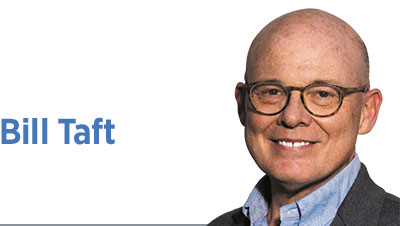 This spring, I joined my fellow Indianapolis drivers in testing our precision pothole avoidance reflexes, a skill that is now essential for navigating Indy’s moonscape of deteriorating streets. While it’s easy to blame city government inefficiency for the blown tires and damaged rims so many of us experience, the real culprit is our cherished Unigov form of government.
You might find it surprising that I blame Indy’s claim-to-governance-fame for our current infrastructure problems, but I hope you will hear out my reasoning. When the Indiana General Assembly took the unprecedented step of consolidating Marion County and the city of Indianapolis in 1970, it was designed as a solution to suburban flight, ensuring that middle class suburbanites and their taxes would be retained in Indy’s expanded boundaries. Unigov encompassed most suburban sprawl for 40 years, capturing the growth of Marion County’s outer townships to offset the depopulation and declining tax base of its urban core.
Unigov’s impact changed around 2000 when most new housing and commercial development began sprawling beyond the boundaries of Indianapolis/Marion County, and Indy’s population growth flattened.
The outer townships of Indianapolis that once boomed with new development are experiencing many of the challenges of age. Middle class families departing these townships for surrounding counties have mostly been replaced with lower-income residents, schools have struggled with maintaining educational standards, crime and poverty rates have increased, and big-box retailers have left for bigger greenfield sites.
All of which brings me back to potholes. Because the city of Indianapolis includes so many miles of cheaply built suburban streets from the 1960s-1990s, it is stuck maintaining a backlog of roads that are reaching the end of their useful life. Indianapolis actually has one of the highest numbers of road lane miles per resident in the country, which means it has limited funds to pay for maintaining thousands of miles of roads that are falling apart.
This results in a springtime Whac-a-Mole game of fixing the worst potholes in streets we can’t afford to repave. A recent analysis concluded that over $1 billion annually is needed to fully repair Indy’s streets (this would constitute almost 90% of its total budget). State-imposed property tax caps have prevented the city from increasing its local income to cover this gap, and increasing taxes just in the city would likely accelerate disinvestment from the townships.
So, are there solutions for reviving Indy’s infrastructure? Some potential solutions that would require unlikely state approval would be dramatically amending the road funding program away from its currently rural-favoring formula, lifting the property tax caps on urban areas, or allowing Indy to impose a commuter tax. None are likely to happen,
However, we can strengthen our fiscal position through development policies within our control by encouraging increased investment in the unique urban neighborhoods of Center Township. While its outer townships continue to decline, Indy is increasingly dependent on tax revenue generated in its urban core. Because unique urban neighborhoods like Old Northside, Fountain Square and Butler-Tarkington have no suburban rivals, building and renovating homes, businesses and amenities in Center Township generates sustainable public revenue. Increasing income and property taxes generated through urban core growth is the only strategy the city directly controls to fund needed street repairs.
So, each time you dodge a pothole, you can curse Unigov—then think about ways to accelerate urban investment to properly fund city street maintenance.•
__________
Bill Taft is director of Interurban at Indianapolis-based Sagamore Institute. Send comments to [email protected].
Click here for more Forefront columns.
Please enable JavaScript to view this content.
Editor's note: You can comment on IBJ stories by signing in to your IBJ account. If you have not registered, please sign up for a free account now. Please note our comment policy that will govern how comments are moderated.