
Subscriber Benefit
As a subscriber you can listen to articles at work, in the car, or while you work out. Subscribe Now The first time most people enter the sacred grounds of the Indianapolis Motor Speedway by car, they are greeted by the IMS Museum.
The public entryway off West 16th Street takes visitors down a two-lane tunnel, dipping underneath the short chute between Turns 1 and 2, and places them directly in front of the facility. The second-oldest building in the entire infield, the IMS Museum serves as a symbolic front porch for the speedway.
Through decades of greeting fans from all over the world, the nearly 50-year-old museum remained largely the same—a collection of historic cars and not much else. Now, the place that celebrates the world’s greatest racetrack has a brand-new look inside and provides IMS entrants a vastly upgraded experience, even if most people wouldn’t notice anything had changed before stepping through the doors.
“It’s kind of brutalist architecture from the 1960s, but while the outside hasn’t changed at all, we’ve doubled the size of the museum,” said Joe Hale, who serves as president of the IMS Museum and helped lead the transformation. “I challenge you to find a square inch in here that hasn’t been touched in some way.”
About 40,000 square feet of space has been added without extending the building up or out. That was made possible by creating a spectacular mezzanine area and removing the velvet rope from the basement, which previously was restricted to select tours. After 17 months and $60.5 million—on-time and under budget from the original plans, a construction rarity in any industry—the museum officially opened on Wednesday with a much-needed tuneup that will impress everyone from true gearheads to novice tourists.
“We have the opportunity to tell the story of the Indianapolis Motor Speedway’s history in a way that we couldn’t in the past, with this new configuration,” said Jason Vansickle, vice president of curation and education at the museum.
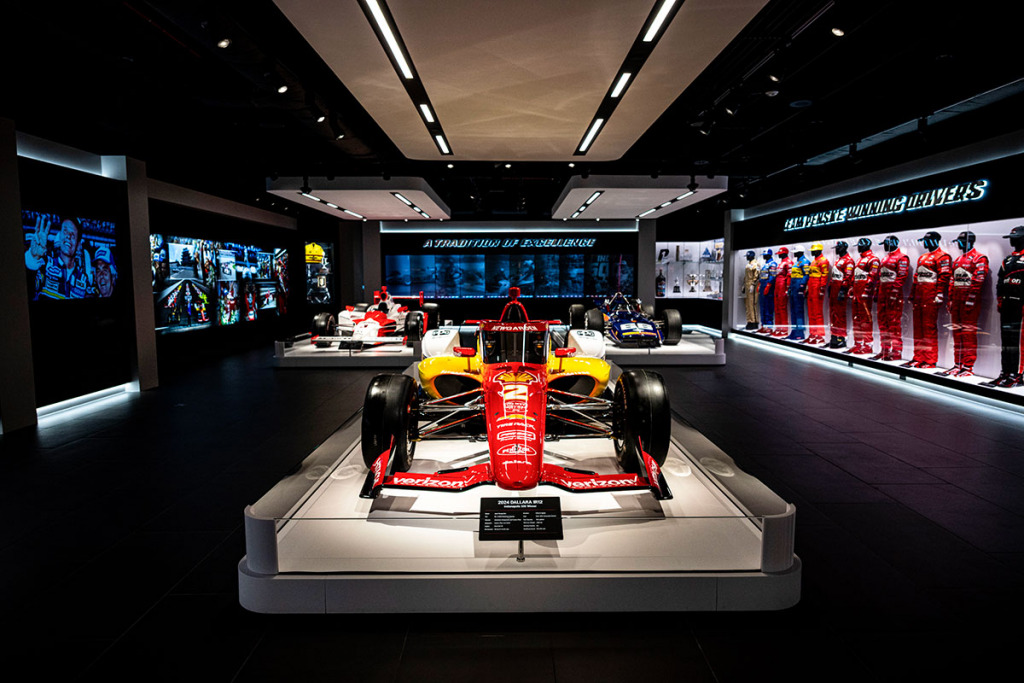 The gallery dedicated to Team Penske’s 20 Indianapolis 500 wins. (IBJ photo/Mickey Shuey)
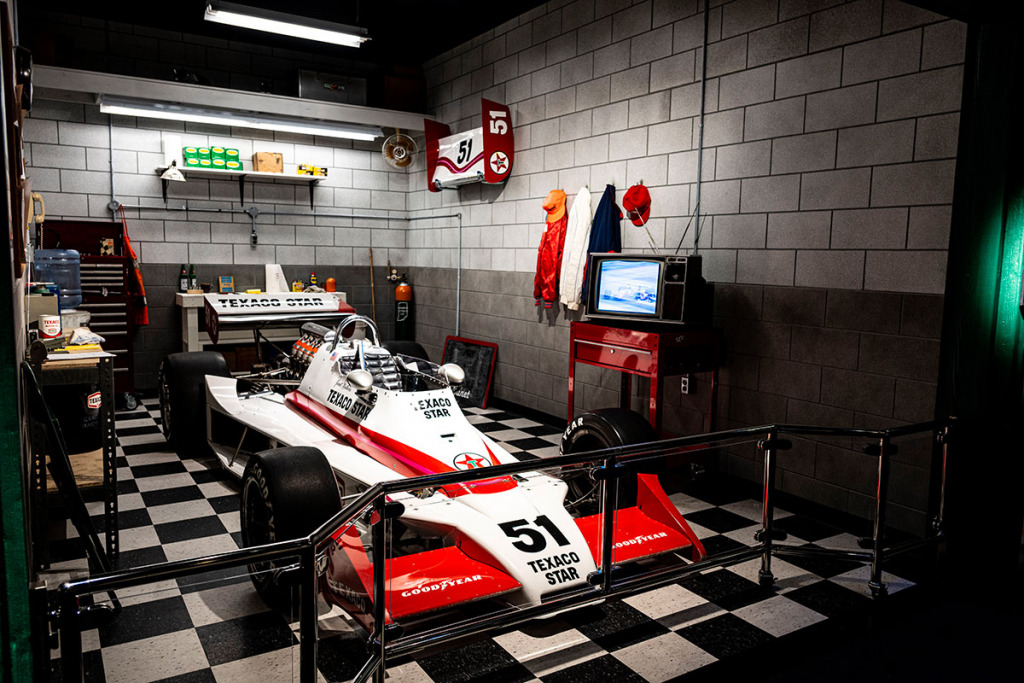 One of the garage exhibits that represent historic Speedway eras. (IBJ photo/Mickey Shuey)
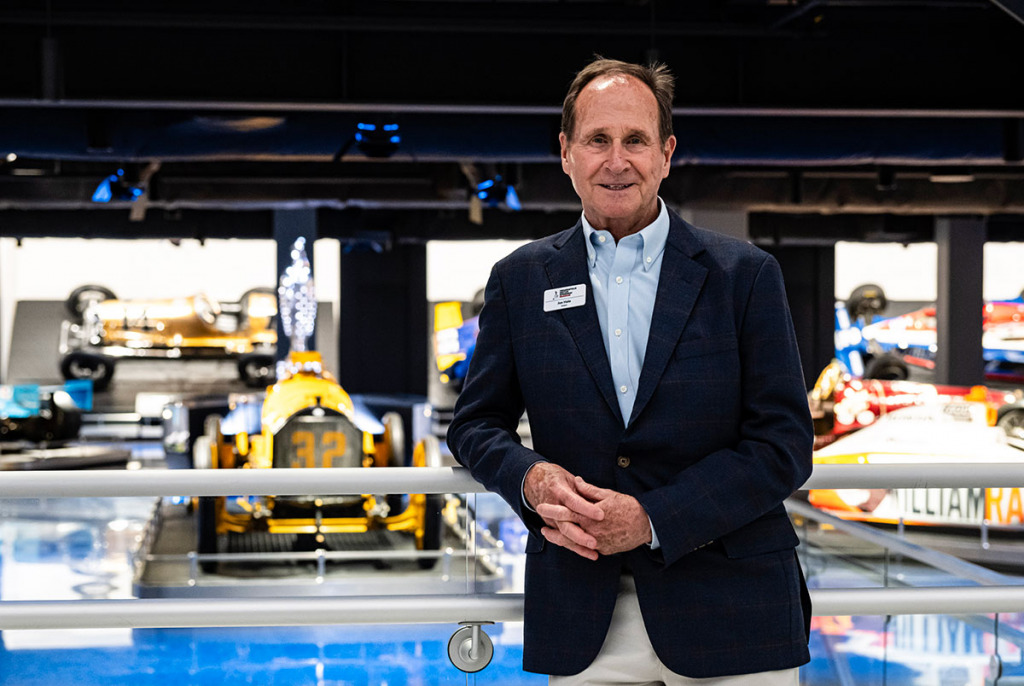 IMS Museum President Joe Hale. (IBJ photo/Mickey Shuey)
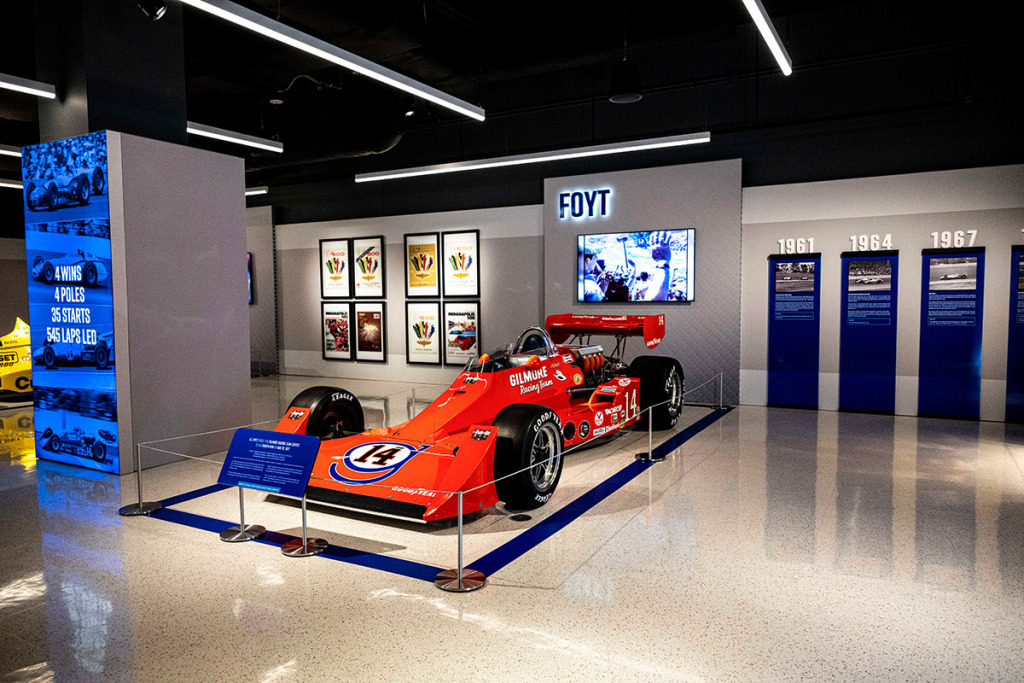 An A.J. Foyt display is part of an exhibit honoring the race’s four four-time winners. (IBJ photo/Mickey Shuey)
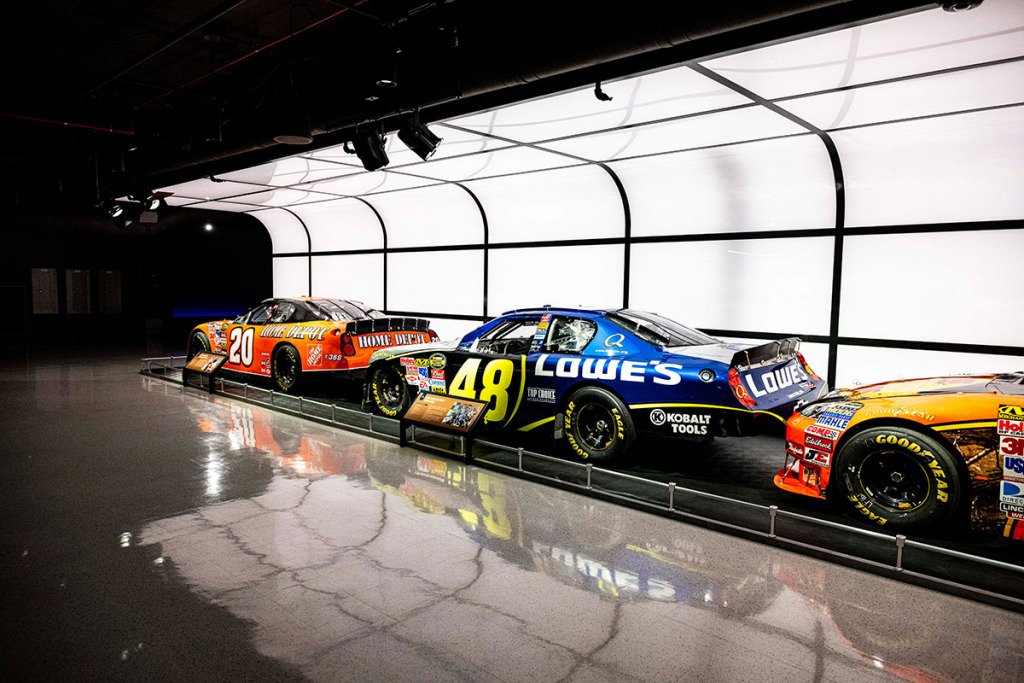 A tribute to NASCAR’s Brickyard-400-winning cars. (IBJ photo/Mickey Shuey)
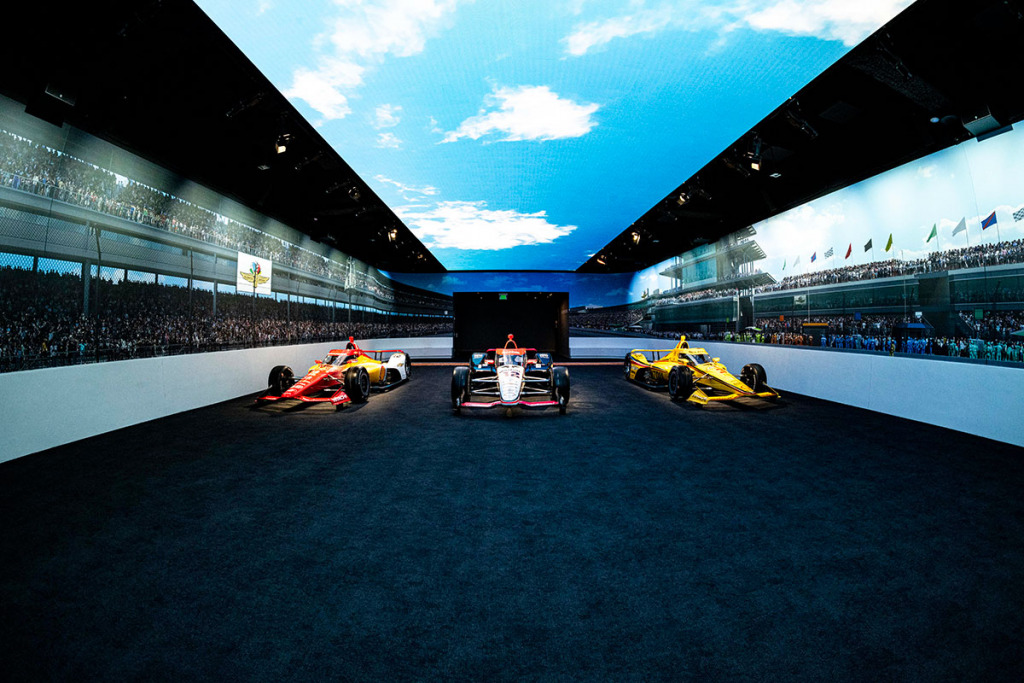 The Starting Line Experience takes visitors through pre-race festivities and traditions. (IBJ photo/Mickey Shuey)
Something for everyone
The freshly told Indianapolis Motor Speedway story begins in the Gasoline Alley Gallery, where historic garages transition by decade, complete with era-specific technology, such as a vintage 14-inch television on a stool next to the stunning 1955 Dean Van Lines roadster captained by Hall of Famer Jimmy Bryan. There, some museum artifacts are on display for the first time, including one of the oldest in the entire 55,000-piece collection: the original 1909 Articles of Incorporation for the track.
In the Starting Line Experience, LED screens measuring 80-feet-by-20-feet take you through the Race Day morning and the cherished pre-race festivities of the Indianapolis 500. The immersive display creates the most emotional experience available at the museum, as you see, hear and even feel the beloved traditions that make up the greatest day on the sports calendar. While the flyover following the national anthem is about as close as you can get to the real thing, make sure you’re ready for “Drivers, start your engines!” because you’ll be absolutely blown away with what takes place.
Every museum needs hands-on activities, and while the previous iteration of the IMS Museum was very hands-off—no, you still can’t touch the actual display cars—the transformed version lets patrons virtually jump into the driver’s seat, pits and timing stand. Driving simulators, a pit stop competition and even a strategy challenge for the true racing aficionados can be taken on in the Qualifying Zone. Toss on a headset and dictate your driver’s fuel strategy or grab a wheel gun and attach some fresh tires as fast as you can. There’s even a block-piece Indy car for toddlers to enjoy in the most kid-friendly area of the revamped museum.
“In the past, if a family brought little kids with them [to the museum], all they heard was, ‘Don’t touch this,’ or, ‘Don’t touch that,’” Hale said. “We had the car guys, but we didn’t necessarily have the rest of the family. What’s different now is, there is a heck of a lot for kids to do here and experiences for entire families.”
Still about the cars
The gently rotating Borg-Warner Trophy might make you feel like you’re in a completely different place, but traditionalists will appreciate the fact that the IMS Museum is still about the cars. From Ray Harroun’s 1911 Marmon Wasp to Dan Wheldon’s 2011 Williams Rast-Curb/Big Machine Dallara Honda and everything in between, some of the most iconic Indianapolis 500 winning machines are still on display.
Roger Penske celebrates 20 Indianapolis 500 victories with several of the winning cars for those races in the Team Penske gallery on the main level. After walking through the neon-red-light entryway, visitors can view a display case for each year of the 20 Victory Lane trips for Team Penske, earned by some of the giants of the sport.
The mysterious basement, now open to anyone with a ticket, includes an Indianapolis 500 Winners Gallery and a tribute to NASCAR’s 30-plus-year history with eight Brickyard 400 winning machines on display. Jeff Gordon’s legendary Rainbow Warrior inaugural winner from the 1994 race and the late Dale Earnhardt’s iconic black No. 3 Chevy from the following year are both part of that collection. While that display is a rotating feature as part of the Bobby Rahal Family Gallery, you can see another lineup of the museum’s stock car collection in the NASCAR at the Speedway display on the lower level.
Another rotating gallery there is The Best of the Best: Four-Time Winners, which displays one winning car from each of the speedway’s greatest legends, along with racing suits, helmets and unique artifacts like A.J. Foyt’s 100 Mile An Hour bomber jacket. That gallery will change every three to nine months, a far different timeline than the previous, once-per-year gallery displays, giving visitors a reason to come back several times a year.
Special touches
Given the deep nostalgia and emotional ties to the venue and race, the IMS Museum wouldn’t feel quite right without some unique touches.
The renovated IMS Museum displays 33 lights in the entryway rotunda, which represent the 33-car field for each running of the cherished race. The cars on display in the lower-level gallery are banked at the same degree as the four turns of the IMS oval (9 degrees and 12 minutes, for those of you wondering at home). Even the oval-shaped cutout in the mezzanine pays homage to the track’s design.
However, the signature element that cuts to the core of what the Indy 500 is all about is the late Chuck “Wolfman” Lynn’s bike. Lynn, who passed away last year, was as synonymous with the place as any of the drivers, peddling newspapers from his tricycle for 40 years. That custom-made trike, which was gifted to Lynn years ago, is proudly on display at the end of the Gasoline Alley Gallery. “Chucky” was part of the fabric of IMS, and his legacy is now forever celebrated with the drivers he loved.
With 80% of the IMS Museum’s visitors coming from outside Indiana and a quarter of those coming from outside the country, the newly revamped IMS Museum presents a real opportunity—not only for the venue but for the track itself.
Once you went through the old museum once, there wasn’t much reason to return. Now, with gorgeous displays and breathtaking experiences illuminating the incredible history of the Indianapolis Motor Speedway, fans can experience something different each time they visit.
“In the past, you walked in, and you basically saw the whole museum right there,” Hale said. “There were a lot of cars in front of you then, but what we’ve really done now with this massive project is enhance the storytelling behind the spectacle.”
Next time you drive through Gate 2 to the front porch of the world’s greatest racetrack, be sure to head on in and stay a while. Just like the photo opportunity in front of the pagoda, kissing the bricks or touring the garages, the new-look IMS Museum is something you’ll want to experience each and every time you make the trip.•
__________
From Peyton Manning’s peak with the Colts to the Pacers’ most recent roster makeover, Schultz has talked about it all as a sports personality in Indianapolis for more than 15 years. Besides his written work with IBJ, he’s active in podcasting and show hosting. You can follow him on X @Schultz975.
Please enable JavaScript to view this content.
Editor's note: You can comment on IBJ stories by signing in to your IBJ account. If you have not registered, please sign up for a free account now. Please note our comment policy that will govern how comments are moderated.