
Subscriber Benefit
As a subscriber you can listen to articles at work, in the car, or while you work out. Subscribe NowThere’s a burgeoning opportunity for Indiana to embrace nuclear energy to meet energy needs required by a high-tech, AI-driven economy, leaders across multiple sectors said Tuesday at IBJ Media’s Nuclear Energy Forum.
The event, held in Indianapolis, brought together about 270 attendees for a half-day of discussions that presented the potential benefits—and hurdles—of bringing nuclear energy to Indiana.
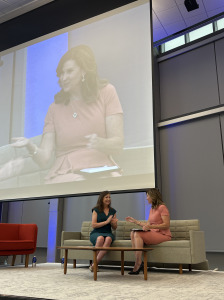
The forum was presented in cooperation with the state-run Indiana Office of Energy Development amid Gov. Mike Braun’s push for the state to embrace the development of nuclear power—especially small modular reactors, called SMRs—to meet growing energy needs.
Keynote speaker Maria Korsnick, CEO of the Washington, D.C.-based lobby group Nuclear Energy Institute, said that data centers will require an unprecedented amount of power in the coming years.
“People are really recognizing that this future simply must include nuclear because whoever leads in AI, they’re going to lead the world,” Korsnick said. “The rate of AI innovation cannot be constrained by the rate of new energy output.”
What was discussed
Discussion topics included the viability of SMR development in Indiana. Small nuclear reactors produce about a third of the generating capacity of traditional reactors, according to International Atomic Energy Agency. Although there are no operational SMRs in North America, the Indiana Legislature this year passed several laws incentivizing the development and manufacturing process, hoping to attract future projects.
Other discussion topics Tuesday included how Indiana can efficiently embrace nuclear energy and understanding public perceptions of nuclear power. Other panelists from companies including Rolls-Royce discussed their development of SMR power generation.
Indiana has no nuclear reactors in the state producing power for its residents. Purdue University’s Reactor Number One, PUR-1, is only nuclear reactor operating in Indiana and is primarily used to train nuclear engineers.
Seungjin Kim, head of the Purdue School of Nuclear Engineering, said about 20 to 30 students a year earn bachelor’s degrees in nuclear engineering, typically leaving the state because of a lack of opportunities.
But some panelists at Tuesday’s event see that changing.
Ed McGinnis, CEO of nuclear energy startup Curio Energy, said banks and bit-tech companies are showing an unprecedented interest in nuclear energy financing and development.
“This nuclear renaissance,” he said, “has legs.”
‘There are cheaper and safer ways’
Not all attendees were convinced.
“This is the same old dog-and-pony show we’ve seen from the nuclear industry for decades,” said Kerwin Olson, executive director of the Citizens Action Coalition advocacy group. “They’re extremely good at lobbying and marketing … they always tell an incomplete story.”
He said the industry talks about the operational nuclear plans of the 1970s and 1980s, but does not mention the many that were canceled or went bankrupt. Despite the talk of banks and financing, nuclear products typically are funded by taxpayers and rate payers, he said.
“There are cheaper and cleaner and safer ways to do this,” said Olson, who attended the forum, “and we simply don’t accept that this is the only path forward.”
Please enable JavaScript to view this content.
If we really want AI, and really need it?, then the SMR’s are all we have without more coal and natural gas plants, of which Kerwin Olson doesn’t like either. The amount of energy needs for the data centers is overwhelming with our current energy production, and the ridiculous green wind and solar power could not make enough power to even keep our houses electrified. It’s the old, we are either on the bus or off the bus, not many choices in between.
Although the nuke advocates talk as if SMRs are right around a very long corner (10 years), the fact is that there will be thousands of megawatts of natural gas gas combined cycle plants built to cover data center demand now and the near future. And nat gas plants don’t fully depreciate in 10 years. The entire SMR ruse is simply a way to keep the industry subsidized ad infinitum, whether anything is built or not – more like unnecessary power capacity shoved down ratepayers throats like in Indiana.