
Subscriber Benefit
As a subscriber you can listen to articles at work, in the car, or while you work out. Subscribe Now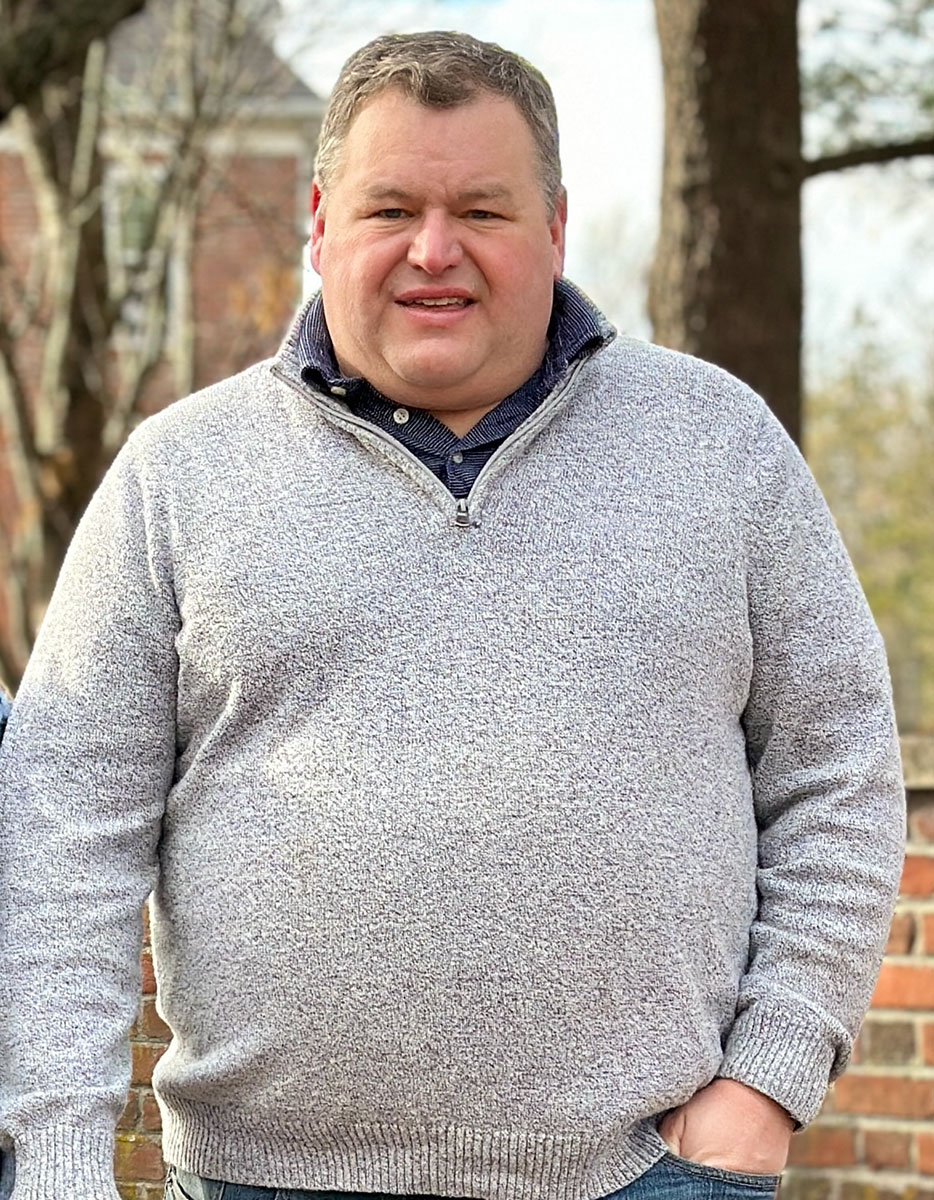
Michael Headrick of Indianapolis wanted to start on a new GLP-1 medication for weight loss, so he mentioned Eli Lilly and Co.’s Zepbound to his doctor, who agreed that it was an appropriate medicine.
But Headrick’s insurance didn’t cover the injectable drug, which can run more than $1,000 per month.
Fortunately, Headrick had heard of Lilly’s direct-to-consumer online pharmacy, LillyDirect. His physician had heard of that, too, so he sent LillyDirect the prescription.
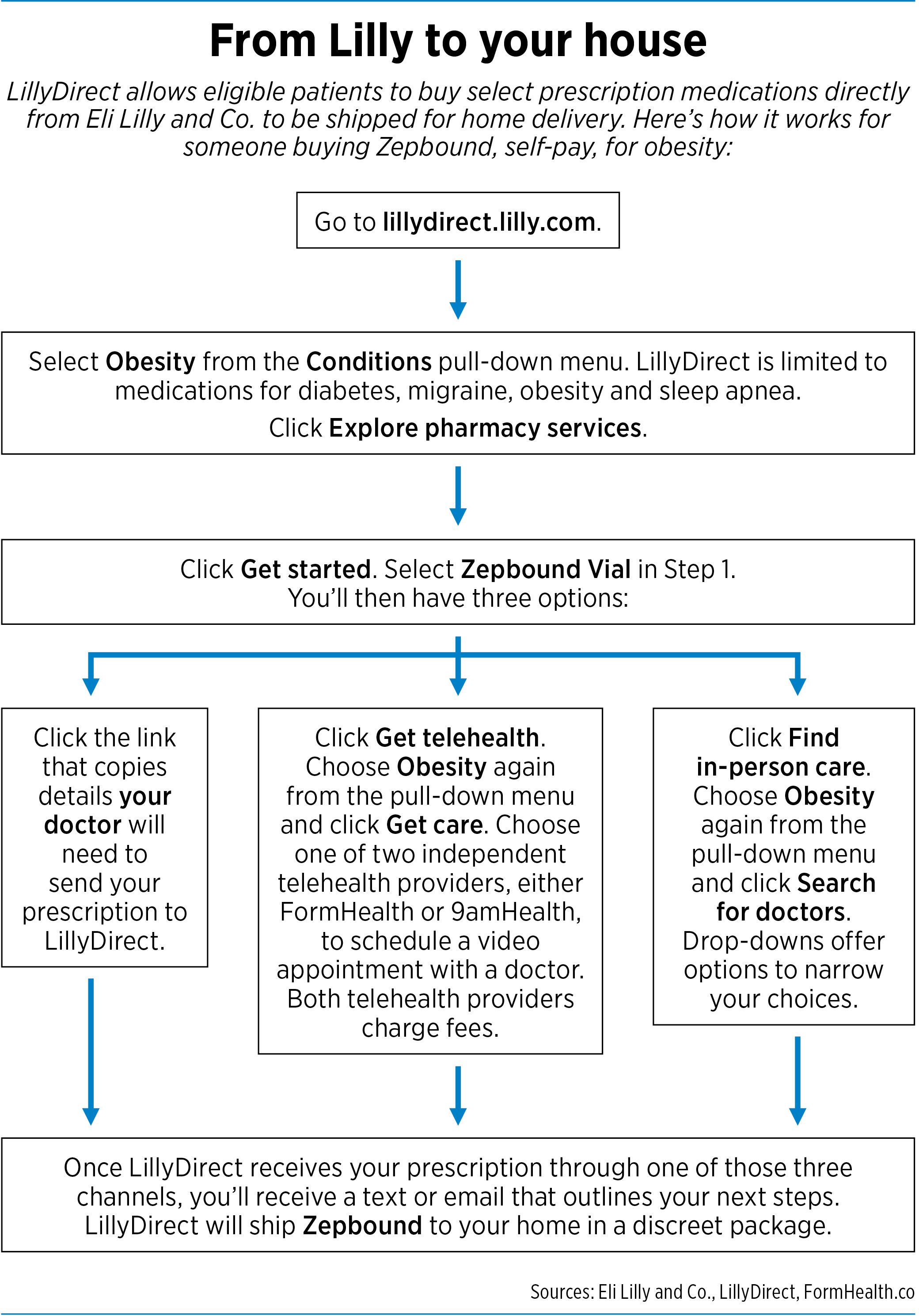
Soon, Headrick received a series of texts: First, that his Zepbound prescription had been received, then a link to pay the $399 he owed for the four-week prescription, then messages that included instructions on taking the medicine.
The 2.5 milligram dose of Zepbound arrived in two days.
“The information was right up front,” he said. “The payment was easy.”
Indianapolis-based Eli Lilly and Co. launched its direct-to-consumer business, LillyDirect, a little more than a year ago and has been ramping up efforts to connect directly with consumers on the platform since.
Although Headrick’s transaction was self-pay, LillyDirect also ships prescription medicines covered by insurance. Its focus is on medications for just four chronic conditions—diabetes, migraine, obesity and sleep apnea.
The website offers links for patients to schedule a telemedicine visit with a physician, search for a physician near them or have their personal doctor send LillyDirect a script.

In launching LillyDirect, Lilly CEO David Ricks said the idea of selling select prescription drugs directly to patients was a response to the complexities of the U.S. health care system where people often struggle to manage their chronic health conditions.
Lilly declined to provide sales or growth data for LillyDirect. But Zepbound paid for by patients outside of insurance holds potential to drive significant growth.
In fact, according to Lilly, about 10% of new patients in the U.S. obesity market who start a treatment are using Zepbound through LillyDirect’s self-pay pharmacy.
“We’ve all come to depend on the efficiency and convenience of digital solutions for our everyday needs, and we believe health care should be no different,” Jen Mazur, senior vice president and general manager of U.S. LillyDirect, said in a written statement.
In February, Lilly cut prices for patients paying for single-dose Zepbound vials without insurance by $50 a month for 2.5 milligrams, a common starting dosage, and 5 milligrams. The charge is $349 or $499 a month, respectively.
With its new Zepbound Self Pay Journey Program, the company also introduced higher dosages of Zepbound, 7.5 or 10 milligram vials, for $499 on first fill and refills if done within 45 days of the medicine’s previous delivery. If patients refill prescriptions outside the 45-day window, the cost is $599 a month and $699 a month, respectively.
Out of reach
Many health insurance policies do not cover GLP-1 medications prescribed for weight loss for patients with obesity.
A 28-day supply of four pens carries a list price of $1,086.37, according to Lilly, although prices can vary depending on insurance coverage.
The lower-cost Zepbound for self-pay patients on LillyDirect comes in single-dose vials, instead of the more expensive pre-loaded pens for injection.
Lilly’s overall growth primarily is driven by sales of Zepbound, approved for obesity and sleep apnea, and Mounjaro, for Type 2 diabetes. Both drugs use the same active ingredient, tirzepatide. Mounjaro is not available on LillyDirect.
Zepbound sales totaled $4.9 billion in 2024, its first full year on the market.
In December, Ricks said Zepbound could become the most popular drug in the company’s history.
“We know that obesity itself is a chronic disease, in turn, linked to more than 200 other serious health issues,” Ricks said during Lilly’s press conference last month to announce its $27 billion expansion of U.S. manufacturing. “While some progress has been made in obesity, for example, it still does not receive the same diagnosis, medical care or insurance coverage as other chronic diseases. We see this beginning to change as the benefits of these medicines become obvious.”
Lilly is no longer alone in offering direct-to-consumer prescriptions.
In August, Pfizer also started selling prescription drugs directly to consumers through PfizerForAll, which offers home delivery of prescription medicines, over-the-counter treatments, and flu and COVID-19 tests.
Some physicians worry that giant drugmakers selling directly to patients, often through telemedicine appointments, could keep patients from forming relationships with their personal physicians when dealing with complex conditions like obesity that often are accompanied by other health problems.
The American College of Physicians a professional organization of internal medicine specialists, issued a statement of concern on Jan. 5, 2024, the day after Lilly launched LillyDirect.
“While information on in-person care is available, this direct-to-consumer approach is primarily oriented around the use of telehealth services to prescribe a drugmaker’s products,” the ACP said. “For telemedicine services to take place responsibly, there should be an established and valid patient-physician relationship, or the care should happen in consultation with a physician who does have an established relationship with the patient.”
When contacted by IBJ for further comment on LillyDirect, ACP spokesperson Jacquelyn Blaser said the group’s statement from a year ago is still its position.
Redefining expectations
Most Lilly medicines in the United States are distributed through wholesalers—with McKesson Corp., Cencora Inc. and Cardinal Health Inc. by far the largest—to serve pharmacies, physicians, hospitals and other health care professionals, according to a Lilly regulatory filing.
LillyDirect accounts for a small percentage of Lilly’s overall revenue, but the company sees it as a growth area for reaching consumers.
The site features health and wellness information from Thrive Global, a health-behavior-change company founded by Arianna Huffington. Lilly also has an agreement with Nourish, which offers nutrition information and support for managing chronic conditions, on LillyDirect.
Headrick, the LillyDirect self-pay customer, said he’s lost 18 pounds since starting to take Zepbound about a month ago, with no noticeable side effects.
Zepbound is a weekly injectable drug that mimics hormones in the gut and the brain to regulate appetite and feelings of fullness.
“Instantly, the sensation of being hungry went away. I am starting to get a little bit of that back,” he said, adding that he and his doctor have discussed possibly adjusting doses over time. “I felt like I’ve had a very positive experience with this medication.”
The LillyDirect self-pay Zepbound single-dose vials require Headrick to use a syringe to draw the medicine and then inject it.
He said LillyDirect provided easy-to-follow instructions on using the syringe with the vials, although Headrick added: “I could see some people having some phobias with it.”

Dr. Peter Schwartz, a professor of medicine at the Indiana University School of Medicine and director of the IU Center for Bioethics, called GLP-1 drugs amazing medicines.
But he added that their high costs burden the health insurance system. He said in his experience, attaining insurance coverage for GLP-1 drugs for obesity was “relatively unusual and difficult.”
“There are real health benefits to losing the kind of weight that these medicines allow you to lose. … It may be cost-effective, but it’s still an enormous burden on the system,” Schwartz said.
Of Lilly offering self-pay options for Zepbound, he added:
“In American medicine, we allow people the freedom to pursue treatments that are not covered by insurance, if they have the means, such as cosmetic surgery, in vitro fertilization.”
Schwartz said the American health care system has grown comfortable with telehealth, but he said physician relationships need to be built on something deeper. “Medicines for chronic diseases have to be managed and monitored, and patients have to return for follow-up,” he said.
For Lilly, the investment in LillyDirect—with medical appointments, health information and medications on one portal—is part of its effort to “redefine consumer expectations of health.”
Lilly’s Mazur said, “Lilly is dedicated to expanding LillyDirect.”•
Please enable JavaScript to view this content.
At $349-$499 per month, what incentive does Lilly have to produce the drug in a much less costly pill form? I’d say none!
They should include the pen at that price- too much room for human error. People aren’t accustomed to injecting themselves