Subscriber Benefit
As a subscriber you can listen to articles at work, in the car, or while you work out. Subscribe Now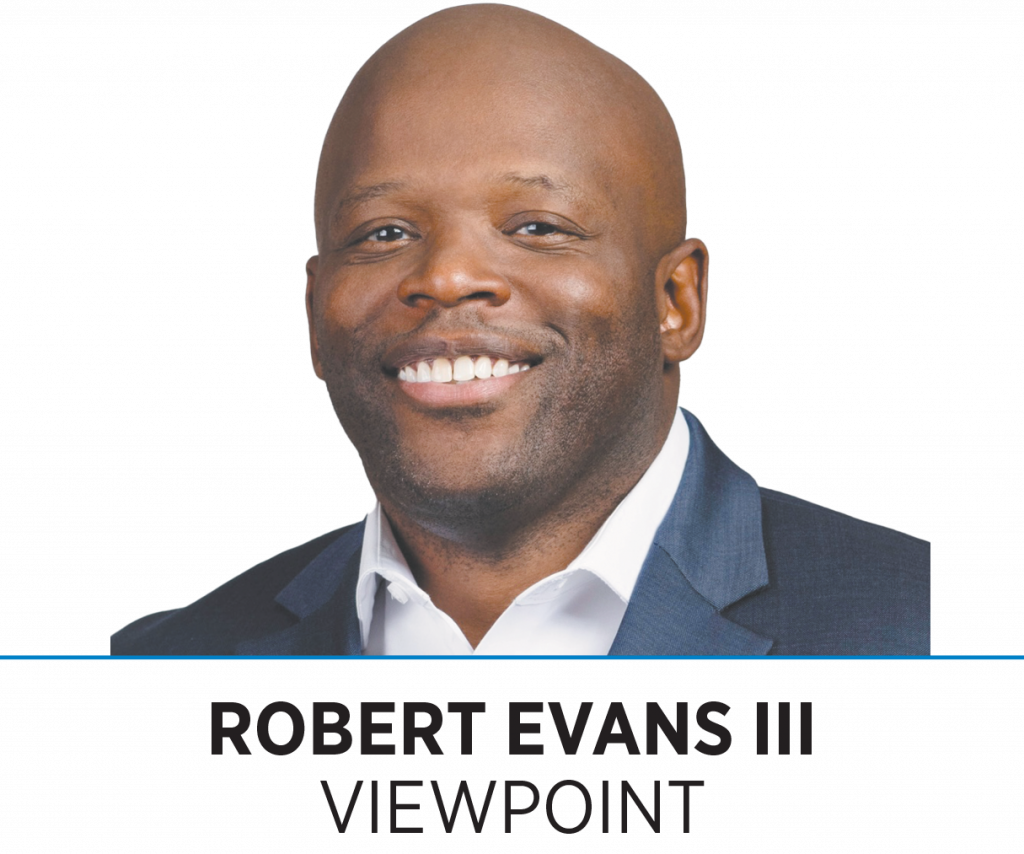
Recently, I attended “The Monument Knows: Public Conversation No. 2,” a discussion about the meaning and future of Monument Circle, hosted by the Indy Chamber.
Taylor Schaffer, president and CEO of Downtown Indy Alliance, described the monument as Indianapolis’ civic stage, while Sampson Levingston of Through2Eyes spoke about generations of personal stories surrounding it.
As a disabled Army veteran, I connected most strongly with Blaine Zimmerman, chief talent and marketing officer at the Indy Chamber, an Army veteran and Indiana National Guard infantry officer. His comments about what the monument means to veterans made me think less about stone and bronze and more about our obligations to all people who share the public spaces around it.
Inevitably, the conversation turned to the perception that downtown is unsafe. We were reminded that crime is down. But crime statistics do not explain why some people remain reluctant to come downtown.
The problem isn’t simply fear of serious crime. It’s the discomfort we’ve come to expect — and what we’re told to accept — as part of living in a big city: aggressive solicitation, unwanted confrontations, harassment, indecent exposure and behavior families should not have to navigate simply to enjoy the day. Most encounters never become crime statistics.
There is an emperor-has-no-clothes quality to the conversation. Yes, we can point to statistics showing a safer downtown. But that does not mean we should discount experiences that make people feel unsafe. Both things can be true.
Civic and cultural leaders should not dismiss these concerns. They should act. Imagine if women routinely expected men following them and aggressively catcalling them on Monument Circle, or if Black residents expected racial slurs. Would we respond by citing declining violent crime? Of course not. The public would protest, the media would shine its light, and city leaders would be expected to address the behavior. Accountability would be demanded. Why should other forms of harassment simply be accepted?
The same applies to public spaces. How can you enjoy a downtown park with your family when its benches and much of its grounds have become permanent sleeping areas? Public spaces belong to everyone, including people experiencing homelessness. But why have we accepted that compassion requires everyone else to surrender their right to use them?
While living in Chicago, I worked as a case manager serving homeless veterans and, during both of my graduate programs, studied the public policy, legal questions and government responses surrounding homelessness. I understand this issue is complicated and cannot be solved through enforcement alone. But compassion does not require abandoning reasonable expectations for behavior in society.
My wife and I recently moved to one of downtown’s surrounding neighborhoods, where we both work and play. She works for the Indiana Department of Veterans Affairs in the American Legion Mall, helping provide emergency financial assistance to veterans, including those at risk of homelessness. She enjoys biking to work, often before sunrise. Each morning, she has to wonder whether another homeless man will try to follow her into her building, as has frequently happened, or whether she will encounter someone performing an intensely private act in the doorway.
Our solution is painfully ordinary: She FaceTimes me until she is safely inside.
That is not an abstract “perception problem.” It is a woman’s lived experience, and we should believe it.
We can and should help people who are homeless while expecting everyone to follow the same basic rules of public behavior. Monument Circle belongs to all of us. So do our parks, sidewalks and streets. Helping people in crisis and maintaining safe, usable public spaces are not competing values. It should not require everyone else to surrender their right to their city.•
__________
Evans is a public manager and policy analyst whose research focus is civil-military relations in the post-9/11 world.
Please enable JavaScript to view this content.