Seattle-based developer plans $4B data center project in Indianapolis

The data center campus proposed by Sabey Corp. would occupy a 130-acre site and include two buildings totaling more than 1 million square feet.

The data center campus proposed by Sabey Corp. would occupy a 130-acre site and include two buildings totaling more than 1 million square feet.

First American Nuclear, a 40-employee startup currently based in Washington, says its Indiana-based Closed-Fuel Cycle Nuclear Energy Park will be designed to reprocess and reuse spent nuclear fuel on-site.
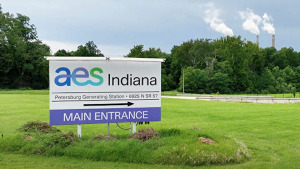
The signatures of President Vop Osili and several other councilors were missing from a letter released last week.

The Indiana Office of Utility Consumer Counselor, which acts on behalf of utility customers, did not join the settlement. Neither did ratepayer advocacy group Citizen’s Action Coalition.
The proposal appears to have bipartisan support. But it’s unclear how much the City-County Council, which has no actual authority over the utility, can truly influence the process.
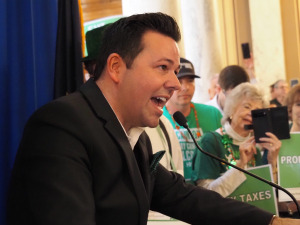
Indiana’s second-highest official has thrown his weight behind calls for a sales tax moratorium on utility services—but, even as rates rise, the idea faces a difficult path through the General Assembly.
With the explosive growth of Big Tech’s data centers threatening to overload U.S. electricity grids, policymakers are taking a hard look at a tough-love solution: bumping the energy-hungry centers off grids during power emergencies.

Heat advisories and extreme heat warnings stretch from Nebraska to Long Island and from New Hampshire to northeast Texas.
The statewide average increase was nearly double the prior year’s record increase of 9.3%, the analysis found.
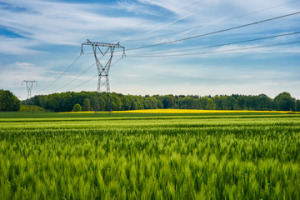
Plan call for the line to deliver electricity from western Kansas about 800 miles, across Missouri and Illinois and into Indiana, connecting there to the power grid for the eastern United States.

The state agency tasked with protecting utility consumers has asked regulators to reject Duke Energy Indiana’s plan to retire two coal-powered units and replace them with new natural gas units.
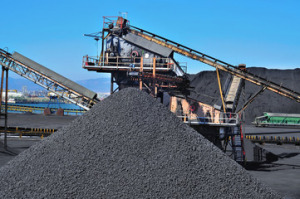
Coal-fired power plants are becoming more valuable now that the suddenly strong demand for electricity to run Big Tech’s cloud computing and artificial intelligence applications has set off a full-on sprint to find new energy sources.
The bill will expedite approval processes for large-load customers like data centers and create cost- recovery mechanisms for projects utilities take on to serve those big customers.
The president directed federal agencies to loosen various restrictions on coal mining, leasing and exports.

The spike in demand for electricity is being driven, in large part, by the artificial intelligence race as tech companies are snapping up real estate and seeking power to feed their energy-hungry data centers.
The Indiana Utility Regulatory Commission, or IURC, gave approval for an increase of $395.7 million a year for rates and charges, down from the $491.5 million hike requested by Duke—a decrease of 19.5%.

Purdue officials announced in May that the university was selected to study small nuclear technology and how it can potentially be used to power Indiana in the future.
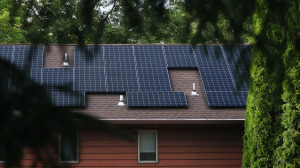
Residents could have solar panels installed on their rooftops. Or a renter could subscribe to community solar “micro-grids” that can reduce their bills.
U.S. District Judge Tanya Walton Pratt ruled that an act signed into law by Gov. Eric Holcomb in 2023 that gives local utilities the right of first refusal on electric transmission projects discriminates against interstate commerce.
The energy parks would provide a much-needed reliable source of power as aging U.S. grids struggle to meet demand from artificial intelligence and electrification of homes, vehicles and factories.