
Subscriber Benefit
As a subscriber you can listen to articles at work, in the car, or while you work out. Subscribe Now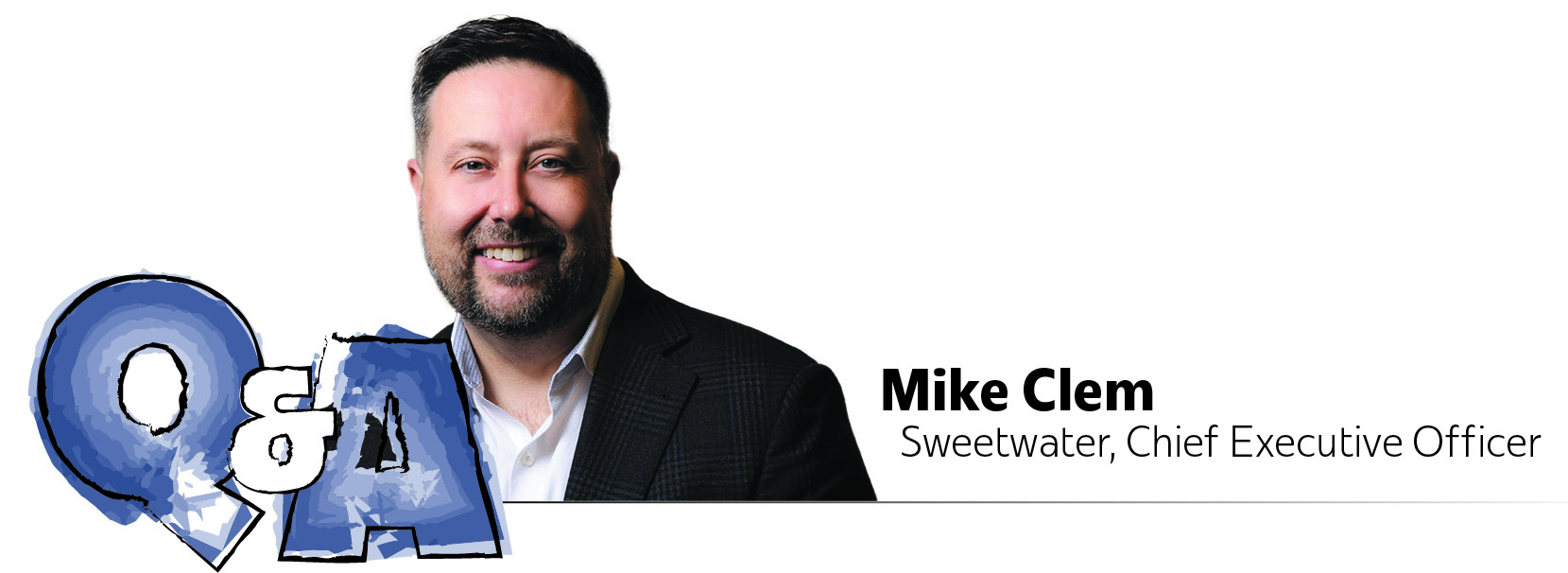
Chuck Surack founded Sweetwater Sound in 1979 as a four-track recording studio in the back of his Volkswagen bus and grew the company into the largest online music retailer in the country.
In 2021, Surack sold a majority share of the company to Providence Equity Partners and stepped away from day-to-day operations to focus on Surack Enterprises, a holding company for his other firms.
But Surack’s focus on getting the details right—for customers, employees and even the community—has stuck. In fact, Sweetwater’s relentless effort to build relationships with customers has helped the company lean in during economic challenges, including when tariffs are driving up the costs of goods.
IBJ talked with CEO Mike Clem about Sweetwater’s huge Fort Wayne campus, which includes—in addition to the company’s headquarters and distribution center—the nation’s largest music store, a performance pavilion, recording studios, professional service center, theater, café, salon and more.
I think a lot of people—including me—have an oversimplified vision of Sweetwater, that’s it’s just an online retailer. So tell me more about Sweetwater.
Sweetwater Sound is a 45-year-old company founded in 1979. It’s the nation’s largest online retailer of musical instruments and technology for creators. It’s about $1.7 billion in revenue, 2,500 employees, mostly here in Fort Wayne, Indiana. About 12 million customers, anyone from the kid down the street learning to play guitar up through, well, name a famous artist, we very likely work with them.
About a third of our business is what we would call B-to-B: Houses of worship, schools, cruise ships, pro sports arenas, where we’re not only selling the gear but we actually install it, too.
That’s one very key differentiation. We are not pure-play, e-commerce, like an Amazon transaction. What we do is true, consultative, one-to-one relationship-based selling.
The heart and soul of that are 600 of what we call sales engineers who are recruited from all over the country. You have to have a pretty prestigious background in music to even be considered. Maybe you toured with so and so, used to own a recording studio. You come to Fort Wayne, Indiana, and you go through 13 weeks of what we call Sweetwater University before you ever interact with a customer.
And then as a customer, you get matched up with one of these experts who shares your instrument, your genre, your passion. And every time you interact with us, you get that same person, so you’re truly building a relationship over time. We’re getting to know you as a person. What are your actual goals as a creator? How can we help propel you on that journey?
We’re here for lifelong journeys with customers, not one transaction at a time.
So you’re not just talking about forming that long-term relationship with the church or another business. If I am in a small garage band—which I’m not—but if I were in a garage band and needed to buy some basic equipment, I’m going to deal with the same person over and over at Sweetwater?
You get the same VIP experience as Elton John calling in. And we’re going to get to know you. “What do you need? You want to record an album? You want to volunteer at your church? You want to play live?” We’re going to work with you figuring these things out.
That shapes how we make recommendations for certain types of gear. But in between those purchases, we’re also going to check in three, six, 12 months later. “Hey, how’s that working? How’s the album going? How can we help? Oh, you’re stuck there—have you tried this technique? Have you seen this article? We could introduce you to this person.”
It’s more than selling gear. It’s, how do we propel you? And that’s how we add more value. So when you buy from Sweetwater, we do things like a free two-year warranty, free shipping, this tech support. If your gear is not working right, we’re going to help you for free over the phone.
There are some really unique things we do with guitars. For example, every guitar over $299, we take it out of the box. It goes through a 55-point inspection where we’re actually cosmetically checking it over. We’re looking for playability. We’re actually making adjustments. And then it goes through what we call Guitar Gallery, where we take high-res photos. So when you see it online, even if I’ve got five of the exact same guitars in stock, you can choose. “You like the woodgrain pattern the best on this one? We’ll send that to your door.”
So we’re forming true relationships, true expertise, adding more value. That’s the secret sauce.
I assume most of the products that you sell, or at least many of them, are available in other places, and this is how you bring customers back.
It is. And that’s what I think has made us so resilient through this tough economy and all the tariffs issues … investing deeply in true relationships and adding true value. We’re not racing to the bottom on price. And that’s how we make it more than a commodity sort of sale. There’s just a much bigger goal here to really invest in humans, because it’s just the right thing to do for human beings.
So obviously, though, you are affected by tariffs in some ways. Tell me what the experience has been like.
It resembles a lot of the other downturns we’ve seen in the economy. At Sweetwater, during these kinds of times, we’re blessed with size and scale. And so we actually push in during these times as other people are kind of pulling back.
And again, because we’re not selling on price and because we can add more value, we can stay more resilient than others. We can have the inventory. We can still do promotions and take care of customers. We’re all starving musicians, and so we do see some people who are looking for a deal, they’re looking for a promotion, and we’re able to be that solution. Even in a tough economy, we can still get gear … in musicians’ hands that’s affordable and keep them doing what they need to be doing.
We do see customers reaching for financing, a lot more payment solutions. So we try to offer creativity there, and listen, we’re just going to work with you, and we’re going to figure out how to keep you making music, even when times get a little tough.
Do you provide financing through other vendors? Have you branched into any of it yourself?
We have the most sophisticated payment solutions in our industry. We have one option for extended-term financing on the Sweetwater-branded credit card. We offer Affirm as a payment solution, which is really popular with this generation. And then we have a very unique in-house program where we offer three- and six-installment plans where we can actually control the approval rate. That really helps us serve our customers well because we can reach for any one of these as needed.
This brings me back to the idea that I had an oversimplified idea of what Sweetwater does. It sounds like you have to have experts in a lot of areas.
For this business model to work, when you call Sweetwater, you have got to talk to an expert. And so our founder, Chuck Surack, was always smart enough to know there’s such a thing as growing too quickly, especially when you’re focused on white glove customer service and expertise. And so we have been very careful to grow over four decades now from technology into guitars, into drums, into school instruments, one category at a time, so that we could build up the right expertise and the right training.
We do a lot of data science to route the right customers to the right people, because we want passion to ignite when you get on the phone, not just expertise. We really want to make sure we’re serving that whole customer journey, and so matching those customers into the right experts is critically important.
What are your biggest sellers? Are they instruments? Is it equipment? Is it a combo?
The majority of the sales are musical instruments and anything related to recording technology, which could be speakers, microphones. But the fastest-growing right now is our school instruments—band and orchestra. And that growth is actually really heartwarming. It’s about investing in these young musicians and really growing the next generation.
So one thing that’s very new for Sweetwater is that we’re not just selling the equipment, but we now rent instruments nationwide. There’s a real challenge in school music right now, especially as you see some of the funding being cut at a federal or state level.
About a million students each year will start in a band program, and about 60% will give up in that first year. And as we talked to educators, what we found out is that the number one reason students give it up is that it’s just not a great experience. The instrument itself is just kind of old and clunky. And so we have partnered with educators across the country. We’re now renting an instrument and providing an upgraded, quality instrument with a bunch of add-ons and extra value, and we’re starting to see that curve bend a little bit. We’re actually watching more students stick with the program, and so that’s the fastest-growing area.
That sounds like a combination of business and philanthropy.
There are a number of wonderful organizations across the country and even here in Indiana [that] are sharing that same passion. And so a lot of our philanthropic effort does go into supporting access to music, whether that’s in the schools, whether that’s for underprivileged communities, whether that’s certain groups that aren’t getting access.
You mentioned a large percentage of your workforce is in Fort Wayne, although it sounds like some of the work could be done anywhere. Why is it important to have so many workers in Fort Wayne?
We get asked all the time, “Why aren’t you in Nashville? Why aren’t you in LA?” Listen, this is Indiana’s home for our founder, Chuck Surack. This is my home—born and raised. And we have a great pride in not just growing this company, but what does it mean to be a pillar in this community? And a lot of our philanthropies are about how we give back to Fort Wayne.
We talk a lot about, what does it look like to have heart for this community? And we host a number of events. We’re able to bring so many of these artists and concerts and events and workshops into Fort Wayne, and we take great pride in sort of putting Fort Wayne and Indiana on the map as a state really focused on music. Indianapolis has a very similar mission. And so we take a lot of pride in being part of that story, too.
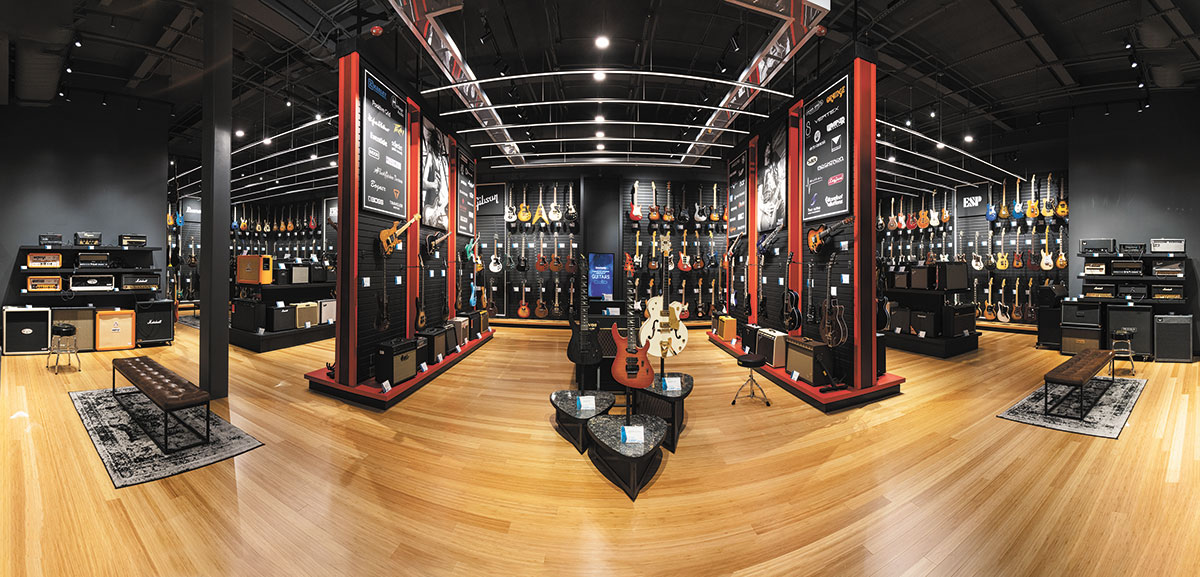
You’re an online retailer, but in Fort Wayne, you have the largest music store in the country. Is that right?
It is right on our campus here, under 500,000 square feet.
We have invested a lot in the culture here: 2,500 employees, the largest music store in the country. We have a diner, we have a fitness center, we have a personal trainer, an arcade, a doctor and a nurse. I could keep going. We have built this because that culture just is so important to us.
If we’re going to recruit all these musicians from across the country and sort of displace you from your normal support network, it’s really important that [we] build up all those services around you [to] make life simpler. But also, because we’re a relationship-based company, we want to have a great culture, happy employees, so that we can reflect that positivity into these phone calls and take care of musicians.
Why do you think it’s important to have an actual store? Why is it important for someone to actually be able to hold a guitar?
It’s a very emotional purchase. I want to see it. I want to feel it, hear it. And so, whereas we do most of our sales online, we really have built up our store as a destination store. We will have customers drive from states away.
Because as a buyer, I want to come hear this guitar through this very specific amplifier, and I want to compare that to this other very specific amplifier. So we will set you up in a demo room for half a day. There aren’t many places in the country that you can do that. But we’ve made that investment.
We also work really hard with our online experience to sort of mimic that in-store experience. And so when I talked about those guitar inspections or photos or some of the other things we do with video and high-res media, we’re make a big investment into helping you feel like you’re up close and personal with that instrument, even if it’s an online purchase. That has served us very well.
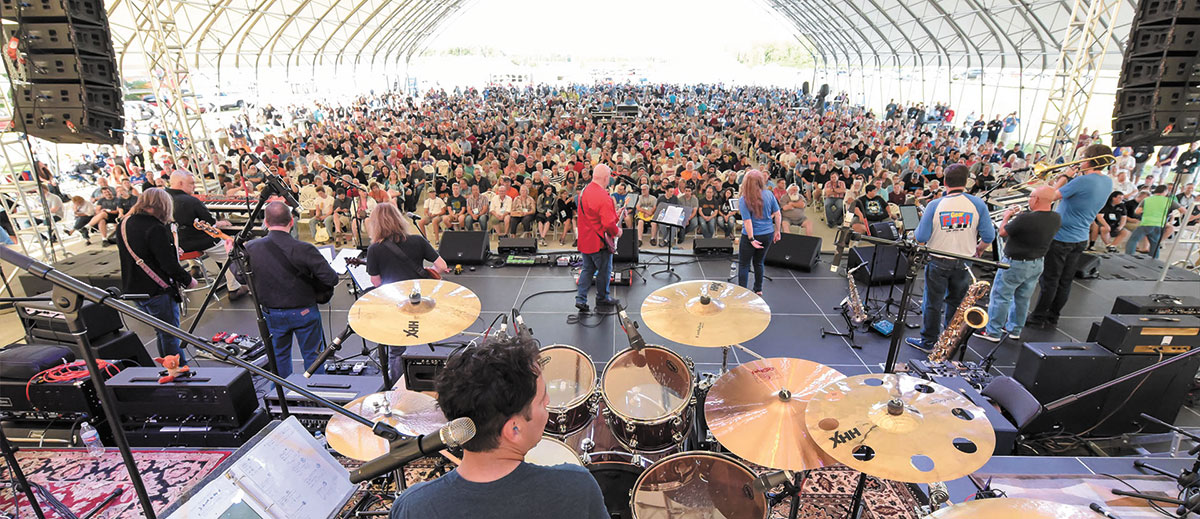
You also have a pavilion for performances on the campus.
Yes. Shame on us if we’re the largest online seller of music gear and not supporting that in our community. And so a few years ago, we invested in an amphitheater, and this summer, we’ll do somewhere around 20 shows, bringing in major artists and just bringing more music into the city.
Tell me about your background. How did you get started at Sweetwater? I think you mentioned you were a drummer.
I grew up in this area, in a very creative family, and almost went to music school. At the last minute, I changed and ended up at Purdue in engineering and technology. This is the mid ’90s, just as the internet is becoming a thing, and I just fell into this opportunity to build some of the earliest retail technology for some big brands. I kind of carved out a reputation and then found my way to Sweetwater in 2003 when it was a much smaller company—only $4 million in online sales.
I just had an opportunity to partner with Chuck and really build up that online presence. And so now, almost 22 years here with the company, and what I love is, there’s a story of digital innovation that’s more than you would expect between two cornfields in Indiana. You marry that with this old-school, customer-service mindset and over-the-top attention to detail and then you see all of that inside of a company with a heart and a moral compass. It’s just such fun to be a part of a company that thinks that way.•
—Lesley Weidenbener
Please enable JavaScript to view this content.
Their customer service sets the example for ALL others. Second to none.