
Subscriber Benefit
As a subscriber you can listen to articles at work, in the car, or while you work out. Subscribe Now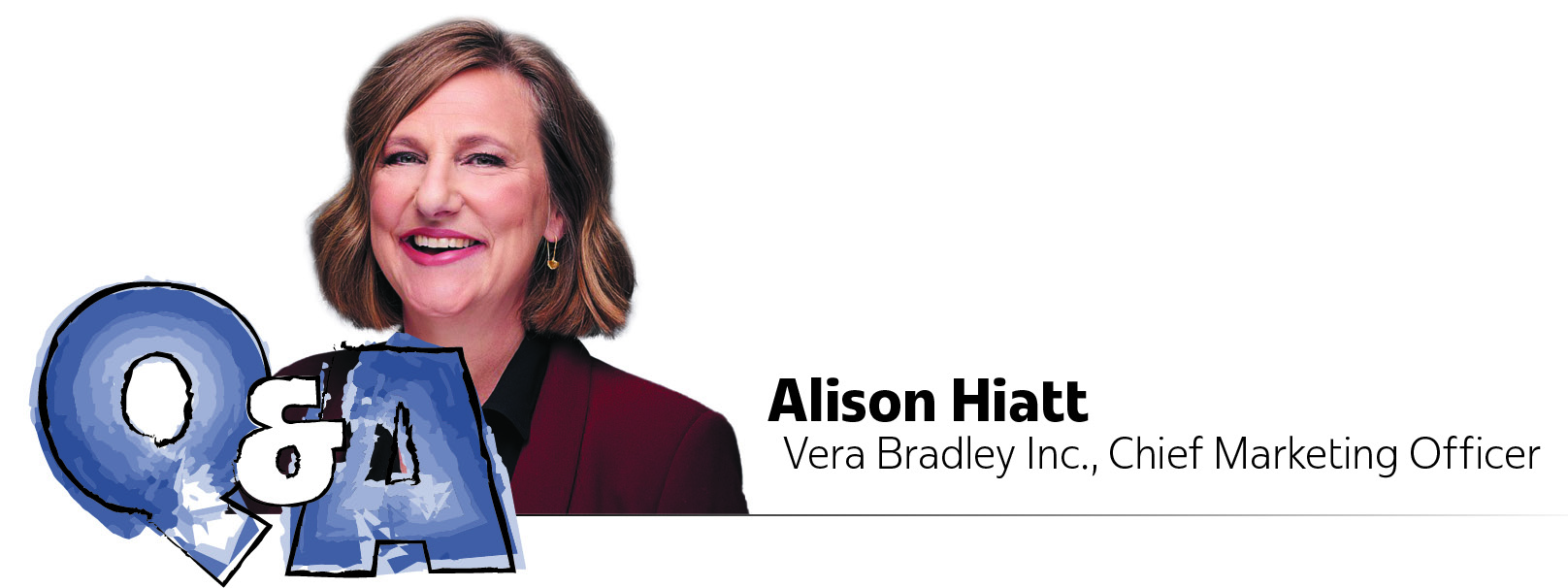
Fort Wayne-based Vera Bradley Inc. launched a rebrand nearly a year ago aimed at modernizing its traditional bags, luggage and other products with new fabrics and silhouettes and the goal of drawing new customers and reinvigorating sales.
The change was about taking what customers already love about Vera Bradley—color, prints and practicality—and updating that with performance fabrics and modern shapes and designs, said the company’s chief marketing officer, Alison Hiatt.
She calls the new look “heritage evolved” and said it’s helping people rediscover the brand or even try it for the first time.
And Hiatt said the changes have occurred with the blessing of the company’s founders, Barbara Bradley Baekgaard and Patricia R. Miller, who created the company in 1982 after becoming frustrated that luggage was so colorless and boring.
“While Pat and Barb are no longer involved in the day-to-day business, they were very supportive of these changes and making sure that the brand stayed relevant and alive,” Hiatt said. “And so it’s been really special to have them along as we’ve gone through these different stages, to have their support as we’re making tough choices.”
The changes have been challenging, Hiatt acknowledged. Sales were down 21% in the company’s last annual report. And the company’s stock price is down 60% over the past year.
In fact, just a few days after this interview, Vera Bradley announced that that its CEO, Jacqueline Ardrey, was stepping down amid declining sales.
Hiatt acknowledged the sales challenges but said she’s optimistic about the company’s multiyear strategy for growth.
“Results don’t come as fast as everybody wants, and that’s for certain,” she said. “But we know that—from studying other brands and the time that it has taken for other brands to turn around … it is a multiyear strategy.”
IBJ talked with Hiatt about what’s changed and what’s ahead.
What were the goals of the rebranding? And how is it going?
Project Restoration has four pillars of focus, and it is very much a multiyear project to really rethink our product, our customer target, our brand and overall, our channels.
Last summer was the initial launch of those efforts. And so we’re very excited because we’re going to lap ourselves. And that’s always really nice, because as a business changes, that change is hard for consumers. It’ll be interesting to grade ourselves once we lap
that change.
The whole genesis of this was that over the years, unfortunately, Vera Bradley had lost relevance, and with that, had really lost overall sales, customers, brand awareness, you name it. When we look at what we were trying to do—and we’re in the midst of doing—it was really a need to refresh and evolve. Consumers change, what they want changes, their outlook changes and so on. …
We have definitely noticed we are bringing on a different type of new customer, one that we have not brought on to Vera Bradley in quite some time.
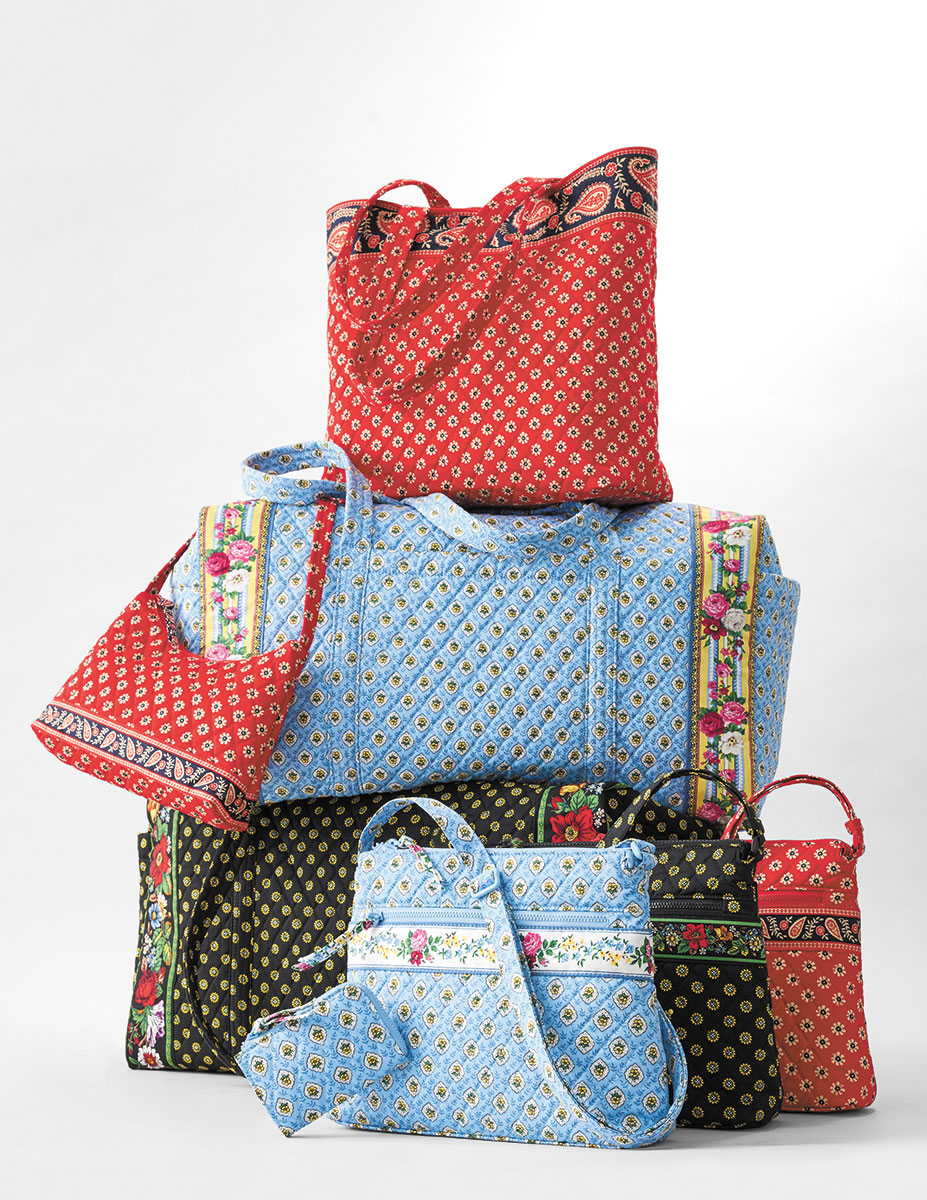
The product was a refresh in print outlook and in silhouette and in fabrics—just really updating to give people options and choices. Cotton is still our tried and true and our focus. However, we know that there are nylons and other things that are a little more modernized that people want the option of.
When we think about channel, we obviously have the dot-com, we have stores and then we have wholesale. We know where people have been shopping has really changed over time, particularly even in the last 10 years. And so with our refresh, we have had a lot of new conversations with new brands and new retailers that you’ll start hearing about as early as [this] week’s earnings call. So we’re starting to—as we say—“be where she shops.” … And since the refresh, we’ve had calls from retailers that we have not normally had calls with.
Are these retailers that appeal to younger customers? Or higher-end customers?
I would say it’s a couple of different directions. One we still have a relationship with is Urban Outfitters. We did a collaboration with them. … So that’s been more on the younger side.
I would say there’s other retailers that you’ll hear about that are more of the “where everybody’s shopping these days.” We have also increased our presence on Target.com in particular. We’re also seeing a lot of energies with our dot-coms as well. …
We have been able to bring on younger customers. … That doesn’t mean that we don’t love our older customers, but for the health of the brand, we really needed to diversify our portfolio to make it a little more risk-averse but also to make sure that we’re appealing to a new generation of Vera Bradley fans.
For many people, their moms had Vera Bradley. And so it’s been really fun to see this resurgence of people who once had Vera Bradley be a part of their life rediscover it and say, “Why did I stop carrying this bold and bright and beautiful bag?”
We’re really in a time where people are embracing maximalism and self-expression and color and joy—and Vera Bradley really fits the bill there.
I just got back from a weekend with my mom, my sister and my nieces, and we were all carrying some type of Vera Bradley bag.
Yeah, that’s fun. There are very few brands that have the ability to authentically speak to those different generations, and so we’re very excited to keep that tradition going and keep the tradition of bringing on the new generations.
If you look at it financially—and this has been public—making these changes has been hard in that we’re some of the deeper-discount focus. That doesn’t mean that we don’t have discounts. It just means that we need to make sure that we’re building back the equity of our brand.
Over the years, we’ve opened up a lot of outlet stores. We had a lot of great deals. But we need to make sure that we’re balanced. Again, it’s not bad to be discounted, but we need a balance, and there’s been work on that front.
Do people tend to start thinking they’ll only buy with a discount?
We get trained, yes, and it’s not that [Vera Bradley doesn’t] want to give good discounts, but we also want to make sure that we’re protecting the value that is placed on the products as well.
Tell me about what kinds of changes in the product you think are appealing to a younger audience.
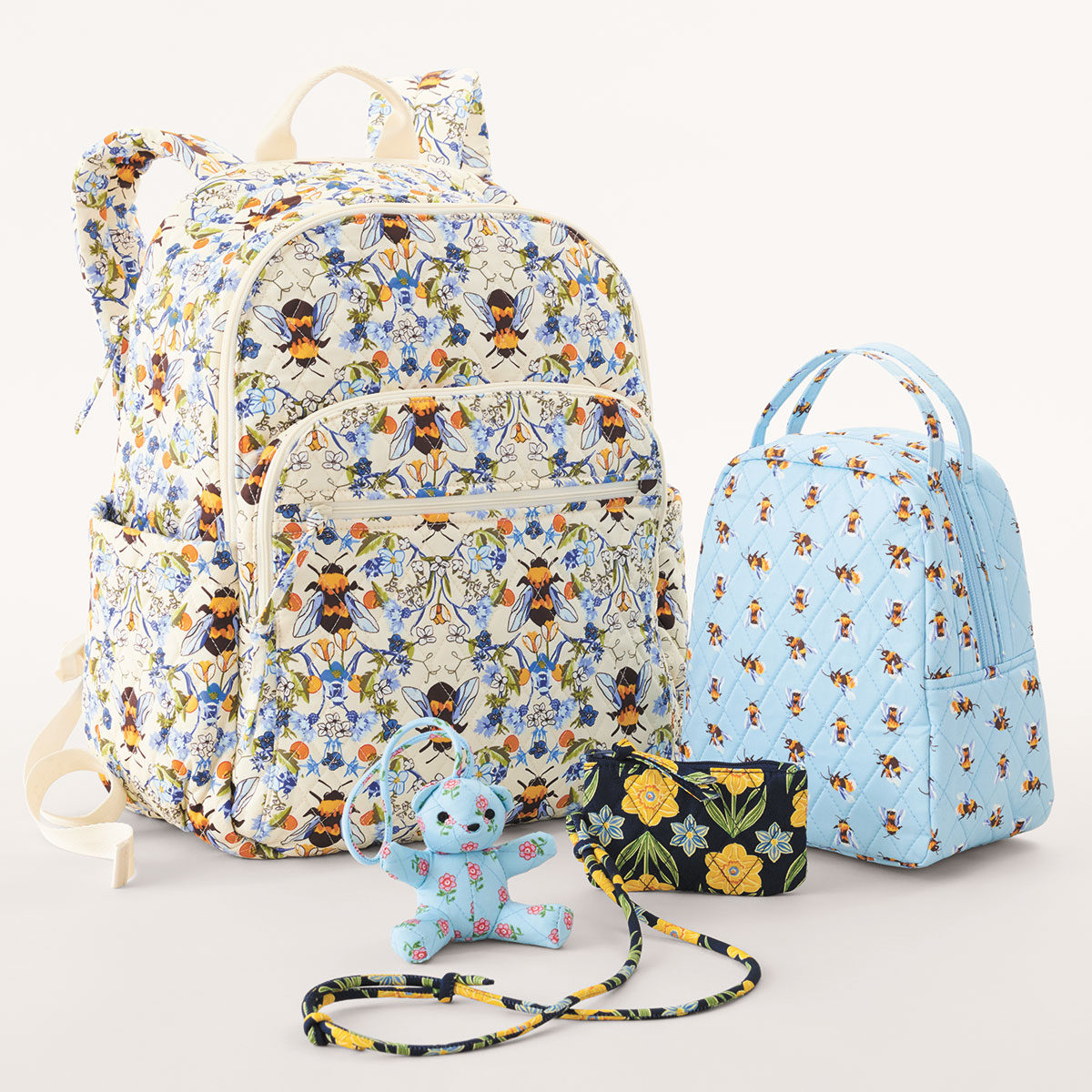
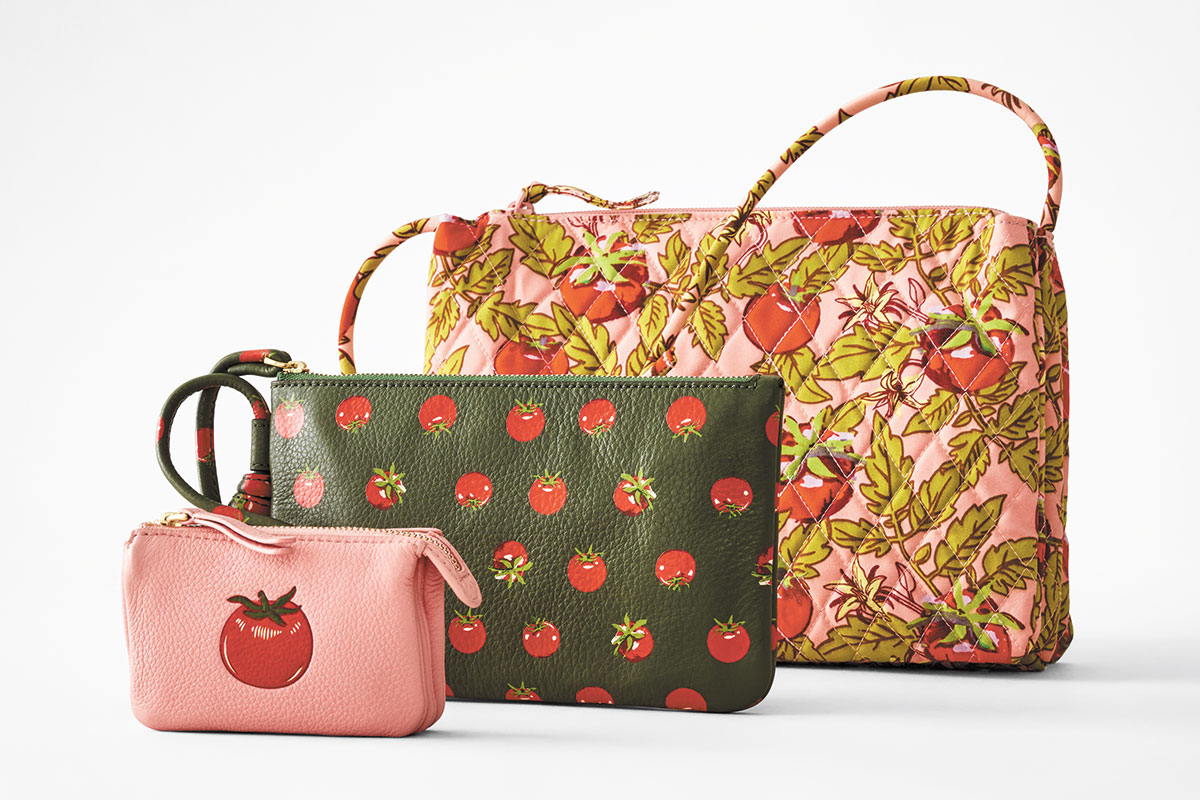
The design team has come up with this concept that is “heritage evolved.” So the heritage is our paisley, our borders, some of these more ditzy prints. Those are really popular. Those are really the marquee, but [the designers] don’t want it to be necessarily exactly like it was. They want to have a little bit of an updated spin, whether that’s color or novelty.
This spring, we launched a whole bunch of prints that had tomatoes on them, and they were super successful. Same thing with bees, done in a little more of a slightly modernized, elevated way that’s still fun and accessible but just evolved.
So it’s taking our heritage—the things that people love about us—the color, the icons—but then we are updating those ever so slightly.
Do you use influencers on social media?
We’ve always had people that naturally just love the brand that we will work with. I want to come back to the word “authentic.” We are not in the business of having people show up that do not authentically carry Vera Bradley, love Vera Bradley. So we have continued to have relationships or seek out people that want to have this brand.
We recently worked with Wishbone Kitchen, if you’re familiar with her. She recently was going on a book tour and needed some stuff to travel with, and she loves Vera Bradley. So we’re like, yes, this makes a lot of sense. And she posted something recently of the bag that she chose—her duffel—and how much she loved it.
We’re continuing to do that from all different areas of interest, of influencers: TikTok and Instagram and Facebook.
When an influencer tells people about a bag, for example, can you see the impact in sales right away?
We can, actually. It’s really fun to watch. But I think more than sales, it’s about the engagement with our followers and/or new followers that are reconnecting with us on social media to follow along. More than the one-time sales, it’s about how many people are we bringing and introducing or reintroducing back into the Vera world that want to stay in touch with us?
You’ve mentioned there are growing pains with change. Have you seen an impact on sales among your traditional customers?
It’s public record in terms of what our sales have done and the tough choices that we’ve had to make relative to, when the size of the business decreases, the size of what is supporting that business has to decrease as well. But we do feel good about the multiyear strategy.
Results don’t come as fast as everybody wants, and that’s for certain, but we know that—from studying other brands and the time that it has taken for other brands to turn around, whether it’s Abercrombie or Crocs or Coach—that it is a multiyear strategy. So we are encouraged by what we’re seeing.•
—Lesley Weidenbener
Please enable JavaScript to view this content.
Editor's note: You can comment on IBJ stories by signing in to your IBJ account. If you have not registered, please sign up for a free account now. Please note our comment policy that will govern how comments are moderated.