
Subscriber Benefit
As a subscriber you can listen to articles at work, in the car, or while you work out. Subscribe Now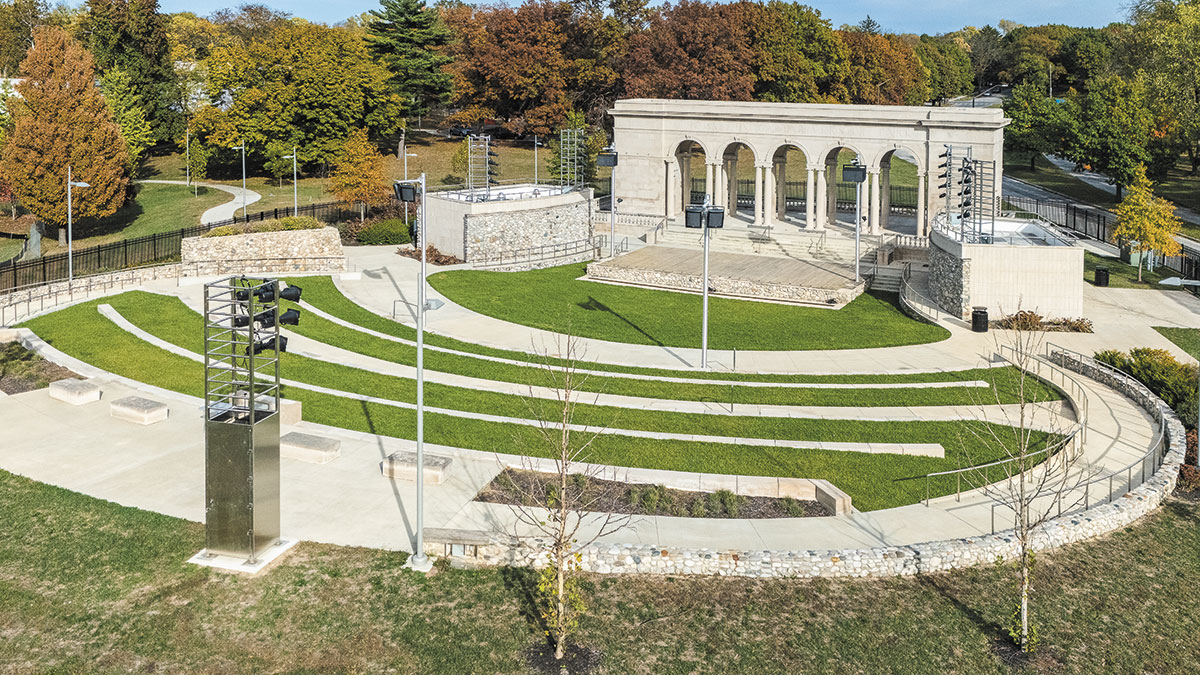
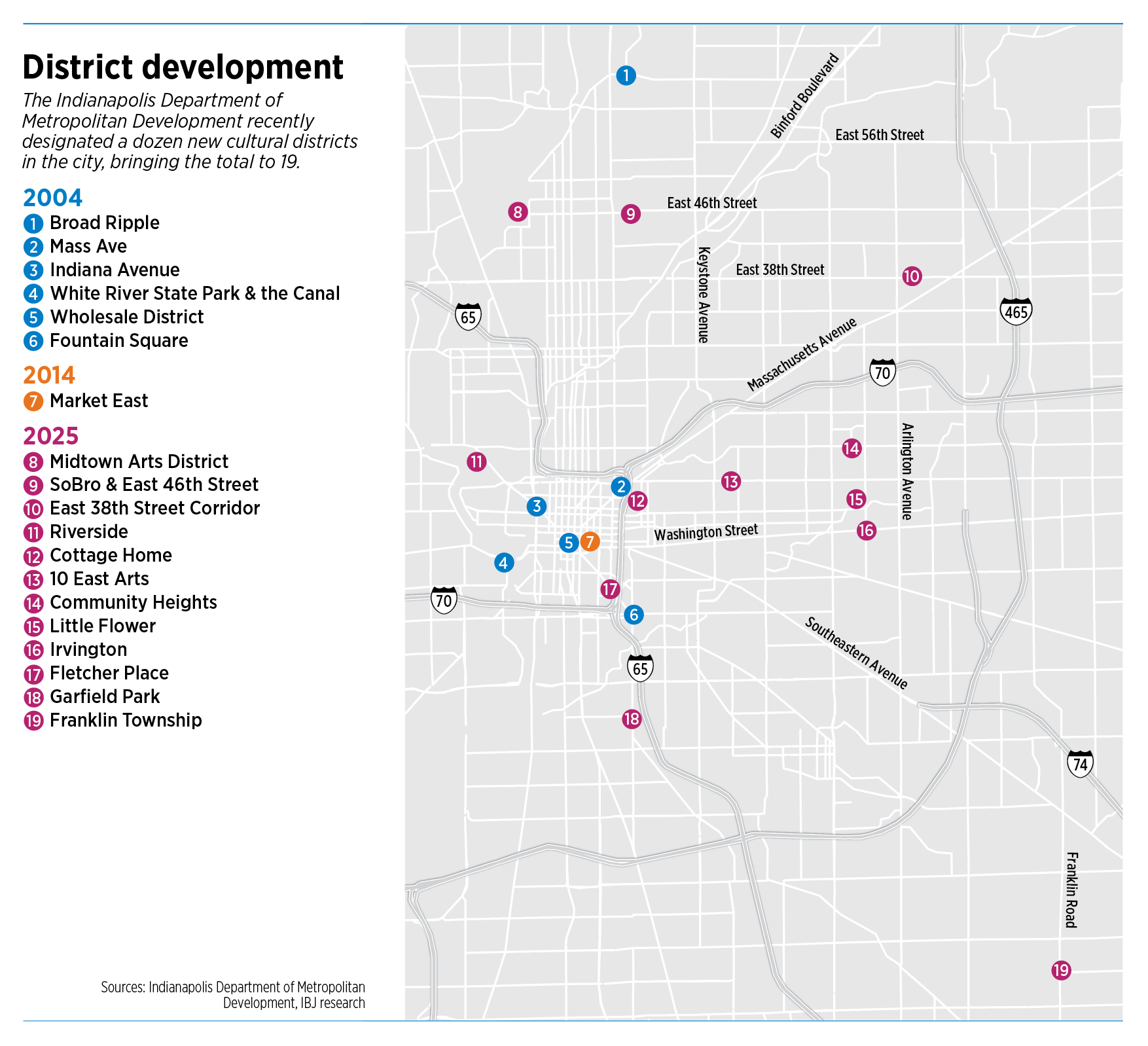
Mass Ave, Fountain Square and Broad Ripple might be the areas that spring to mind when you think about Indianapolis’ cultural districts, a designation the city has used for places that offer arts, dining and experiences that make an area unlike any other.
But now you can add Little Flower, the East 38th Street Corridor and 10 East Arts to the list. They are among 12 new districts that Mayor Joe Hogsett’s administration has designated as part of a program that is distributing $500,000 in one-time funding across the city.
The move nearly triples the number of highlighted areas and recasts perceptions of what areas are worthy of recommending to visitors.
The Cottage Home neighborhood, on the east side of downtown between I-65/I-70 and Arsenal Tech High School is one of them. The annual Cottage Home Block Party, an event established in 1984, clinched the designation as part of a Department of Metropolitan Development program that invited neighborhood organizations to apply for funding this summer.

Margaret Henney, a member of the Cottage Home Neighborhood Association, submitted Cottage Home’s proposal. The neighborhood received $4,000 out of a pool of $500,000 distributed among existing and new cultural districts.
“I think it’s exciting for the city to recognize places that have their own unique culture,” Henney said. “Some of those are going to be bigger than others. Some are going to be smaller and a bit more niche. I think everyone loves to be recognized. We like to say, ‘Hey, even though we are newly named a cultural district, our culture isn’t new.’ I think a lot of the other communities given this designation will probably feel the same way.”
Indianapolis now boasts 19 cultural districts. Besides Cottage Home, the other 11 new ones are the following:
◗ 10 East Arts, proposed by John H. Boner Community Center, 2236 E. 10th St.
◗ Community Heights, a neighborhood anchored by Community Hospital East, 1500 N. Ritter Ave.
◗ East 38th Street Corridor, an area west of I-465 selected as a Lift Indy neighborhood in 2022
◗ Fletcher Place, a Virginia Avenue neighborhood known for restaurants Milktooth and Bluebeard
◗ Franklin Township, which includes the communities of Acton and Wanamaker
◗ Garfield Park, proposed by Big Car Collaborative
◗ Irvington, an east-side neighborhood known for historic buildings Benton House and Bona Thompson Memorial Center
◗ Little Flower, an east-side neighborhood bordered by 16th Street to the north, Emerson Avenue to the east, 10th Street to the south and Sherman Drive to the west
◗ Midtown Arts District, proposed by Butler University
◗ Riverside, a neighborhood east of the White River that includes 16 Tech Innovation District and Taggart Memorial Amphitheater
◗ SoBro & East 46th Street, part of the Meridian-Kessler neighborhood that extends east along 46th Street to the Nickel Plate Trail
Among grants awarded to new cultural districts, Riverside and East 38th Street Corridor led the way with $50,000 each.
Henney said Cottage Home requested $21,000 and received $4,000.
Houses primarily built from 1870 to 1900 give Cottage Home its name (which emerged in the mid-1980s). Although Henney admits to a slight bias, she described the neighborhood’s block party staged on the second Saturday of October as the city’s best community gathering.
“It’s sort of a mishmash of fall celebration with a little bit of Halloween,” Henney said. “Some people will come dressed up. It’s usually kids who are excited to wear their costume more than just once. But the theme is community and togetherness.”
In 2001, Mayor Bart Peterson launched initiatives that led to the establishment of cultural districts in the city. By 2004, six districts—Broad Ripple, Fountain Square, Indiana Avenue, Mass Ave, White River State Park & the Canal and Wholesale District—were in place. A seventh cultural district, Market East, was added in 2014.
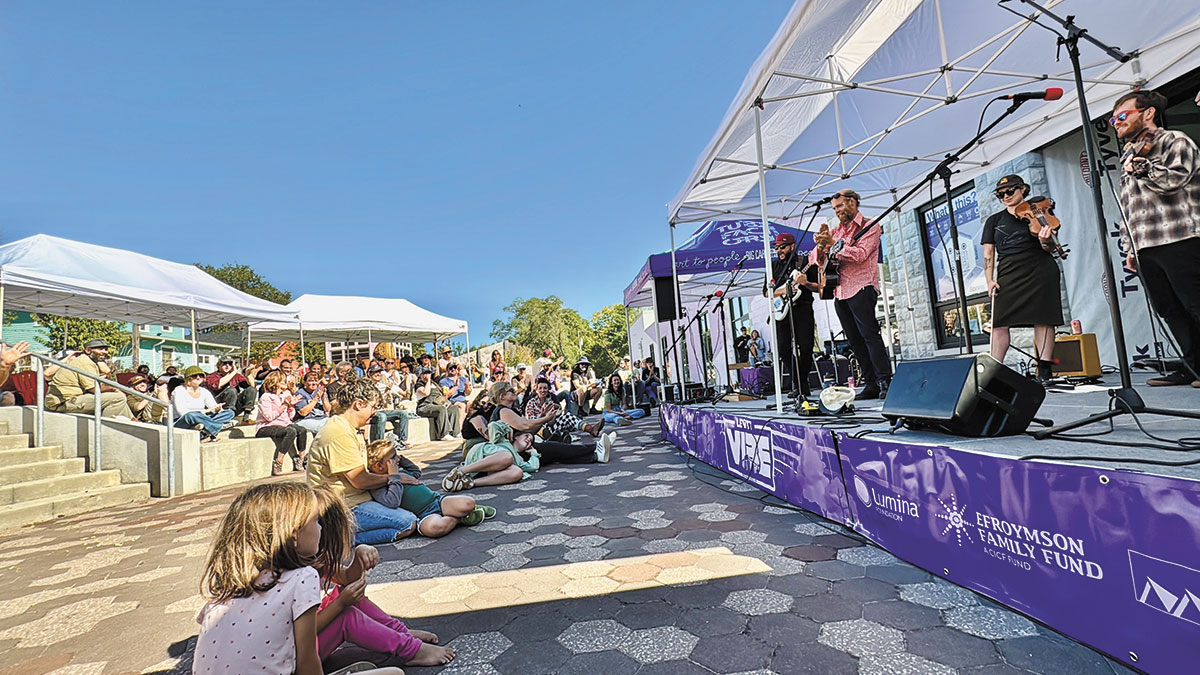
This year’s one-time grant program awarded $100,000 to Broad Ripple for the installation of festival string lighting on Broad Ripple Avenue and artist support for the neighborhood’s Third Thursday events. No other cultural district received more than $80,000, which Fountain Square collected.
Carmen Lethig, a deputy director at the Indianapolis Department of Metropolitan Development, said 36 groups applied for funding or cultural district designation. When the program was announced, the DMD didn’t anticipate a minimum or maximum number of new districts to be approved, Lethig said.
Five existing cultural districts were awarded funding. Nine applicants were awarded funding and cultural district status, and three were awarded cultural district status but no funding.
An eight-member selection committee was made up of members from the DMD, the Department of Public Works, the Mayor’s Office Community Engagement Division, the Office of Finance and Management, Indianapolis Economic Development Inc. and the City-County Council.
The nine-member Metropolitan Development Commission approved the selection committee’s recommendations.
Attracting visitors
Lethig said the applications for funding underscored efforts by organizations and residents to make their neighborhoods attractive to visitors.
“We already knew this, but we’re excited to understand and appreciate all of the work the neighborhoods do at a hyper-local level to improve Indianapolis and improve their own community,” Lethig said. “We’re happy to be able to help them out with that.”
Chris Gahl, executive vice president and chief marketing officer for Visit Indy, said the city’s cultural districts are valuable selling points.
“Cultural districts unlock authentic experiences,” Gahl said. “With this new wave of cultural districts being added to the portfolio of Visit Indy’s marketing material, it unlocks places and spaces farther out from the city center where visitors can explore.”
Elysia Smith, owner of Irvington Vinyl & Books, helped prepare her neighborhood’s application for funding and cultural district status. Smith said recognition for Irvington is overdue.
“We had a 28-page application, with about 15 pages just on the history of the neighborhood’s cultural output since its inception in 1870,” she said.
Irvington requested $100,000 to be spent on multiple projects, including an art park paying tribute to sculptor Helene Hibben, digitized archives at the Bona Thompson Memorial Center, and a nonprofit venue and makerspace Smith wants to open behind her bookstore, 202 S. Audubon Road.
Irvington received a grant of $5,000, a fraction of the neighborhood’s request.
Smith said the minimal amount of funding and the expanded roster of cultural districts left her perplexed.
“The amount of cultural districts designated really makes me question, ‘What does a cultural district mean?’” Smith said. “There are places that received designations that don’t have a business district and don’t have a cultural output.”
But Visit Indy executive Gahl said he has no objections to the ballooning list of cultural districts.
“When a geographic region or a cultural district has a density of food, art, culture and unique experiences, it plays to what a visitor is seeking,” Gahl said. “When we look at each of the 19, and we look at our litmus test—which is, ‘Will a visitor have a positive experience?’ and, ‘Is there a density of attractions and offerings?’—all 19 check those boxes of being visitor-centric.”
DMD official Lethig said she doesn’t view the roster of 19 cultural districts as a watering down of what the city previously marketed.
“I understand that point of view, but I think that’s a bit of a scarcity mindset,” Lethig said. “I think there are enough unique assets and unique neighborhoods and opportunities all around the county.”
On the map
It’s understandable if Indianapolis residents aren’t familiar with all 12 of the new cultural districts.
The expansion presents a learning curve even for Visit Indy, the organization focused on promoting tourism and economic impact related to tourism.
Gahl said team meetings are devoted to the cultural district topic.
“We are in a place of studying and making sure the entire 58-person Visit Indy team is well-versed in these new cultural districts,” Gahl said. “It’s a case of, ‘Where are they located? What offerings do they have? What are the neat places and spaces we should be uplifting?’”
Field trips are another way the Visit Indy staff is gathering content to showcase the new districts online.
“We’ve been feverishly getting photography and video and mapping out, literally, these new cultural districts through the lens of a visitor,” Gahl said.
Visitors will be encouraged to explore the districts via the Indianapolis Cultural Trail (which already runs through Fletcher Place and stops at the western edge of Cottage Home), Pacers Bikeshare and app-based rideshare services, Gahl said.
A cultural district designation represents more than bragging rights for a neighborhood, Gahl said. Marketing the areas can help the city compete as a destination.
“When we study Boston, New Orleans, Chicago, Miami and even Louisville—cities we compete with daily for conventions, major sporting events and leisure visitors—they excel at positioning physical places for the visitor,” Gahl said. “This only helps Visit Indy’s ability to get people out and exploring and spending more.”
Acknowledged legacy

Jim Rawlinson, board president of Irvington Development Organization, echoed the sentiments of bookstore owner Smith regarding Irvington’s history of being underappreciated.
“I think there were some hard feelings in Irvington around not having been included way back in the day when they originally did the cultural districts,” Rawlinson said. “It was great to have an opportunity to apply and get in.”
Decades before Irvington nurtured its nationally known Halloween festival, the neighborhood was home to visual artists known as the Irvington Group. Painter William Forsyth was part of both the Irvington Group and the five-member Hoosier Group (with T.C. Steele, J. Ottis Adams, Otto Stark and Richard Gruelle).
Present-day leaders in Irvington enlisted sculptor Cheryl Anne Lorance to make new works for the planned art park paying tribute to Hibben, who exhibited her work in Irvington in the 1930s.
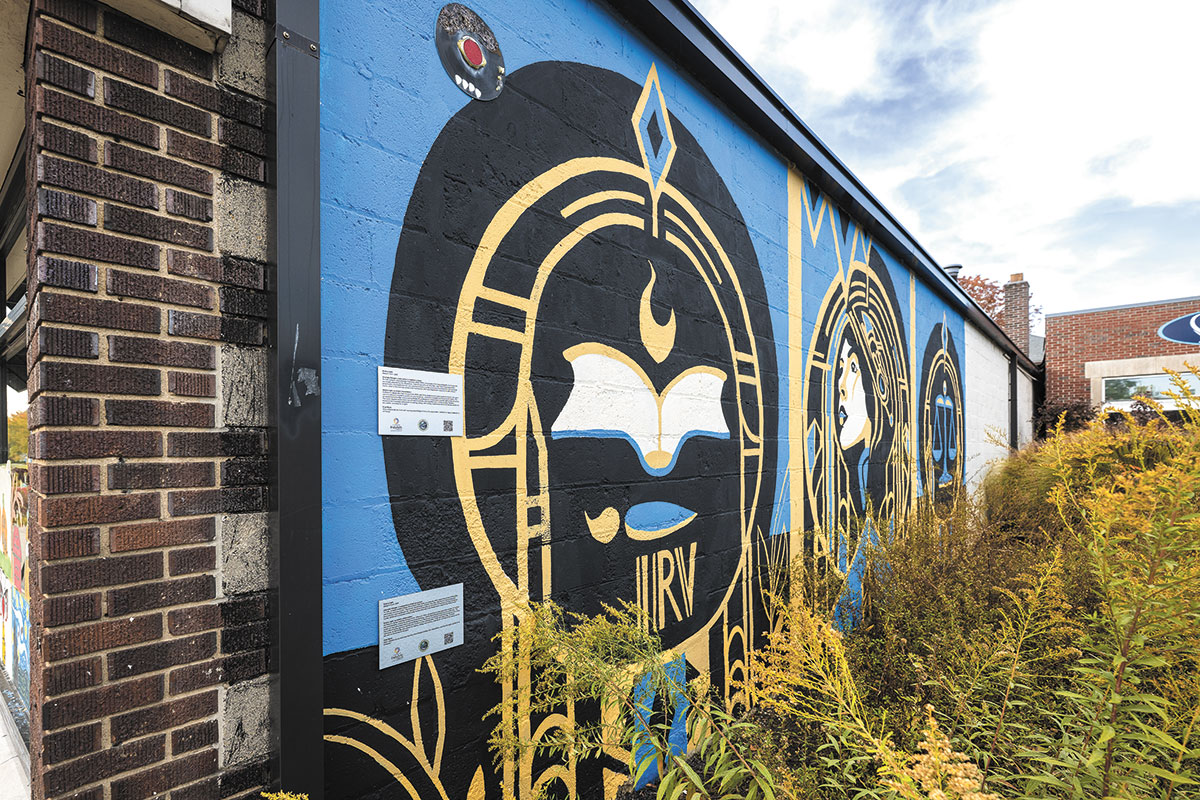
Meanwhile, a 2025 mural of Madge Oberholtzer in the neighborhood was awarded two trophies at October’s Monumental Awards presented by Citizens Energy Group. Painted by Andrea Light, the mural commemorates Oberholtzer’s role in thwarting the Ku Klux Klan in Indiana.
The Irvington Development Organization commissioned the mural of Oberholtzer, who lived in the neighborhood in the 1920s.
“IDO has been excited to push integrating public art back into our community,” Rawlinson said. “That mural recognizes our history and helps us play up that Irvington has been at the nexus of arts and power in Indianapolis for more than 100 years.”
Although Irvington didn’t receive the level of funding it requested, the cultural district designation can be used to attract attention to the area’s needs, Smith said. An independent “cultural district fund” is in the works for Irvington, she said.
IndyGo’s Blue Line construction, which is expected to affect Irvington’s main thoroughfare of Washington Street for at least another year, is a reason to seek donations for the fund, Smith said.
“We need to be thinking about how we are going to market ourselves through this time period and work together to survive this construction,” Smith said.
Building momentum
The Thomas Taggart Memorial would not have been considered a positive asset for the Riverside neighborhood when the city’s initial group of cultural districts were selected.
Built as a limestone colonnade after the 1929 death of Taggart, who served as a U.S. senator and mayor of Indianapolis, the memorial eventually fell into severe disrepair.
“Twenty or 30 years ago, my family and my neighbors and friends and I would get out there and bust our butts to clean it up,” said Phyllis Sakina, former president of the Riverside Civic League and one of the authors of the neighborhood’s funding proposal. “We would pick up glass and you-name-it, because the city just kind of left it as a dumping place.”
In 2021, the memorial was rehabilitated and repurposed as the Taggart Memorial Amphitheater at Riverside Park. Two years later, the Riverside Promenade opened in the park as a pedestrian and bike path to commemorate the area’s cultural heritage.
The park occupies 862 acres, a larger footprint than Manhattan’s Central Park, and the Riverside neighborhood includes three waterways: White River, Central Canal and Fall Creek.
In addition to being classified as a cultural district, Riverside received $50,000 to support programs, fundraising and historical landmarks.
No future city funding is planned for the cultural districts program, Lethig said.
Similar to representatives of other new districts, Sakina expressed optimism that the designation will lead to future payoffs.
“It’s definitely a feather in our cap,” Sakina said. “If your grandfather willed you $50,000 to start your life, it’s better than having nothing. We’re wanting to couple this stimulus with applying for other grants and funding opportunities to do more and bigger and better things.”•
Please enable JavaScript to view this content.
Mixed feelings about this.
Designating new cultural districts seems to be able to help accelerate development. Market East comes to mind. Ballard basically designate a sea of parking lots as a cultural district & it has since become the city’s densest mixed-use neighborhood.
At the same time, expanding the number of cultural districts to 19(!) will dilute the meaning of a cultural district for years & years until they all develop. Perhaps it will end up being counter-productive.
Also, classifying ALL of Franklin Township a “cultural district” is crazy. I’ve heard rumors that the 2026 Indiana General Assembly may entertain the idea of splitting off Indy’s southernmost 3 townships as its own city. Perhaps designating all of Franklin Township – home of Aaron Freeman – is a play to prevent that from happening.
Yep Robert, you said most of it. The only words missing are contrived and rationalized.
Two very large jokes include Riverside being compared to Central Park in NYC. That’s almost as big a stretch as including Franklin Township as a district.!
The three southern most townships as their own city? Show me the fiscal numbers on how that makes sense for residents.
Joe, it doesn’t make any sense financially. It would likely hurt both Indianapolis and the new city. But, if this rumor is true, it tracks with contemporary populist political discussion in Indiana.
Agreed. But it’s the sort of behavior I’ve come to expect from Freeman. He couldn’t get anyone to listen to him on the CCC, so he instead fled to the Statehouse where he can meddle in the affairs of Indianapolis from there. He seems to regard Marion County as a glorified driveway for the suburbs and donut counties. Residents of the area he wants to blow through? They can kick rocks.
For instance … sure Marion County, here is a little more money for roads, not even close to what is stolen from you by the state or what’s needed to make a long-term difference, but you have to raid your budget to access it as matching funds. People like Freeman are who my Republican CCC refer to as to why we have bad roads, moreso than Joe Hogsett.
Other than Irvington (which has been a de facto “cultural district” longer than the City has been designating them) most of these “districts” and their dollar allocation make zero sense.
And I agree that it’s nuts having 19 districts (most of which lack any coherent rationale or reason to visit).
An honest to goodness “district” could keep a visitor busy with places, events, shops, and dining for a long weekend.
Whomever made or otherwise had high level involvement in this decision making needs to be dismissed.
This is a good idea. Have to start somewhere.
I would still love to see engagement from Visit Indy in most of these places. Some of districts have paid staff yet no engagement from the City or our DMO. Also just naming these groups does little. we all need help with planning, land use, safety etc and its clear this is a one time effort.
I would still love to see engagement from Visit Indy in most of these places. Some of districts have paid staff yet no engagement from the City or our DMO. Also just naming these groups does little. we all need help with planning, land use, safety etc and its clear this is a one time effort.
I would still love to see engagement from Visit Indy in most of these places. Some of districts have paid staff yet no engagement from the City or our DMO. Also just naming these groups does little. we all need help with planning, land use, safety etc and its clear this is a one time offering of support
I would still love to see engagement from Visit Indy in most of these places. Some of districts have paid staff yet no engagement from the City or our DMO. Also just naming these groups does little. we all need help with planning, land use, safety etc and its clear this is a one time offering of support
I would still love to see engagement from Visit Indy in most of these places. Some of districts have paid staff yet no engagement from the City or our DMO. Also just naming these groups does little. we all need help with planning, land use, safety etc and its clear this is a one time offering of support
I would still love to see engagement from Visit Indy in most of these places. Some of districts have paid staff yet no engagement from the City or our DMO. Also just naming these groups does little. we all need help with planning, land use, safety etc and its clear this is a one time offering of support
I would still love to see engagement from Visit Indy in most of these places. Some of districts have paid staff yet no engagement from the City or our DMO. Also just naming these groups does little. we all need help with planning, land use, safety etc and its clear this is a one time offering of support
I would still love to see engagement from Visit Indy in most of these places. Some of districts have paid staff yet no engagement from the City or our DMO. Also just naming these groups does little. we all need help with planning, land use, safety etc and its clear this is a one time offering of support
I would still love to see engagement from Visit Indy in most of these places. Some of districts have paid staff yet no engagement from the City or our DMO. Also just naming these groups does little. we all need help with planning, land use, safety etc and its clear this is a one time offering of support