
Subscriber Benefit
As a subscriber you can listen to articles at work, in the car, or while you work out. Subscribe Now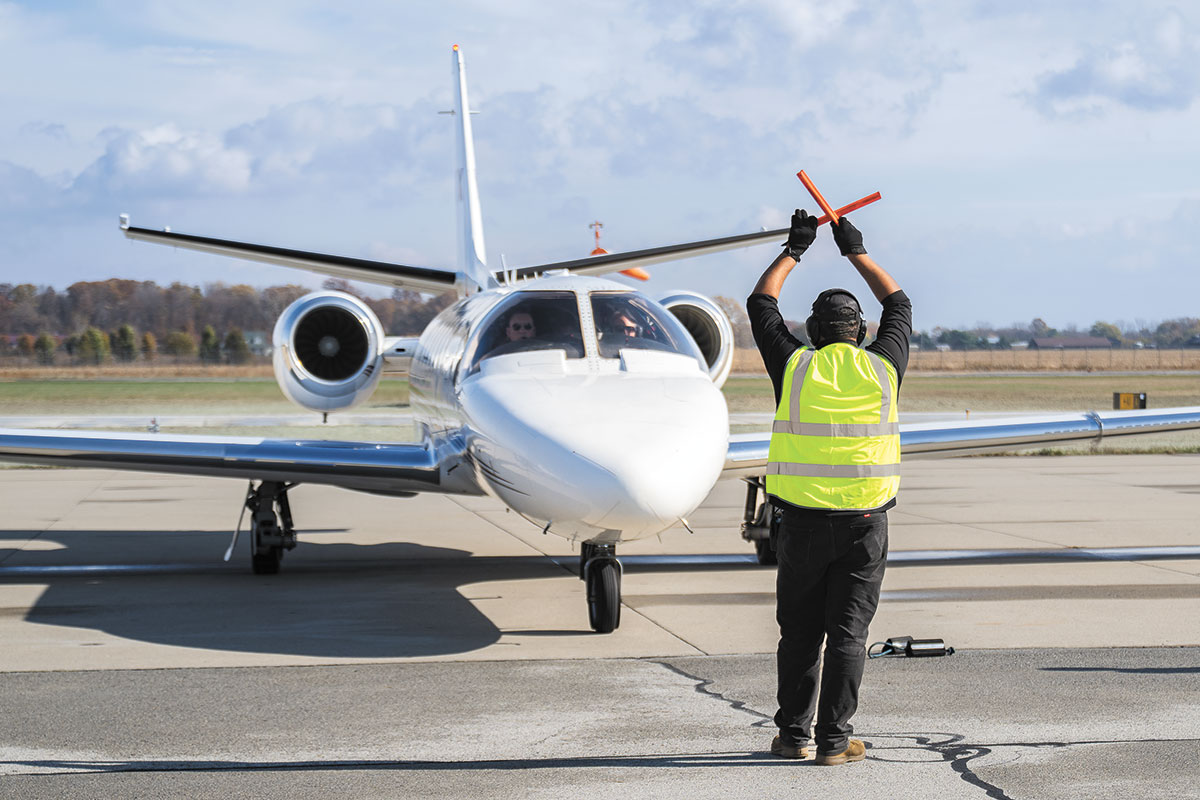

When Sonny Beck returns home from an international flight on one of his six corporate jets, he knows he has a long trip back to his office in northern Hamilton County.
He lands at Indianapolis International Airport and passes through customs before starting a 50-mile drive to the Atlanta headquarters of Beck’s Hybrids, where he is CEO. And he knows other business leaders on the north side have a similar experience.
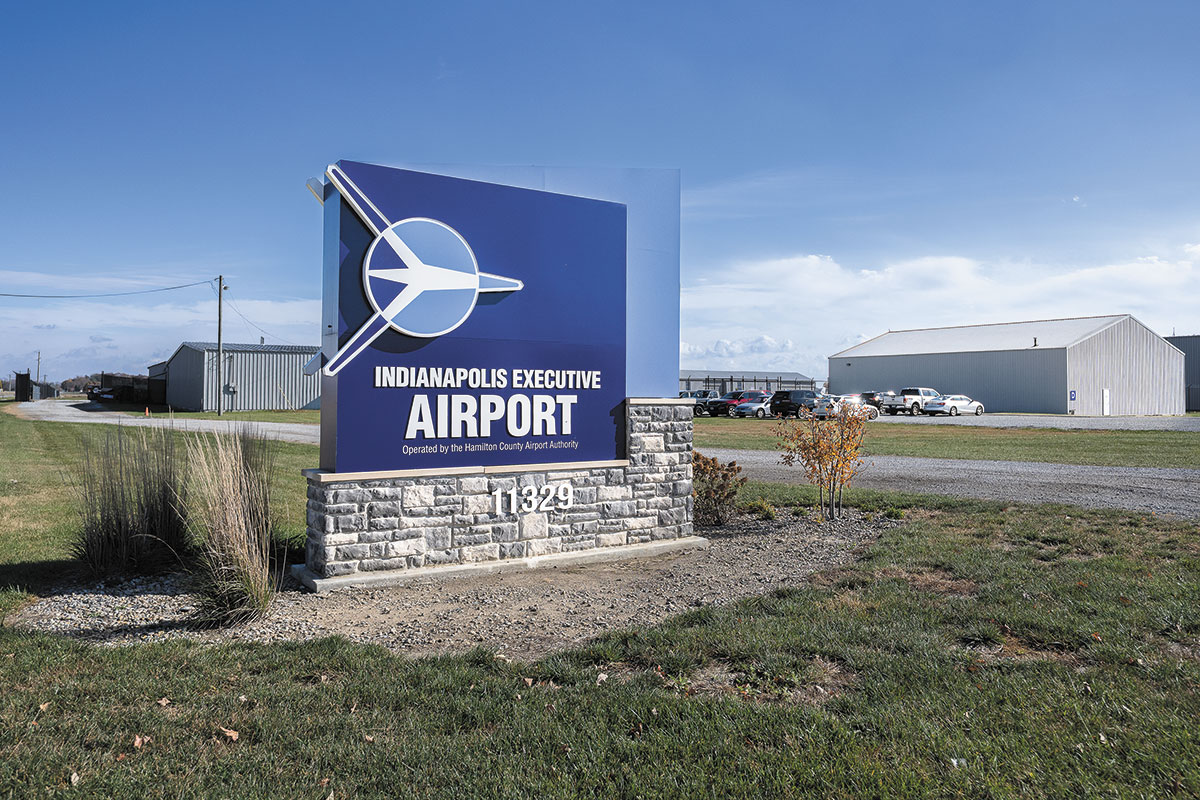
That is what motivated Beck to lead the push to land a U.S. Customs and Border Protection office at Indianapolis Executive Airport, along State Road 32 and about a mile east of U.S. 421 in Zionsville.
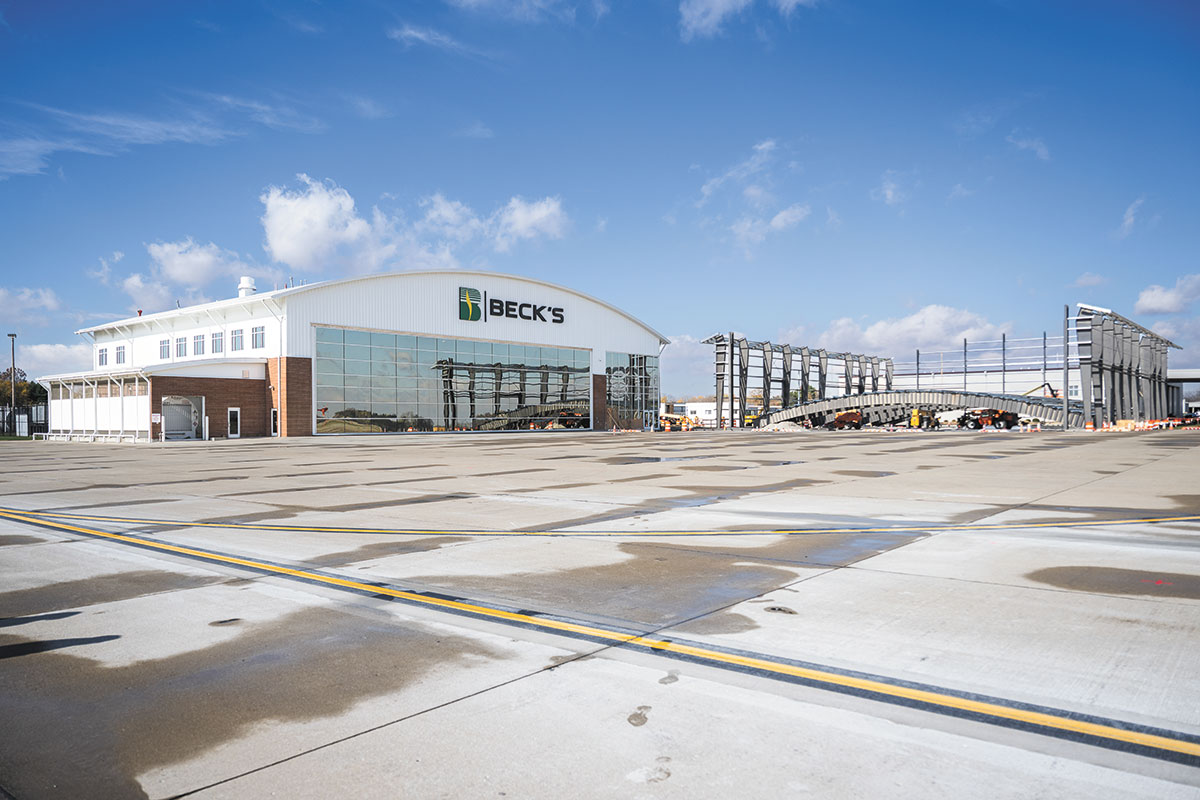
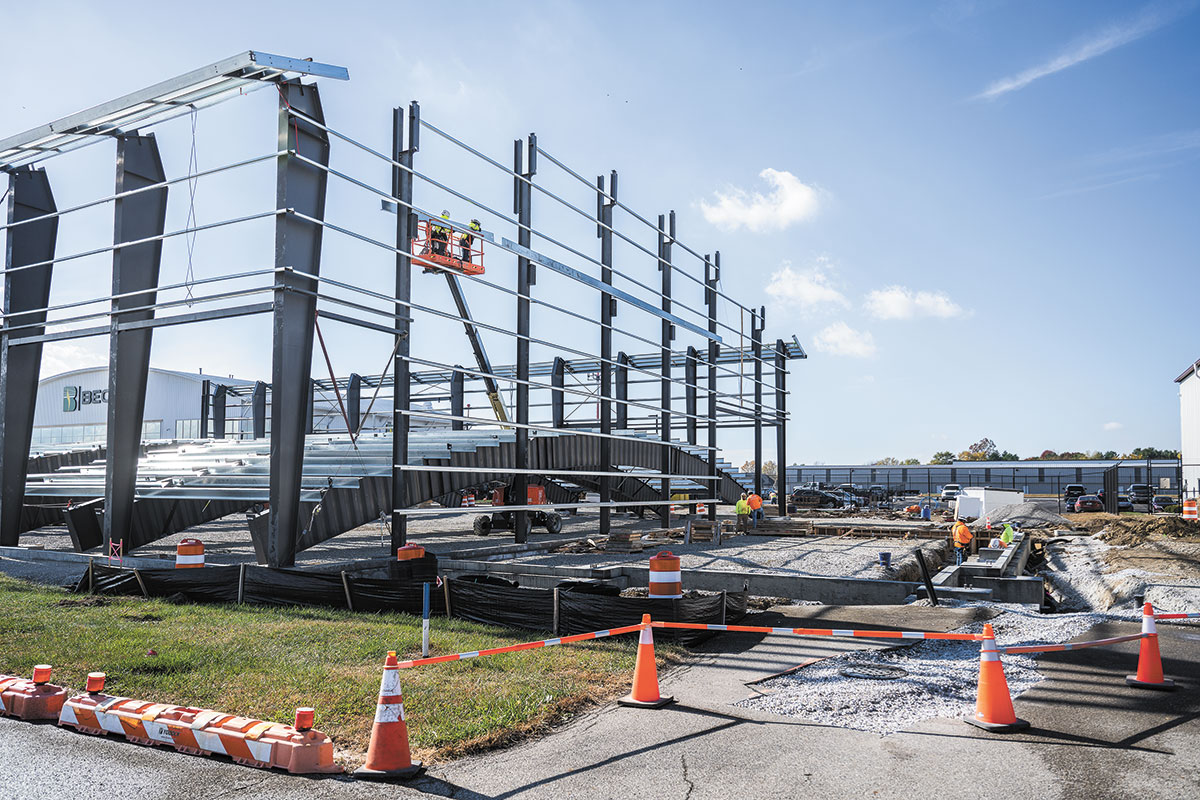
The 3,000-square-foot customs office is under construction alongside a new Beck’s Hybrids hangar, which will be the company’s second enclosure at the airport. International flights currently depart from the 567-acre airport, but a customs office would allow them to land there.

Beck and municipal leaders on the north side expect the customs office will be a catalyst to attract companies to the LEAP Research and Innovation District in Lebanon, the Grand Park District being planned around Westfield’s 400-acre sports campus and in communities throughout the northern suburbs.
“My thoughts are that if we have an international airport there, a customs service, if you build it, they will come,” he said. “Yes, we’ll make use of it. But for me, it’s about building our economy.”
Airport Director Sam Sachs said the Federal Aviation Administration approved the customs office earlier this year. Now, local leaders are working through the details and recently gathered at the airport to go over costs. If all continues according to plan, the customs office will open next year.
Hamilton County Commissioner Steve Dillinger said Beck’s Hybrids is paying about $1 million to build the facility, and Hamilton County Tourism has offered to pay $500,000 toward the cost of staffing the facility with two agents. City, town and county leaders are determining how to divide the remaining $735,000 in costs for the first year of operation.

“The money is not the biggest hurdle,” Hamilton County Commissioner Mark Heirbrandt said. “It’s going through what you have to do with the FAA and all the requirements that you have to follow. That’s a heavy lift.”
Those requirements include a designated space for inspections, compliance with security regulations and the financial ability to reimburse costs for CBP services. The process to attain a customs office typically takes about eight years, but Indianapolis Executive Airport received approval in about half that time.
“When you get elected leaders throughout that region that see the benefit, then you’re going to have a will and a passion to figure out how to get it done,” Heirbrandt said.
Sachs said the airport is looking to also add Global Entry processing, which is a CBP program similar to TSA PreCheck. Global Processing allows pre-approved travelers to use automated kiosks for faster entrance into the United States.

In Indiana, CBP has customs offices at Indianapolis International Airport, Fort Wayne International Airport, Gary Chicago International Airport and South Bend International Airport. An additional customs office is inside the Winfield K. Denton Federal Building in Evansville.
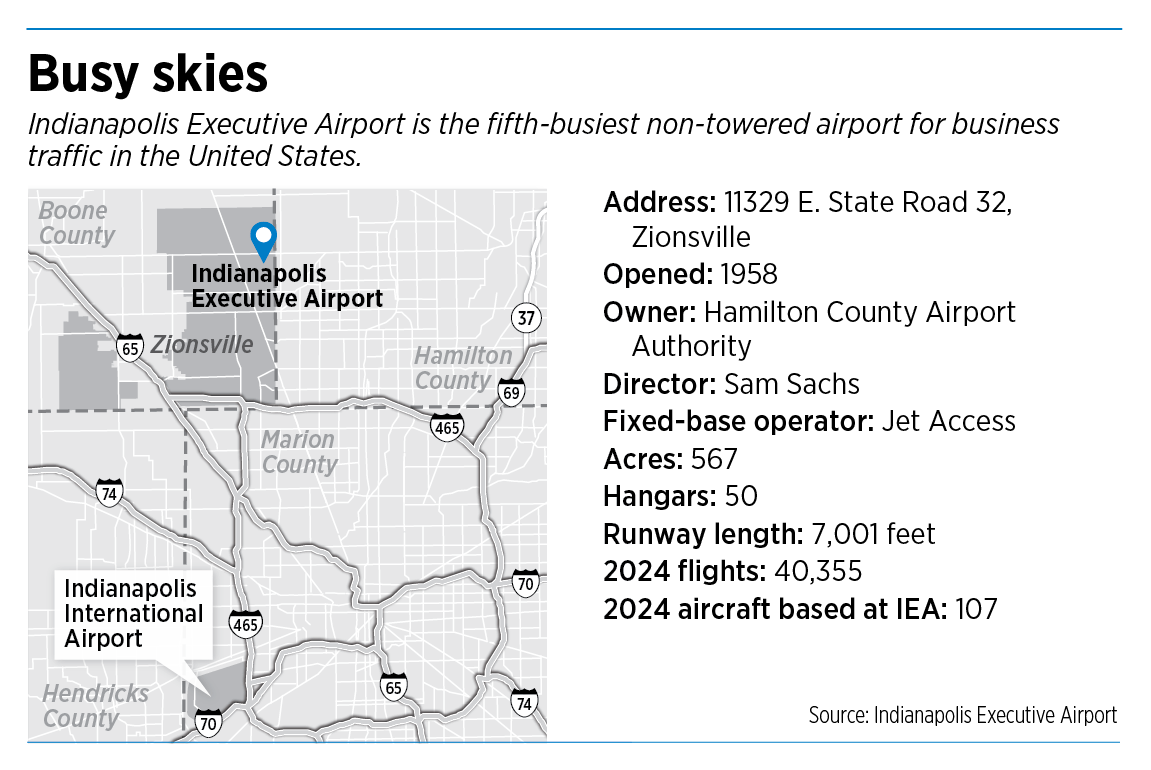
More than 40,000 flights operate in and out of Indianapolis Executive Airport annually, making it the fifth-busiest non-towered general aviation airport for business traffic in the United States, according to the FAA’s 2024 traffic flow management system counts.
The airport is also the busiest non-commercial airport in the state that specifically caters to business travel or jet aircraft. General aviation represents private transport and recreational air traffic. The 115 or so flight operations per day on the runway include business flights, student flights and propeller aircraft.
Sachs anticipates about 200 international arrivals to fly into Indianapolis Executive Airport in the first year of the customs office.
“The numbers already support us having a facility here,” he said.
Growing with the community
As cities and towns on the north side have grown, so has Indianapolis Executive Airport.
“We’re a product of where we are. It’s all about location,” Sachs said. “When they built this airport, they didn’t realize what was going to grow up around it, but that’s what happened. And the airport grew up along with the community.”
Previously known as Terry Airport, Indianapolis Executive Airport was established in 1958 as a farm airport with a grass runway.
Hamilton County purchased Indianapolis Executive Airport in 2002 after Boone County turned down an opportunity to own the airport, a decision current-day leaders in Boone County recall with regret.
The Hamilton County Airport Authority oversees improvement, operation and maintenance at the airport, while Fishers-based Jet Access is the airport’s fixed-base operator and provides services like fuel, parking and hangars.
“When it was offered to us, we bought it in a heartbeat because having an airport that is not on your tax rolls in another county, right across the line, made a lot of sense for us,” said Dillinger, who has served as a Hamilton County commissioner since 1989, making him the state’s longest-serving county commissioner.
Today, 107 airplanes and 50 hangars are based at the airport. Beck’s Hybrids opened a private hangar in 2016, and its new hangar will be next door.
A $15.2 million project completed in 2023 extended the airport’s runway from 5,500 to 7,001 feet. The airport this month completed an extension of its taxiway to improve safety and traffic flow.
The longer runway allows departing planes to carry more fuel for longer flights.
“I’d say almost every month, we have another aircraft that’s going to Europe, whether it’s Italy or France, England, Belgium,” Sachs said. “And at 5,500 feet, our previous runway length, they probably would not have been able to do that.”
Sachs said the majority of users are local business leaders who live in Brownsburg, Carmel, Indianapolis, Westfield and Zionsville. Executives from companies like Midwest retail giant Meijer Inc., based in Grand Rapids, Michigan, regularly fly in and out of the airport, while college basketball coaches use the airport when they visit Grand Park Sports Campus in Westfield to scout players at tournaments.
“I was giving a tour to some high-schoolers, and their questions were like, ‘What celebrities fly in and out? What famous people do you see?’” Sachs said. “And I had to disappoint them because it’s no one you know. It’s no one I know, for the most part. It’s local businessmen, whether it’s CEOs of companies, or oftentimes, it’s just employees of companies that their businesses are flying in to do business.”
Earlier this year, Hamilton County purchased the Sheridan Airport for $4.2 million in a move that county officials said will further serve the growing demand for private aircraft in Boone and Hamilton counties. Sheridan Airport, in the far northwestern corner of Hamilton County, is only about a mile east of the Boone County line. It opened 77 years ago and has a 3,760-foot paved runway and two grass runways.
Heirbrandt said the plan is to eventually shift recreational fliers north to Sheridan Airport and focus on business aircraft in Zionsville.
“This will free up a lot of space for additional development and hangars out at the airport,” he said.
Big opportunity

Community leaders pointed to the airport’s critical role in advancing economic development throughout Boone and Hamilton counties.
According to a 2023 study conducted by the Indiana Department of Transportation, Indianapolis Executive Airport had an economic impact of $36.2 million per year. Sachs anticipates a customs office could add 25% or more in economic impact.
Boone County Councilor Aaron Williams said having a customs facility within minutes of major interstates and corporate campuses will give the region “a distinct advantage.” Purdue University and Ivy Tech Community College also stand to benefit, he added.
“It supports global supply chains and attracts high-value employees and really strengthens our tax base,” he said. “We’re also thinking about it from a jobs perspective. The more accessible Boone County becomes to international air traffic, the more competitive we are in advanced manufacturing, logistics and corporate headquarters recruitment.”

Thus far, Eli Lilly and Co. and Meta Platforms Inc. are the only companies to make public commitments to the 9,000-acre LEAP District since the state launched the economic development campus in mid-2022. (LEAP stands for Limitless Exploration/Advanced Pace.)
Beck said an airport with a customs office within 25 minutes of the LEAP District will be critical to landing additional companies to join Indianapolis-based Lilly and California-based Meta in Lebanon.
“The reason I’m wanting to get the customs here is, No. 1, it’s about growth,” he said. “They build interstates so business will come. You build nice country roads so rooftops will come. And right now, Indianapolis International is exactly 38 minutes—if traffic is good—for international flights to fly in there and then make it up to Lebanon. Most companies will not like that.”
Zionsville Mayor John Stehr said the customs office will be key to attracting businesses, such as research and development firms and life sciences companies, to his town to support the LEAP District.
“That’s where I think the airport customs office is going to really be a great advantage for us,” he said.
In Westfield, Mayor Scott Willis is leading the push to attract international sports organizations to a new district surrounding the Grand Park Sports Campus. Representatives of the Indy Eleven professional soccer team, which is headquartered at Grand Park, regularly fly internationally.
“What happens at this airport certainly has an impact in Westfield,” Willis said earlier this month at Stehr’s State of the Town event at the airport. “Just go to Grand Park on any weekend, especially if there’s a big night game. You’re going to see all the major universities flying into this airport, and you’re going to see all the big logos on their planes. So we have definitely benefited from this.”•
Please enable JavaScript to view this content.
Editor's note: You can comment on IBJ stories by signing in to your IBJ account. If you have not registered, please sign up for a free account now. Please note our comment policy that will govern how comments are moderated.