
Subscriber Benefit
As a subscriber you can listen to articles at work, in the car, or while you work out. Subscribe Now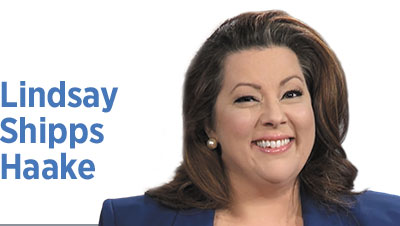 Not many events rise to the level of core memories in the life of a jaded politico like me. But as my children advance in their studies and begin their formative learning in middle school, I am reminded of the remarkable work that our teachers are doing in public, private and charter schools alike. The teaching of civics must be one of the most important jobs in our nation.
Please allow me to explain my bias. When I walked into the Indiana Statehouse for the first time, I didn’t know how a bill really becomes a law. Of course, I knew the chronology taught in the textbooks, full of hope and optimism and devoid of the real story of money, influence and political power.
One of my roles at the Statehouse was to oversee civic education initiatives such as the We the People program, an instructional program for K-12 students and aligned to the Indiana Social Studies Academic Standards. Since its inception in 1987, more than 30 million students and 75,000 educators have participated in the program, which simulates a congressional hearing to teach kids about the principles of the United States’ constitutional democratic republic.
For me, We the People was critical in understanding how Hoosiers develop their skills (or lack thereof) in understanding how our government works and their role as a member of the public. (Hint: It’s critical!)
But back to my core memory: When I was invited to judge the state finals of the We the People competition in Indianapolis, I was gobsmacked at the ease with which students—even the youngest students around the age of 10—navigated our Constitution and the Declaration of Independence.
Looking back, I truly had the closest seat one could have to the best show in education: a live, authentic performance of students showcasing their knowledge and understanding of constitutional principles, in front of a live judging panel, where they are asked to defend their positions on relevant historical and contemporary issues.
Where else does that happen? It certainly doesn’t occur in today’s Statehouse or Congress. The public isn’t allowed to ask questions, and the dialogue is anything but two-way. If you’re lucky enough to have your state legislators or your Congresscritter solicit feedback in an actual conversation, you’ve got one leg up on many Hoosiers whose elected officials would rather not hear from them, especially in a live back-and-forth.
Most important, however, it’s essential to note that the We the People program is built on the selfless service of teachers and volunteers—professionals who generously give their expertise and time to enhance students’ civic abilities. One of those teachers is why I am again offering my time as a judge this year to the We the People finals.
To Ms. Andrea Neal—the teacher whose fifth-graders I was judging that day, a decade ago: You are why my kids know there are three branches of government (surprise, a third of Americans do not!). And you, Ms. Neal, are why so many generations of Hoosiers have progressed in their role as U.S. citizens. I am so very thankful for the years you gave student after student. And even more thankful for the cadre of civics teachers across the state. After all, if we don’t “do” politics, politics will certainly “do” us. And we must be prepared for our civic duties—to vote and meaningfully take part in our American experiment.•
__________
Haake is a government affairs and public relations strategist at Onward & Upward Strategies. Send comments to [email protected].
Click here for more Forefront columns.
Please enable JavaScript to view this content.
Editor's note: You can comment on IBJ stories by signing in to your IBJ account. If you have not registered, please sign up for a free account now. Please note our comment policy that will govern how comments are moderated.