
U.S. ending extra help for groceries that started during COVID
Nearly 30 million Americans who got extra government help with grocery bills during the pandemic will soon see that aid shrink—and there’s a big push to make sure they’re not surprised.

Nearly 30 million Americans who got extra government help with grocery bills during the pandemic will soon see that aid shrink—and there’s a big push to make sure they’re not surprised.

Many parts of downtown are thriving—particularly neighborhoods, where rents are rising, people have to stand in line for a lunch table, and investments are flowing. Other parts—especially downtown’s central core, where many workers might come to the office only once or twice a week—are limping along, pockmarked by vacant storefronts, panhandlers and crumbling sidewalks.
More than 1,000 people have pleaded guilty or have been convicted on federal charges of defrauding myriad COVID-19 relief programs that Congress established in the early days of the pandemic.
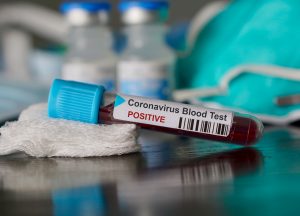
The costs of COVID-19 vaccines are expected to skyrocket after the emergencies are lifted. Free at-home COVID tests will also come to an end. And hospitals will not get extra payments for treating COVID patients.

The U.S. is poised to make COVID-19 vaccinations more like a yearly flu shot, a major shift in strategy despite a long list of questions about how to best protect against a still rapidly mutating virus.
The proposed change is designed to reduce the complexity of the vaccine regimen for the public, doctors and manufacturers. It also reflects a view that “chasing variants” with ever-changing booster formulations is ultimately futile.
The descendant of the omicron variant rose from barely 2 percent of U.S. cases at the start of December to more than 27 percent the first week of January, according to new estimates.
The Indiana Office of Technology, which purchases and distributes computers for state work, does not have an audit trail of the missing computers, an investigation found.
For working parents of young children, it seems the rest of the world has moved on from the pandemic. But unending illness and child care disruptions have upended these families’ lives.
The Associated Press has found that authorities around the world have used technologies and data used in the fight against COVID-19 to halt travel for activists and ordinary people, harass marginalized communities and link people’s health information to other surveillance and law enforcement tools.
The Food and Drug Administration’s decision aims to better protect the littlest children from severe COVID-19 at a time when children’s hospitals already are packed with tots suffering from a variety of respiratory illnesses.

The class-action lawsuit against Ball State University was filed by a student at the school last year. The legal challenge claims Ball State has refused to reimburse students for tuition and fees that were paid for in-person classes and services.
Employees at the world’s biggest Apple iPhone factory were beaten and detained in protests over pay amid anti-virus controls, according to witnesses and videos on social media Wednesday, as tensions mount over Chinese efforts to combat a renewed rise in infections.
The high demand for therapy is the latest sign of and ongoing U.S. mental health crisis exacerbated by the coronavirus pandemic. Though millions of Americans have returned to normal life, many people feel far from normal.
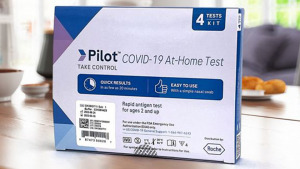
The test is the first over-the-counter test distributed in the U.S. by Roche Diagnostics, which has its North American headquarters in Indianapolis.
Even as vaccines have reduced the risk of hospitalization and death from infection with SARS-CoV-2, researchers continue to worry about the individual suffering and population-wide threats from long COVID.

Pfizer said people 55 and older who got the omicron-targeting booster had four-fold higher antibody levels than those given an extra dose of the original vaccine.
School systems throughout the country reported using less than 15 percent of the latest round of federal education funding allotted during the last school year. Meanwhile, education advocates worry students continue to fall behind academically.
The percentage of preterm and low birthweight babies also went up last year, after holding steady for years. And more pregnant or postpartum women are reporting symptoms of depression.
Any variant that winds up dominating in coming months will probably challenge a key line of treatment and protection for people with compromised immune systems—the drugs known as monoclonal antibodies.