

As students left IPS, leaders paid COVID aid to company to get them back
The district’s $269,600 deal with Caissa highlights the increased competition Indianapolis Public Schools is confronting from local charter schools and vouchers.
The district’s $269,600 deal with Caissa highlights the increased competition Indianapolis Public Schools is confronting from local charter schools and vouchers.

Recovering from the pandemic’s effects on student performance remains a top priority for schools, as state testing scores indicate that learning has stagnated.
The update from IPS shows that 300 staffers affected by school closures and mergers initiated by Rebuilding Stronger were placed elsewhere in the district.

The district plans to give preference to not-for-profits or government agencies before selling to other buyers.

The new version of the law targets districts with declining enrollment, such as the South Bend Community School Corp. and Indianapolis Public Schools, which had an average building utilization rate of 60% in 2021-22.

Nathan Tuttle, the former CEO and executive director of the Edison School of the Arts, is seeking at least $300,000 in damages from the school.
The resolution approved by the school board on Tuesday describes next steps for Floro Torrence School 83, George Buck School 94, Paul Miller School 114, and Francis Parker School 56.

The departure of its chief academic officer means IPS will need to find a new leader to manage issues such as graduation, state test results and curriculum.
Most of the schools listed in the district’s announcement will adopt Montessori, science, STEM, or International Baccalaureate programming in 2024-25 as part of Rebuilding Stronger.
Three Marion County school districts had funding proposals on the ballot as voters headed to the polls Tuesday. And all three received approval.
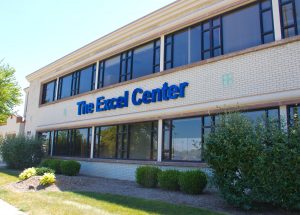
A seventh Excel Center adult charter high school has the green light to open in Indianapolis, and it’s hoping to open in a school that Indianapolis Public Schools will close at the end of this school year.
Warren Morgan, who joined IPS in May 2020, oversees curriculum and instruction for the district as a member of the executive leadership team.
Over the past few years, Indianapolis Public Schools took an important step toward stability by trying to right-size the district in a plan called Rebuilding Stronger.
Indianapolis Public Schools’ proposed tax increase would pay for building improvements at 23 schools as the district rolls out its Rebuilding Stronger reorganization.
The referendum for capital expenses is part of the district’s Rebuilding Stronger reorganization. Here’s what you need to know.
The overhaul approved in November reconfigures grades, closes six schools and expands specialized academic programs in an effort that officials say will create more great schools and prioritize equity.
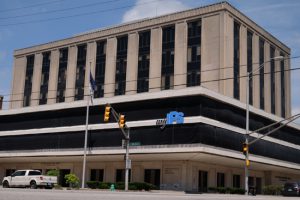
The unanimous vote to approve the Near Eastside Innovation School Corp. to run the school follows the district’s decision to drop Urban Act Academy—the charter operator that has run the school since 2018-19—from its Innovation Network.
The district’s unique portfolio of charters and traditional public schools, created nearly a decade ago by IPS leaders and state lawmakers, has left both populations fighting for funding.
Edison, one of the few Innovation schools in Indianapolis Public Schools not run by a charter operator, called a special meeting Tuesday after Executive Director Nathan Tuttle was accused of using a racial slur.
The state law requires school districts to notify the state Department of Education if classroom buildings are left “vacant or unused.”