
Subscriber Benefit
As a subscriber you can listen to articles at work, in the car, or while you work out. Subscribe NowItalian automotive components manufacturer Dallara has had a presence in central Indiana since 2001, but its role—in Speedway, in racing and in numerous other industries—has evolved.
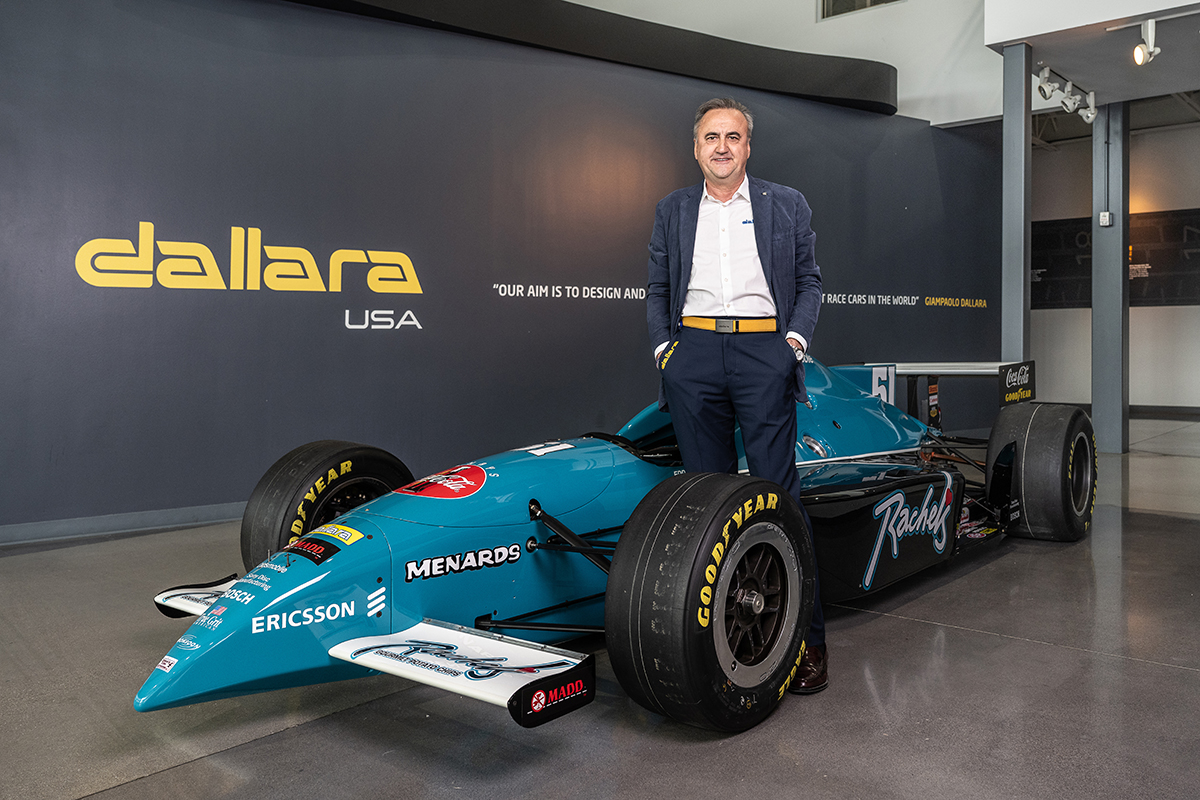
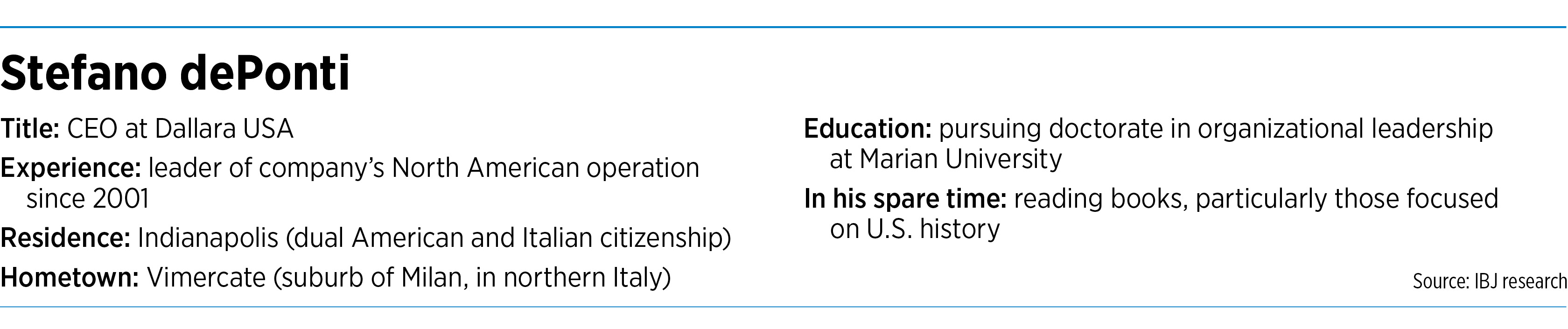
Stefano dePonti has been Dallara USA’s CEO since the inception of the Indianapolis operation, which employs about 60 full-time employees and 80 people total. It’s Dallara’s only location outside of Italy.
DePonti said Dallara USA’s focus is engineering, education and innovation. And so it made sense that last year, Purdue University announced plans to occupy a portion of Dallara’s downtown Speedway facility as part of a new partnership meant to further develop the university’s Indianapolis presence, including its motorsports engineering program.
The company’s North American headquarters has seen other changes of late, rebranding to the Dallara Experience Hub and featuring multiple gathering areas totaling 33,000 square feet, racing simulators, a conference room and a manufacturing garage, all of which can be used for large events.
Dallara has also announced a venture with AK Esports for a Sim Garage concept that offers more immersive simulator experiences, with locations at the headquarters and another at Bottleworks District in downtown Indianapolis.
DePonti spoke with IBJ about the company’s growth, as well as lessons the company has learned in recent years. This interview has been edited for length and clarity.
How did you come to start working at Dallara here in Indianapolis?
My work at Dallara started in 2001, three years after the company became the official manufacturer for the new Indy Racing League cars. When I came over, the need was to have some Italians that were able to speak English, to be agents for the commercial aspects and customer service. At that time, everything was manufactured in Italy, shipped over to the official distributor for Dallara, and I was the one doing all the logistical, commercial and customer service work, while Sam Garrett was doing all the engineering and the technical aspects.
When we won the 2010 bid with the IndyCar series to exclusively design and manufacture the car, part of the business plan was to manufacture the car here and have a business presence for the company here in the United States. As they say, it was the right place and the right time because it was a time when the town of Speedway was starting their redevelopment plan, which resulted in what you see on Main Street today.
In addition to your work in IndyCar, Dallara is also involved in NASCAR and other racing leagues as well as the aerospace and defense industries. What value does it bring to the work you do to have such diversity in your business and not be, for lack of a better term, reliant on the relationship with IndyCar?
Diversifying for a company like Dallara comes naturally because of the synergies between technology and racing that can be transferred to aerospace and defense applications. It’s a huge opportunity. I’m a strong believer in the space economy, like space tourism and commercialization. And as a company as innovative as Dallara, with that mindset, we cannot afford to stand still and not to be part of it.
Another way for us to be innovative is through esports. It’s not just a matter of entertainment—which is an important factor because we want to make sure fans can have fun driving on simulators with the cars that we designed—but it’s also an important aspect of education, because there’s a lot of engineering and mathematical aspects you can design into the program. You can get schools involved, from high schools to universities, and they can compete with others from all over the world and get that experience.
Dallara has started a new chapter by incorporating Purdue University in Indianapolis’ motorsports engineering program into your facility. What opportunities does that create?
One part of our work is with the business world, then you have the academic world that’s preparing this new class of executives and engineers to serve our industry. These two worlds are better when you try to fill the gap, so companies can work more closely with universities, especially in the research area, to help academics understand what companies’ needs are to craft a curriculum based on those sorts of requirements.
It’s beneficial because we can talk directly and develop and research potential projects together. Sometimes when you go to college, you go by the book and stay with the same book for years. But companies want to improve themselves and, when mistakes happen, learn from it and do research to move forward. If companies have support from a university behind them, both can benefit, as a company can transfer knowledge to the university, and the university can offer supporting tools, like research.
During the 2023 Indianapolis 500, there was a crash involving Kyle Kirkwood, where one of the tires on the driver’s car broke off and went outside of the track, landing on a car. I know Dallara and IndyCar worked closely to resolve that situation, debuting a new retaining nut. Did Dallara having a physical presence in Indianapolis—just blocks from Indianapolis Motor Speedway and IndyCar headquarters—have any influence on the rapidity of the engineering response to the incident?
For sure, being closer is beneficial. We immediately began working, within 10 minutes of seeing the dynamics of the crash, and we told IndyCar that we were doing so, by looking at what happened and understanding the dynamics of that.
As a company, safety comes first … and we always have to be on alert that something can happen and that every crash can have new dynamics. You learn from it.
We want to react; we want to analyze and study to come up with a better solution. Whether it’s the right solution, at least we are being proactive to take action and make a decision. The proximity lets us fill some gaps, particularly with logistics, because the components are built here rather than built in another place and being shipped. We have more contact with IndyCar, and it’s very beneficial.
During the practice session at last weekend’s qualifications, we saw a crash involving Scott McLaughlin’s vehicle. A lot of things happened there, including the back left tire detaching despite it being attached with military-grade Kevlar. Having seen that, are you satisfied with how the vehicle’s design responded in that situation … or are there things that you’re taking away from the situation that can be improved?
In some areas, yes, it did [what it was supposed to]. There’s maybe some fine-tuning that needs to be done to prevent what happened from occurring again. We’re working within these cars to fix that. Once something happens and we know why, we can come up with a solution within the car.
With about 25 years under Dallara’s belt here in Indianapolis, what are your biggest goals for the 25 years ahead?
We want to continue what we’re doing: staying current with technology and innovation.
Innovation is everything; it’s the future. If you stop to say, “I’m good with what I’m doing,” you don’t grow and you fail. We have to reinvest in new assets for our company and our people. And 25 years from now, we will be more active with the educational world and implementing new technology, doing research that we think is important for our business and our products.
We’re an innovative company, are always trying to find answers. We’ll be active in racing, automotive, aerospace and defense and will be ready to meet the requirements that those industries set forth.
You have the last word. Is there anything else of importance that our readers should know about all you have going on?
Racing is special for our state, but it doesn’t need to be seen only as entertainment. There’s many, many, many companies involved in not only engineering and manufacturing but also the marketing, insurance, financials and logistics that need racing to be kept alive and supported.•
Please enable JavaScript to view this content.
Editor's note: You can comment on IBJ stories by signing in to your IBJ account. If you have not registered, please sign up for a free account now. Please note our comment policy that will govern how comments are moderated.