
Subscriber Benefit
As a subscriber you can listen to articles at work, in the car, or while you work out. Subscribe Now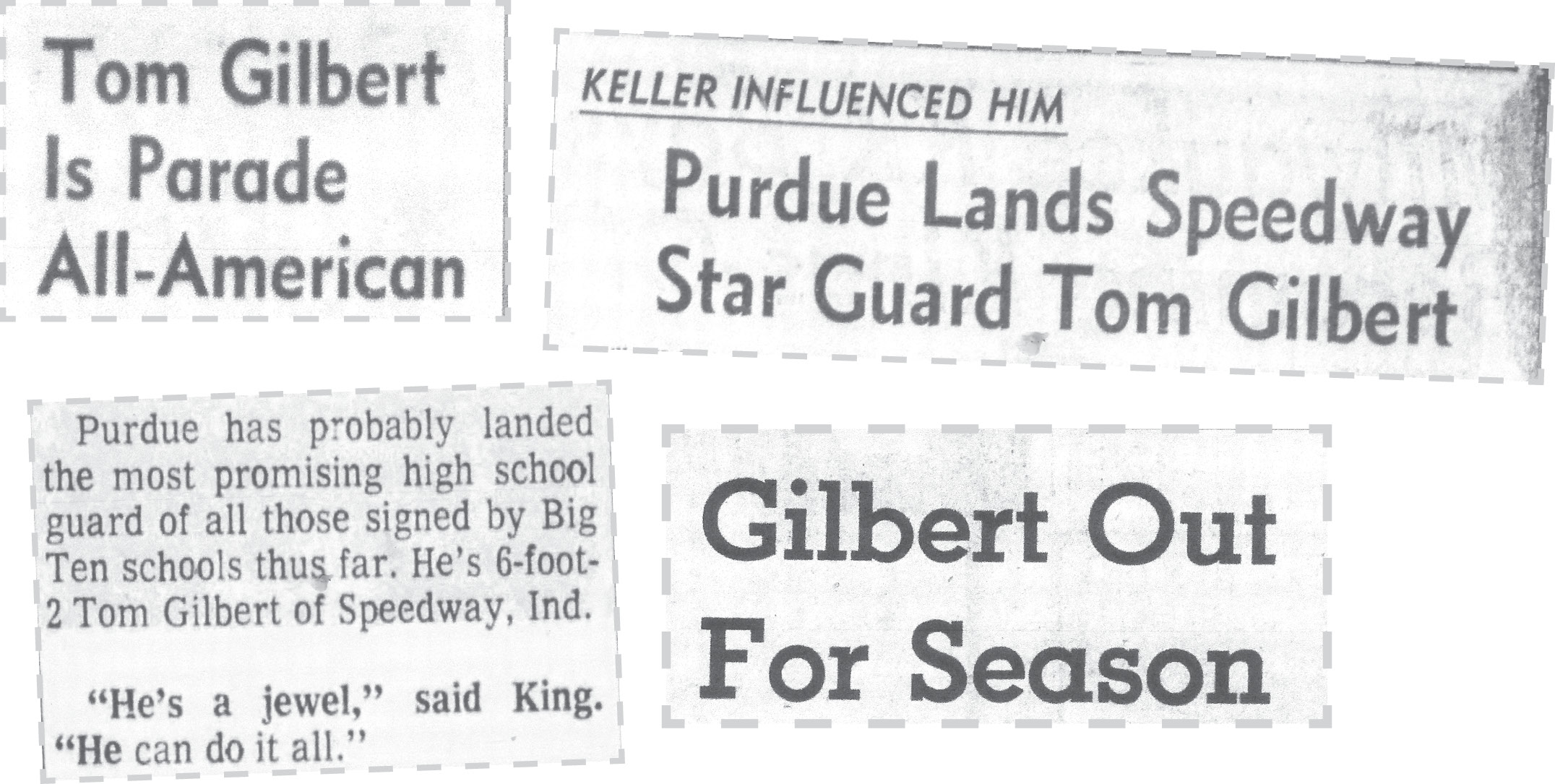
 Life isn’t fair” is the cliché of cliches but applies to all lives in varying degrees. For Tom Gilbert, it became the unfortunate theme of his adult life. Had he been so inclined, it could have been his mantra.
Gilbert passed through the stages of an idyllic childhood and nationally recognized high school athletic career at Speedway High School to a college experience at Purdue that was both snakebitten and self-destructive to an adult life that was cruelly unfair. Tragically unfair, ultimately.
He lost his footing while stepping off a curb while walking toward a tire store in Brownsburg on July 24 and died at Ascension St. Vincent Hospital on Aug. 23, age 73. Gilbert was unable to break his fall, likely because of his impairment from a stroke suffered in November 2012. He also had undergone heart treatments for an ablation and pacemaker before that.
Difficult surgeries were performed to repair his fractured cheekbones and, later, his upper intestine. He faced a lengthy recovery, and there were moments he appeared to be progressing, but he began declining last week. Longtime friend Tom Smith, a 1965 Speedway grad and a former teacher, coach and principal at the high school, visited Gilbert the day before he died and whispered the Lord’s Prayer in his ear.
“It’s a sad story of somebody who had a pot of gold at one point, and it all slipped out of his hands,” Smith said. “But it didn’t change the person he was.”
Or the athlete.
Rosy prospects
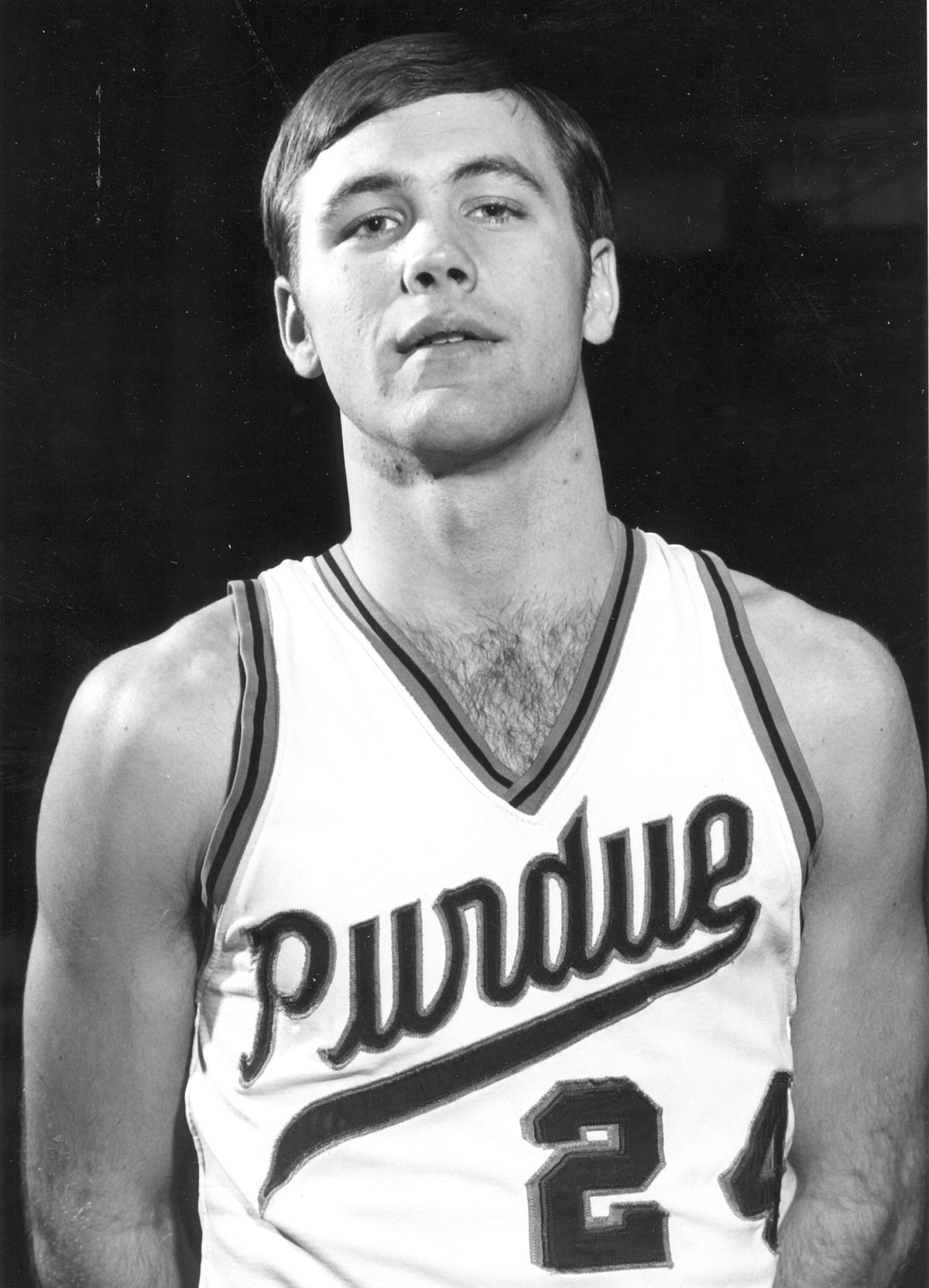
Gilbert was an all-county tailback and punter at Speedway after leading Marion County in scoring with 110 points. He followed by leading the county in scoring in basketball as well, averaging 29.3 points per game. His school scoring record of 1,402 points lasted until 2015. He had major college scholarship offers for both sports, from most of the Eastern powers and as far west as the University of Southern California, where he visited.
But basketball was always going to be his collegiate sport. He had grown up six houses away from Meadowood Park in Speedway where he watched and then played in high-level games. He met Mr. Basketballs Billy Keller (1965) and George McGinnis (1969) there. McGinnis became a family friend, so welcome that he was invited to stop by anytime and raid the family refrigerator. McGinnis, along with his Washington High School teammate Jim Arnold, learned to water ski with the Gilberts at Cataract Lake. Keller became a mentor and role model. He also became friends with Rick Mount (1966) and drove to Lebanon for summer workouts following his senior year in high school.
Although he wasn’t voted Indiana’s Mr. Basketball in 1970, Gilbert received multiple All-America honors. The most prestigious was a first-team selection by Parade magazine, based on scouting reports from more than 100 coaches nationwide. The Midwest voters reportedly were unanimous in their judgment of Gilbert as the best player in the region.
He was joined on that “team” by future Hall of Famer Bill Walton, future NBA veteran Tom McMillen, future ABA and NBA star “Super” John Williamson and a Chicagoan named Kris Berymon.
Gilbert narrowed his college choices to Purdue, Indiana and Kentucky. IU interim coach Jerry Oliver, who had coached Washington High School’s 1965 state championship team, called Gilbert “one of the best we’ve seen … he could play for anybody.” Smith, a first-year teacher and coach at the time, flew with Gilbert to a banquet in Lexington, after which they met privately with legendary Kentucky coach Adolph Rupp. Gilbert was offered a high-paying summer job on a horse farm with the promise he wouldn’t have to work hard, and a job for his girlfriend if he desired.
Disappointing reality
He chose Purdue because of its proximity to home and the influence of Keller, who helped lead the Boilermakers to the NCAA championship game in 1969.
“We’re tickled to death to get Tom,” said Purdue coach George King, who was on hand for the letter-of-intent signing at Speedway. “He’s the finest guard prospect in this part of the country—and we’ve seen ’em all. We’ve been looking for a guy who can do everything, plus provide the leadership. We see things in him that we saw in Keller.”
Freshmen were ineligible for varsity competition in that era but played an abbreviated schedule against freshman teams from other colleges. Gilbert sprained an ankle shortly before the season began—an ominous sign, it turned out—and started slowly but still led the team in scoring with an 18-point average. He scored 32 against the Notre Dame freshmen and 24 against Louisville.
He was in and out of the starting lineup early in his sophomore season with the Purdue “varsity” but felt pressure to perform immediately and shot poorly. He seemed to have made a breakthrough with eight second-half points in a Dec. 30 loss to St. Joseph’s. “I think Tommy has found himself to some degree,” King said afterward.
That season turned out to be a lost cause for everyone. Purdue’s longtime athletic director, “Red” Mackey, died on Feb. 22. King, as had been planned all along, took over that role, draining time from his coaching duties. The personalities and talents of the players didn’t mesh, either, and they finished just 12-12.
Gilbert was disenchanted enough to seriously consider transferring, and he had options. Maryland’s Lefty Driesell had recruited him in high school and still wanted him, although Gilbert was leaning toward playing for LSU’s newly hired coach, Dale Brown. But King’s replacement, Fred Schaus, made a home visit and re-recruited Gilbert, telling him everyone would start with a clean slate and that he could earn a starting spot the next season.
“Like a dumb kid, I was like, ‘OK, I got screwed once. Maybe they won’t screw me twice,’” Gilbert once told me.
Gilbert started four early games for Schaus but was sidelined by stomach flu in December. He played off the bench after that but had a notable performance against Northwestern in February, scoring 11 points to lead a second-half comeback in a four-point victory. He considered that “the only game I ever had the opportunity to really be part of it.”
He barely played and went scoreless in the next game, however, and three days later suffered a broken cheekbone when hit by an elbow in practice, ending his season.
He scored 14 points in the intrasquad scrimmage before his senior season, but by then Bruce Parkinson, a Schaus recruit, had established himself as the lead guard, and classmate David Luke and younger players were showing equal promise. Gilbert played in just 11 games that season, scoring eight points.
His final appearance came on Jan. 12 at Illinois in a 22-point victory. Double-teamed aggressively in the backcourt with about 20 seconds left, he swung his right arm while dribbling in the backcourt and hit an Illinois player. He was called for a flagrant foul and a technical and was ejected. He didn’t play in the final 13 regular-season games and shifted his focus to academics late in the season. He didn’t accompany the team to New York, where it won the National Invitation Tournament over an 11-day period.
His playing time diminished each of his three seasons. He scored 146 points over 44 games for his career, with a 3.3-point scoring average—not what he or anyone else would have anticipated four years earlier.

‘Just a great guy’
It goes that way sometimes. Highly recruited players come in with big dreams and either get beat out by similar players, burned out by the grind or bummed out by what they perceive as politics. It’s easy to get lost in the shuffle.
What didn’t diminish for Gilbert as the years passed was the respect he received from his friends and teammates.
Randy Shields, recruited in the same class as Gilbert out of Wisconsin, set rebounding records and was the second-leading scorer behind Gilbert as a freshman, but played even less over the next three years.
“He didn’t have the career he was hoping for, either,” Shields said of Gilbert. “But I enjoyed his sense of humor, his smile and his gutsiness.”
Bruce Rose, Gilbert’s roommate as a freshman, stayed in touch long after he and Gilbert left Purdue. “Just a great guy,” Rose said.
High school friend Arnold recruited Gilbert to be a groomsman for his wedding and played golf with him frequently until the stroke. “He was a lifelong friend,” Arnold said. “Great memories.”
Following graduation, Gilbert worked in real estate—in construction, sales and appraising. He lived in Florida for about 10 years in one stretch but was back in Indiana when he suffered his stroke on Election Day in 2012. He often relied on a walker or cane from that point, and his speech was affected. But he didn’t dwell on his fate.

He also overcame alcoholism. His active social life at Purdue hadn’t helped his basketball career, and it continued after leaving college. He finally joined Alcoholics Anonymous and won that battle.
Gilbert forever remained frustrated by the outcome of his college career, believing he didn’t get a fair shake. He wished he had followed McGinnis to IU and taken Oliver’s offer to play both football and basketball there. He also believed he should have gone through with his plan to transfer after his sophomore season. But he acknowledged his own faults.
Asked earlier this year how he thought his college career should have gone, Gilbert estimated he could have at least been a solid starter who averaged 10 to 12 points per game.
“I learned there’s God-given talent, there’s work-at-it talent, and there’s no talent,” he told me. “The God-given talent always wins out. I had to work at it.”
The heart problem and stroke presented his ultimate athletic challenges, and he fought hard to deal with them. And if Purdue turned out to be the wrong place at the wrong time for him, he still left behind a legacy in basketball well beyond that experience and a long line of friends.
“I just hope he’s finally at peace,” Rose said.•
__________
Montieth, an Indianapolis native, is a longtime newspaper reporter and freelance writer. He is the author of three books: “Passion Play: Coach Gene Keady and the Purdue Boilermakers,” “Reborn: The Pacers and the Return of Pro Basketball to Indianapolis,” and “Extra Innings: My Life in Baseball,” with former Indianapolis Indians President Max Schumacher.
Please enable JavaScript to view this content.
Editor's note: You can comment on IBJ stories by signing in to your IBJ account. If you have not registered, please sign up for a free account now. Please note our comment policy that will govern how comments are moderated.