

Marijuana, tax reform among interim study committee topics
Other topics include a review of crime trends, traffic fatalities and an analysis of the state’s Medicaid reimbursement rates.
Other topics include a review of crime trends, traffic fatalities and an analysis of the state’s Medicaid reimbursement rates.

Private employees in all but one Indiana county make less than the national average wage, according to an analysis of employment data from the U.S. Bureau of Labor Statistics.

Longtime public figure Marc Carmichael said he will campaign for Indiana’s open U.S. Senate seat in 2024—the first Democrat to announce for the seat currently held by Sen. Mike Braun, who is stepping down to run for governor.

There was no comprehensive effort to address Indiana’s child-care and early-learning shortages this legislative session, but a series of smaller changes will have big impacts on Hoosier families.

Young named at least one factor: Trump’s failure to vocalize his support for Ukraine in the yearlong conflict following the Russian invasion.

Despite billions in state reserves, fixed income retirees who are part of the Indiana public pension program won’t be getting a bonus benefit from the legislature this year.
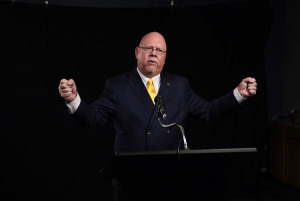
Rainwater netted a historic percentage of the vote in the 2020 gubernatorial election as a third-party candidate.

Of the 1,154 bills filed, Indiana lawmakers approved 252 of those in the 2023 legislative session, with many still waiting for a final signature from the governor. Here’s a recap.
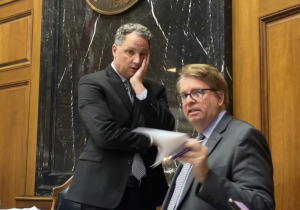
Under pressure from local schools and fellow Republican lawmakers, GOP leaders opted to decrease the amount dedicated to paying down the unfunded liability in pre-1996 Teacher Retirement Fund and shift an additional $312 million to K-12 schools.

From pharmacy rebate managers to hospital price caps to public health, legislators struggled to reach consensus about how to push down prices and save Hoosiers money.
Under the addition, the state governor’s salary would be equal to that of an Indiana Supreme Court Justice—starting with Gov. Eric Holcomb’s successor, who would see a salary increase of 48%.
Lawmakers sent several bills to Indiana Gov. Eric Holcomb’s desk on Monday following chamber actions on concurrence votes and conference committees.

Indiana’s lawmakers are nearing the end of a grueling nearly four-month legislative session, but three of their biggest priorities—aside from the budget—remain unresolved.
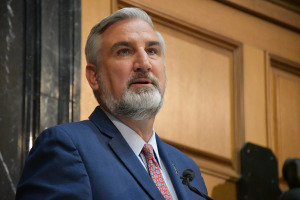
The governor signed a flurry of bills into law on Thursday, bringing the total number of bills to reach his desk to 93. Even as he finished, lawmakers finalized another handful of bills as they near the legislative deadline.
The proposed version of the budget doesn’t include any expansion of school vouchers, which House Speaker Todd Huston has personally pushed for, nor does it finalize funding for mental health and public health commitments.
Lawmakers finished the week Thursday by finalizing a move to limit the right to bail, extend a gas tax increase and make several key changes to a public health bill.
Legislation related to Kratom, picketing, birth control and speed limits appear to be among the casualties of this session, although some of the language could be revived in so-called “zombie bills.”

Discussion about a higher cigarette tax came as the House Ways and Means Committee, the powerful budget-drafters of the chamber, considered bills that address mental health and public health.
Support is clear for the 988 hotline, which is designed to operate similar to 911 but for mental health rather than public safety. However, the most important detail–how much funding the state will provide–has yet to be determined.
Two committees navigating thorny health care pricing bills at the Indiana Statehouse incorporated significant amendments Wednesday before moving the bills forward—with lawmakers expressing reservations about both measures.