

St. Francis-WellPoint deal is a sign of the times
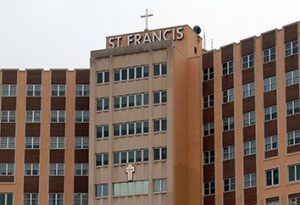
St. Francis, which operates three Indianapolis-area hospitals, and WellPoint, the giant health insurer, announced this month that they have agreed to jointly form an accountable care organization.
St. Francis, which operates three Indianapolis-area hospitals, and WellPoint, the giant health insurer, announced this month that they have agreed to jointly form an accountable care organization.
The project along Indiana 37 will include outpatient facilities and an emergency room.
The St. Vincent Medical Group chief financial officer is the winner in the private companies (revenue $100 million or less) category.
Health care reform put strict limits on physician-owned hospitals, but it seems the law also restricts hospitals that have physician-owned debt.
The Indianapolis-based hospital system’s board of directors could vote to acquire the 25-bed hospital as early as next week, but might put off a decision till February.
California-based Beckman Coulter Inc., which employs more than 500 people in the Indianapolis area, is up for sale, according to the Wall Street Journal. The company has hired Goldman Sachs Group Inc. to investigate a sale. After the Journal’s report, the company’s market value neared $5 billion. Potential buyers include private-equity firms such as the Blackstone Group and Apollo Global Management, or other companies in the medical-device industry, such as Illinois-based Abbott Laboratories, Germany-based Siemens or even Roche Diagnostics Corp. a Swiss company that operates its North American headquarters out of Indianapolis. Beckman’s testing machines are used in hospitals and medical research labs. In 2007, it moved more than 200 jobs to Indianapolis as it relocated its centrifuge development and manufacturing facilities. In October, Beckman announced plans to add 95 more jobs in Indianapolis over the next three years.
What is it about White County? In the same month that White County Memorial Hospital said it’s ready to merge with Indianapolis-based Clarian Health, now White County’s Monticello Medical Center is selling its four-physician family practice to St. Elizabeth Regional Health in Lafayette. St. Elizabeth is part of the Franciscan Alliance, which operates the three St. Francis hospitals in the Indianapolis area. Monticello, the White County seat, is about 30 miles north of Lafayette. St. Elizabeth will employ the four physicians, as well as three nurse practitioners, who collectively serve the largest percentage of White County residents. Locking up family practitioners is key for hospitals right now as they try to form themselves into “accountable care organizations” that will be paid by Medicare and private insurers for managing the long-term health of patients. Medicare’s rules will require accountable care organizations to provide family, or primary, care to at least 5,000 patients.
Indiana University’s health care budget will fall $24.9 million short of projected expenses in 2011-12, according to the Herald-Times of Bloomington, as a low-deductible Anthem Blue Access health care plan has become too expensive to offer to its 18,000 employees. IU trustee Tom Reilly Jr. implied that employees need to cover some of the extra costs.
Eli Lilly and Co. suspended a Phase 3 clinical trial of a skin-cancer drug after 12 patients in the study died, according to Bloomberg News. The deaths, among the 300 patients in the study, “may be treatment-related,” said Amy Sousa, a Lilly spokeswoman. Lilly was testing tasisulam on patients whose skin cancer had spread and who didn’t benefit from earlier treatment. No new or existing patients will be given the drug while the company evaluates safety data for the trial. But Lilly will continue to study tasisulam against breast, ovarian and renal cancers and against soft-tissue sarcoma, the company said.
Clarian Health got few takers in its first year offering a health care benefits program to large employers, but the Indianapolis-based hospital system is undeterred in growing its budding insurance services business.
Welcome to the annual Christmas snafu edition of this column. This year’s crop of meltdowns, missteps and breaches reminds us once again that technology is a fickle friend and unreliable ally.
The merger of Morgan Hospital & Medical Center into Clarian Health got the go-ahead from all parties in the past week, opening the way for Morgan to bring on new doctors to its facilities.
The dramatic shift from primary care to specialty interests within the American health care system begs a deeper question—What is the future of the primary-care doctor?
It’s back to reality for Bioanalytical Systems Inc. After its stock price soared 135 percent in three trading days, the stock started falling back to earth—helped in no small part by the company’s underwhelming earnings report. The West Lafayette-based firm said revenue dipped 13 percent, to $7.4 million, in its fiscal fourth quarter compared to the same period a year ago. Its loss narrowed to $300,000 in the quarter, compared to a loss of $1.4 million in the same period last year. The company sells testing equipment and services to pharmaceutical firms, which have been retrenching the past two years. “The revenue decline in fiscal 2010 stems mainly from study delays, price declines and spending reductions by our customers as part of their overall cost-savings initiatives,” Bioanalytical officials noted in a statement. But the company’s business accelerated in the second half of its fiscal year, causing CEO Anthony Chilton to give an upbeat outlook for 2011.
Eli Lilly and Co. and Amylin Pharmaceuticals Inc. have asked the U.S. Food and Drug Administration to approve their diabetes medicine Byetta for use in combination with basal insulin, which diabetics take in between meals to control their blood sugar. The companies would like to reignite Byetta sales, which have slumped since 2008, when the FDA publicized cases of pancreatitis among patients taking the drug. Indianapolis-based Lilly and San Diego-based Amylin tried to win approval this year for a once-weekly version of Byetta, called Bydureon, but the FDA asked for more tests, delaying the drug’s approval until 2012.
BioCrossroads’ Indiana Seed Fund invested $250,000 in Indianapolis-based Aarden Pharmaceuticals. Aarden’s leading drug program focuses on tuberculosis. The company’s product is based on research by Zhong-Zin Zhang, a professor and chairman of biochemistry and molecular biology at the Indiana University School of Medicine. Zhang is an expert in protein tyrosine phosphates, a group of signaling enzymes that regulate cellular processes. His research was funded through Lilly Endowment’s Indiana Genomics Initiative. The company decided last year to establish its headquarters here, selecting Indianapolis over San Diego.
Clarian Health physicians will now provide cardiac services to patients at Columbus Regional Hospital facilities under a new affiliation. The agreement ensures Columbus Regional has full-time availability of heart surgeons, in additional to the interventional cardiology care provided by Indiana Heart Physicians-Columbus. Columbus Regional has offered 24-7 heart surgery since 2002. In 2011, Clarian will change its name to Indiana University Health.
CNO Financial Group Inc. got a financial strength upgrade from A.M. Best Co., the pre-eminent rating agency for insurance companies. New Jersey-based Best boosted its grade on Carmel-based CNO from B (fair) to B+ (good), crediting CNO with focusing more on business lines where it has a clear competitive advantage and its recent financial restructurings. CNO, which was formerly called Conseco, sells life and health policies to middle-income families.
Warsaw-based Zimmer Holdings Inc. acquired Sodem Diffusion S.A., a Switzerland-based maker of orthopedic surgical power tools. The company will be merged into Zimmer Surgical, a unit based in Dover, Ohio. Zimmer has been trying to diversify its business as sales of its hip and knee implants have stagnated in western markets.
Medical office likely will be the strongest sector, followed by apartments.
The Office of Medicaid Policy and Planning has approved a series of emergency rules that it expects to save a total of $4.1 million over the next six months, but that will make up for only a small portion of the $31.4 million shortfall the agency anticipates for the fiscal year.
Mobile medicine has arrived. Decatur County Memorial Hospital in Greensburg became the first hospital in Indiana to start using AirStrip OB, a patient-monitoring system that sends things like the heartbeat waves of patients directly to physicians’ iPhones, BlackBerrys or other mobile devices.
Two St. Vincent Health hospitals—Saint John’s Health System and St. Vincent Jennings Hospital—have started using the DOCS4DOCS service provided by the Indiana Health Information Exchange. DOCS4DOCS centralizes in electronic format all the lab results, radiology reports, transcriptions, pathology and hospital admissions reports, discharge and transfer reports from all participating Indiana hospitals, physician practices, labs and radiology centers. The service, which swaps more than 6 million messages each month, is paid for by hospitals and laboratories but provided free of charge to physicians. The exchange, based in Indianapolis, now has more than 80 hospitals and 19,000 physicians participating in its medical-record-sharing services.
Marcadia Biotech Inc., a Carmel-based biopharmaceutical company founded by former Eli Lilly and Co. executives, has been acquired by Swiss life sciences giant Roche. Some details of the transaction will be disclosed in February. Roche’s holdings include Roche Diagnostics, which employs more than 3,000 in Indianapolis at its North American headquarters. Marcadia has about a dozen employees at its 11711 N. Meridian St. headquarters, who have so far been sustained by the millions of dollars Marcadia has raised in venture capital and its partnerships with large drug companies.. Marcadia has been focusing on drugs to treat metabolic diseases such as diabetes and obesity. It previously partnered with drug giant New Jersey-based Merck & Co. Inc. and with Indianapolis-based Lilly. Last June, Marcadia and Lilly struck a deal to develop short-acting glucagon drugs to treat severe hypoglycemia. Roche’s big hope for a new diabetes drug, taspoglutide, had its clinical trials suspended in September due to severe digestive-tract side effects.
Dr. Gaylen M. Kelton has been named the first program director of the new Indiana University Master of Physician Assistant Studies program in the School of Health and Rehabilitation Sciences at IUPUI. For the past 14 years, Kelton has been a professor of family medicine at the IU School of Medicine.
Cook Inc. has promoted Rusty Burns to be vice president of global logistics and purchasing. Burns will manage the Bloomington-based company’s warehousing, distribution and materials management. Burns has worked for Cook since 1979.
The deal Eli Lilly and Co. announced Tuesday morning with Boehringer Ingelheim GmbH sounded a lot like a baseball trade—with five drugs and payments to be named later—but analysts and investors generally liked what they heard.
Anthem Blue Cross and Blue Shield’s share of the Indianapolis area has leveled off, even though it still insures more than half the commercial market—or three times as much as its nearest competitor.
Indiana should take advantage of the opportunity to build a comprehensive exchange.