
Indiana’s state budget reserves jump 60% in past year to $4B
Republican Gov. Mike Braun touted Indiana’s balance sheet as providing budget “flexibility” that most other states lack.
Read More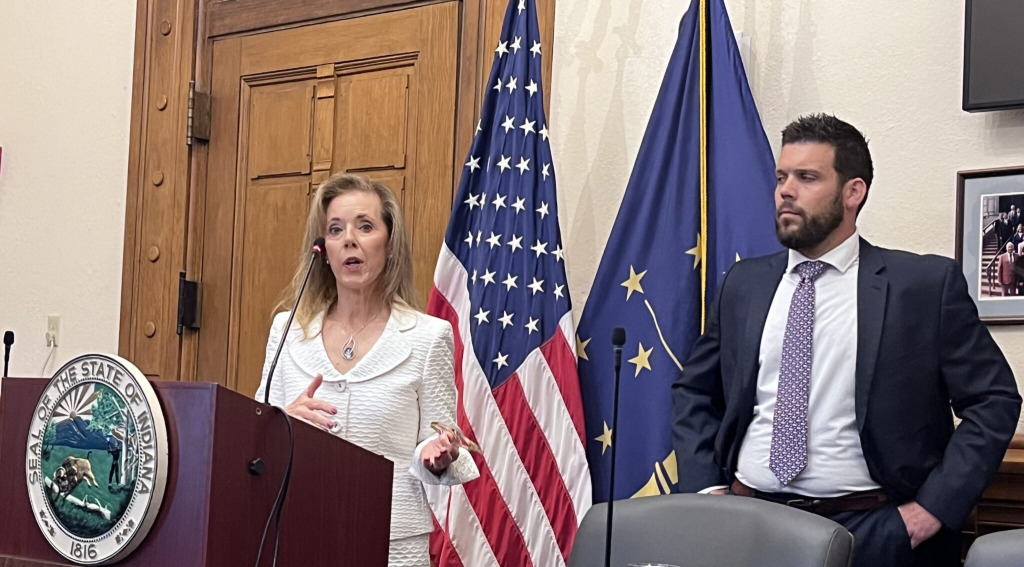
Republican Gov. Mike Braun touted Indiana’s balance sheet as providing budget “flexibility” that most other states lack.
Read More
About two-dozen Hoosier child care providers and advocates overwhelmingly opposed looser statewide staff educational requirements during a Monday public hearing.
Read More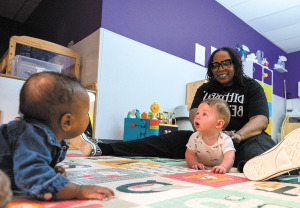
By 2034, unless the county grows its capacity, projections say it will not have spots for about 8,000 children in need of care.

The rules address requirements for both child care centers and homes. They are designed to support both new and existing businesses while maintaining “the highest standards of health and safety for children,” the governor’s office said in a press release.
About 43,000 were enrolled as of February, according to the Indiana Family and Social Services Administration, or 19% of those who are eligible.

The law is one of two recent state actions on child care from a Republican-controlled General Assembly that has resisted state funding for child care and early education.
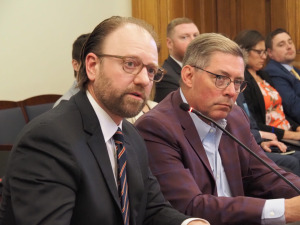
The panel green-lit a deal letting the Indiana Toll Road’s private operator to raise rates twice annually and the governor’s request to spend $200 million expanding a frozen low-income child care program.
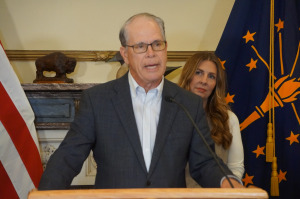
Some Indiana Democrats said they welcomed the additional investment from the Braun administration but criticized the move as inadequate.

HEA 1177 expands the tax credits available to businesses that help employees with the cost of child care. SEA 4 allows but does not require FSSA to use dollars from the Financial Responsibility and Opportunity Growth fund on child care vouchers.

There are a slew of topics legislators plan to tackle in 2026, including rising energy costs, tax codes, child care and education, and possibly a new casino in one of Indiana’s urban centers.
The effort is part of Gov. Mike Braun’s “Family First Indiana” agenda and builds on expanded parental leave policies announced earlier this year.

The state previously announced that it would cut Child Care and Development Fund vouchers beginning next week.
Child care providers around Indiana will see reimbursement rate cuts of 10% to 35% as the state’s Family and Social Services Administration tries to close a $225 million funding gap.
About three-quarters of U.S. adults see child care costs as a “major problem,” but only about half say helping working families pay for child care should be a “high priority” for the federal government, according to the poll.

The 146-page Indiana Kids Count Data Book ranked Indiana 27th in the country for overall child well-being.
The bill would allow single-owner child care companies or nonprofits, like YMCAs, to open multiple locations under one license.
Broadly speaking, the $4.22 billion in untapped economic potential falls into two categories: workplace disruptions—such as worker absenteeism and employee turnover—and lost tax dollars from unearned wages.

Indiana’s campaign finance laws generally bar candidates and their campaigns from spending contributions for “primarily personal” purposes, but do say candidates can use funds to “defray any expense reasonably related” to campaigning or service in elected office.

More employers are taking it upon themselves to help workers find child care, a costly service that can be elusive for working Hoosier parents. A new state fund might be able to help.
Indiana is among a growing number of Republican-led states proposing legislative solutions to tackle the availability and affordability of child care.

Senate Republicans on Monday pushed the Legislature’s latest effort to improve child care access for Hoosier families closer to the finish line. But Democrats say the bill loosens regulations for providers and could put children at risk.
But while the Senate passed its bill—a priority for the Republican caucus—with almost the full support of the chamber, the House version faced adversity from Democrats.