2023 Year in Review: Lilly had a ‘big-deal’ year
Among other big dealmakers in 2023 was Hillenbrand Inc., Jasper-based Kimball International Inc. and Noblesville-based Helmer Scientific Inc.
Obesity drugs like Wegovy and Eli Lilly’s Zepbound are showing promising results in helping people shed pounds. But a law bans Medicare from paying for weight loss drugs. Now, drugmakers and a bipartisan coalition of lawmakers are gearing up to push for that to change next year.
It was a busy year for the Indiana life sciences community, with a flurry of billion-dollar deals, major announcements, and a few setbacks. Here we present the top 10 stories of 2023—the good, the bad and the ugly—about an industry that is often hailed as a key driver of Indiana’s economy.
Fauna Bio, based in the San Francisco area, said Thursday it will give Lilly access to its AI platform, called Convergence, to support preclinical drug discovery efforts in obesity.
Results of a clinical trial for Point Biopharma’s lead compound fell short of analysts’ expectations, and that development is likely to pressure its investors to decide whether to agree to sell the company to Eli Lilly and Co. for $1.4 billion.
People who stopped taking Eli Lilly and Co.’s blockbuster drug Zepbound after about eight months regained half the weight they’d lost a year later, yet were significantly thinner than when they had started the obesity drug, according to a new study.
The new drug, called Zepbound, carries a hefty price of $1,059.87 per month, and insurers and health care plans are balking, questioning its affordability. Many employers and government health programs exclude obesity treatments from their coverage.
The two companies have been battling for years over patents for migraine headache drugs—Emgality for Lilly and Anjovy for Teva. Both drugs are once-monthly injections and were approved 13 days apart in September 2018.
The extension comes amid pushback from several investors, including Point’s largest institutional stock holder.
The announcement represents the company’s latest move to meet the soaring demand for its medicines for diabetes and weight loss.
Lilly’s lepodisiran, given at the highest dose, reduced a heart disease-linked protein to undetectable levels for 48 weeks, according to the study.
The research is the first to document that an obesity medication can not only pare pounds, but also safely prevent a heart attack, stroke or a heart-related death in people who already have heart disease—but not diabetes.
The Indianapolis-based drug company is ramping up manufacturing capacity to avoid possible shortages and to meet potentially huge demand in a nation where more than 40% of adults are classified as obese.
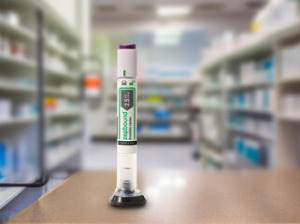
Eli Lilly and Co.’s hot-selling diabetes drug, Mounjaro, will now be sold for a second use, chronic weight management, using a separate brand name, Zepbound.
Excluding nonrecurring items, the Indianapolis-based drugmaker posted adjusted earnings of 10 cents a share, beating Zacks consensus estimate of a loss of 11 cents a share.
Eli Lilly and Co. will study its blockbuster diabetes drug Mounjaro in combination with an experimental muscle-loss treatment as it searches for ways to help patients maintain muscle while losing weight.
The technology hub designation makes Indiana eligible to compete against 30 other designated hubs in hopes of landing up to $70 million in federal funding to implement its program.
The drugmaker accused 11 companies of importing products that they say contain tirzepatide, the active ingredient in Mounjaro, while falsely implying that their products are associated with Eli Lilly or approved by the FDA.
According to the petition Courtney Anguiano knowingly conspired with seven other people to submit 189 false and fraudulent post-transaction reimbursement requests under three different Eli Lilly and Co. savings card programs.
Top executives and directors of Indianapolis-based Point Biopharma Global Inc. could rake in an eye-popping $212 million from their deal to sell the company to drugmaker Eli Lilly and Co.