
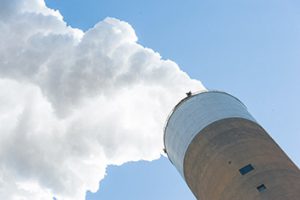
Harding Street power plant’s move away from coal is watershed moment
Under pressure to meet stringent clean-air regulations, Indianapolis Power & Light Co. is converting the Harding Street plant to natural gas.
Under pressure to meet stringent clean-air regulations, Indianapolis Power & Light Co. is converting the Harding Street plant to natural gas.
The surprising move is a blow to the administration and a victory for the coalition of 27 mostly Republican-led states, including Indiana, and industry opponents that call the regulations “an unprecedented power grab.”
The Indiana House has approved a bill that would prevent state agencies from enacting environmental rules tougher than those imposed by the federal government.
The strict standards of the Dec. 12 Paris agreement leave some observers wondering whether politicians understand the implications of the goals they signed up for.
The Environmental Protection Agency proposed tougher new limits on Tuesday on smokestack emissions from nearly two dozen states—including Indiana—that burden downwind areas with air pollution from power plants.

There is a growing sentiment here among key energy leaders—even from those who oppose the EPA plan—that the state should develop its own compliance plan that focuses on realistic strategies to decrease carbon emissions and diversify its energy mix.
Democrats have blocked a Senate bill co-authored by Joe Donnelly of Indiana that would have forced the Obama administration to withdraw new federal rules to protect smaller streams, tributaries and wetlands from development and pollution.
The Obama administration set a new national ozone standard Thursday. Business groups said it is unnecessary and could jeopardize jobs. Environmental groups said it didn’t go far enough.
Carol Comer, the chief of staff at the Indiana Department of Environmental Management, has been promoted to commissioner by Gov. Mike Pence, the state announced Tuesday.
Indiana environmental groups are applauding President Barack Obama's newly announced mandatory cuts in greenhouse gas emissions, but Indiana Gov. Mike Pence said doesn’t intend to comply with the proposal.
The proposed $450 million reservoir near Anderson—created by damming the White River—should be reviewed by a state legislative committee, according to a lawmaker opposed to the project.
Indiana has decided to join a lawsuit challenging an Obama administration rule that gives federal agencies authority to protect some streams, tributaries and wetlands under the Clean Water Act.
The court said by a 5-4 vote Monday that the Environmental Protection Agency failed to take cost into account when the agency first decided to regulate the emissions from coal- and oil-fired plants.
A federal appeals court on Tuesday threw out a pair of high-profile lawsuits challenging the Obama administration's sweeping plan to address climate change, saying it's too early to challenge a rule that isn't yet final.
The proposed rules have fueled political anger in the country’s heartland, becoming a top issue of concern for many farmers and landowners who say there are already too many government regulations affecting their businesses.
Indiana lawmakers say the tougher federal standards on smog-forming pollution will harm the state's economy.
Legislation that would prevent the sale of any products containing microbeads in Indiana, is headed to the governor’s office for final approval.
Senate Commerce and Technology Committee members voted 6-0 Thursday to advance the measure that would gradually phase out the sale and production of cosmetics with microbeads. The House unanimously passed the legislation last month.
Environmental groups are proposing a system of trails to promote use of the White River in central Indiana rather than damming it for a proposed $450 million, seven-mile-long reservoir.
Environmental, health and neighborhood groups are calling on the Marion County Health Department to compel Indianapolis Power & Light to test groundwater at eight coal ash lagoons on the city's south side.