
U.S. recommends ‘pause’ for J&J vaccine over clot reports
The CDC and FDA said Tuesday they were investigating clots in six women that occurred 6 to 13 days after vaccination.
The CDC and FDA said Tuesday they were investigating clots in six women that occurred 6 to 13 days after vaccination.

The expert panel for the Food and Drug Administration voted 19-1 that the drug’s modest benefits don’t outweigh its considerable risks, even with proposed measures to restrict who gets the medicine.
The company said its experts did not identify any safety concerns related to the vaccine, including finding no increased risk of rare blood clots identified in Europe.
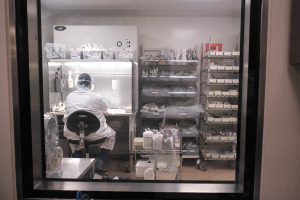
Health care practitioners and insurers are fighting over the hefty prices hospitals charge for specialty drugs to treat patients with cancer, vision loss, low white-blood-cell count and other serious diseases.

Eli Lilly and Co. on Saturday morning presented highly anticipated details from a mid-stage study showing that its experimental drug slowed Alzheimer’s disease progression over about 18 months.

Eli Lilly and Co. told Reuters news agency that it is working closely with the FDA to address concerns about the factory in Branchburg, New Jersey, which makes Trulicity.
J&J initially is providing a few million doses and shipments to states could begin as early as Monday. By the end of March, J&J has said it expects to deliver 20 million doses to the U.S., and 100 million by summer.

The Indianapolis-based drugmaker said it will begin shipping the additional doses immediately to the federal government, which controls distribution of the drugs.
By the end of March, Pfizer and Moderna expect to have provided the U.S. government with a total of 220 million vaccine doses, up from the roughly 75 million shipped so far.
Scaling up production of formerly niche substances such as lipid nanoparticles for a global vaccine drive has been among the most complex challenges behind the effort.
If you follow the daily drumbeat of news emanating out of Lilly Corporate Center, you might not grasp how phenomenally well the company is poised to perform in the coming years.

Lilly has spent three decades and more than $3 billion trying to find a way to treat Alzheimer’s disease. Its latest drug, donanemab, finally shows real promise.
J&J’s vaccine was safe and offered strong protection against moderate to severe COVID-19, according to preliminary results from a massive international study.
The global business consulting firm McKinsey & Company has agreed to a $573 million settlement with 49 states over its role in advising companies on how to “supercharge” opioid sales amid an overdose crisis.
So far this month, drugmakers have hiked prices on 636 drugs, according to research by GoodRx, which tracks prescription drug prices and offer a mobile app to help consumers find the lowest prices on hundreds of drugs.

The experimental drug, donanemab, could be a huge breakthrough for Lilly, which has spent billions of dollars over 30 years researching treatments for Alzheimer’s disease, only to see them fall short in clinical trials.
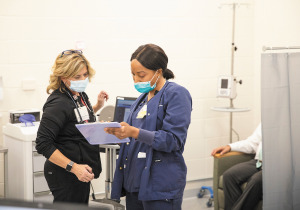
For a highly touted drug meant to keep throngs of people out of hospitals during a pandemic, Eli Lilly and Co.’s wonder treatment bamlanivimab sure has been slow to catch on.
INCog BioPharma Services has purchased 16 acres of undeveloped land in Fishers for its planned new biopharmaceutical manufacturing facility. The $60 million project has grown in size.
The Sinopharm vaccine, like the AstraZeneca one, could be easier for countries around the world to handle since they can be stored at normal fridge temperatures.
The candidate made by Novavax Inc. is the fifth to reach final-stage testing in the U.S. Some 30,000 volunteers are needed to prove if the vaccine–a different kind than its Pfizer and Moderna competitors–really works and is safe.