
Subscriber Benefit
As a subscriber you can listen to articles at work, in the car, or while you work out. Subscribe Now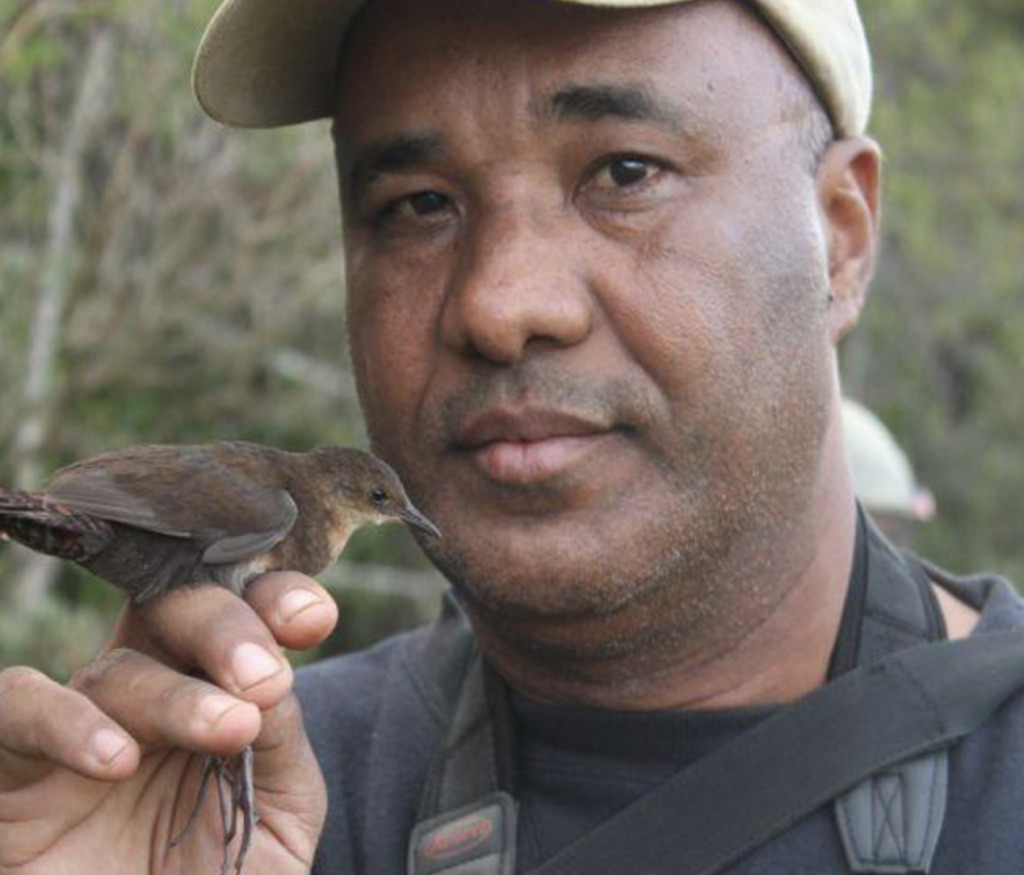
The Indianapolis Zoological Society Inc. on Tuesday announced Lily-Arison René de Roland as the 2025 winner of the Indianapolis Prize, billed as the world’s leading award for animal conservation.
René de Roland, a renowned scientist and biodiversity conservationist in Madagascar, has discovered several new species, led the establishment of four national protected areas and developed community-focused conservation programs, officials said.
Since 2004, he has been the national director of The Peregrine Fund’s Madagascar Program, where he oversees a team of 48 conservationists working to conserve wildlife and landscapes in his homeland.
René de Roland, the 10th winner of the Indianapolis Prize, will receive an unrestricted $250,000 award—the largest individual monetary award given in the animal conservation field. He will be recognized at the Indianapolis Prize Gala on Sept. 27 in Indianapolis.
“Dr. René de Roland’s community-based models and decades of research have not only alleviated human-wildlife conflicts—they have also helped to conserve Madagascar’s unique and wonderful animals and ecosystems,” said Rob Shumaker, president and CEO of the Indianapolis Zoo, in written remarks. “He is dedicated, resourceful and a fierce advocate for Madagascar wildlife, and I’m proud to announce him as this year’s Indianapolis Prize winner.”
René de Roland and his team are credited with the 2006 rediscovery of the Madagascar pochard, a rare duck thought to be extinct since the 1990s. He also contributed to the discovery of two previously undescribed lemur species in northern Madagascar and a wolf spider that now carries his name.
During a 2022 expedition, René de Roland and his team rediscovered the Dusky tetraka, a small songbird that had eluded ornithologists for 20 years.
His efforts led to the creation of four national protected areas in Madagascar totaling more than 1,500 square miles, including rainforests, dry forests, wetlands, mangroves and savannahs.
Established by the Indianapolis Zoo in 2004 and awarded every other year, the Indianapolis Prize recognizes and rewards the world’s preeminent animal conservationists who have achieved major victories in advancing the sustainability of an animal species or group of species.
The remaining finalists for this year’s award (see below) will each receive $50,000. They will also be recognized at the gala.
Alberto Alves Campos (Aquasis, Brazil, and University of British Columbia, Canada): Conservation biologist serving as a founder of Aquasis, a non-profit organization promoting endangered species and habitat conservation in Brazil. Campos helped improve the conservation status of the Antillean manatee in Brazil and created a Western Hemisphere Shorebird Reserve Network site for the wintering grounds of the endangered Red knot.
Lisa Dabek, Ph.D. (Tree Kangaroo Conservation Program, Papua New Guinea, and Woodland Park Zoo, USA): Creator of the first conservation area in Papua New Guinea focused on tree kangaroos. Dr. Dabek is the founder of the Tree Kangaroo Conservation Program where she works with local indigenous communities and regional governments to establish long-term conservation plans for the species.
Biruté Mary Galdikas, Ph.D. (Orangutan Foundation International, USA): Orangutan researcher who first documented the long orangutan birth interval and recorded more than 400 types of food consumed by orangutans. As president and co-founder of Orangutan Foundation International, Dr. Galdikas has contributed to the release of more than 500 rehabilitated orangutans back into the wild and provided unprecedented detail about orangutan ecology. Galdikas was named an Indianapolis Prize DeHaan Finalist in 2023.
Julie Packard (Monterey Bay Aquarium, USA): International leader in ocean conservation, Packard strives to protect marine species and ecosystems. She has led the charge for the sustainable seafood movement by building a global seafood program grounded in ecosystem-based science and a market-based approach. As the founding executive director of the Monterey Bay Aquarium, Packard is a leading voice for science-based policy reform in support of a healthy ocean.
Lee James Taylor White, Ph.D. (Institute for Tropical Ecology Research, Gabon, and University of Stirling, Scotland): Working as a field biologist and conservationist for 40 years, Dr. White’s research focuses on the critically endangered African forest elephant and its keystone ecological role in the countries of the Congo Basin. White has directed extensive population assessments, combated habitat loss, created a network of 13 national parks in Gabon and founded new collaborations, thus protecting half of the world’s forest elephants.
The previous Indianapolis Prize winner was Pablo Borboroglu, founder and president of the Global Penguin Society, which the zoo said has protected 32 million acres of penguin marine and terrestrial habitat.
Please enable JavaScript to view this content.
Congratulations! What wonderful work Dr. Rene de Roland and all of the nominees conduct in their fields.