
Subscriber Benefit
As a subscriber you can listen to articles at work, in the car, or while you work out. Subscribe Now
Throughout its 59 seasons, the Pacers franchise has relied on a roster full of people who stepped forward at a crucial time to keep flickering lights from going out.
The original ownership group, a revolving collection of business leaders from Indianapolis and Lafayette, funded the formation and early seasons, pitching in money whenever needed to meet expenses.
Nancy Leonard hurriedly organized the July 4 telethon that met the goal for season-ticket sales to stay afloat in 1977, and Mel and Herb Simon famously purchased the debt-ridden franchise in 1983 when an offer was on the table to move it to Sacramento, California.
Another name tends to get overlooked, however: Bill Eason.
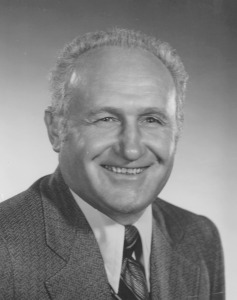
A joke could be made that it’s easy to overlook a 5-foot-4 intellectual, but Eason’s role in the Pacers’ death-defying leap from the American Basketball Association into the NBA 50 years ago this month was no laughing matter. Whether he personally funded the entire $3.2 million entry fee can’t be confirmed, although Leonard said he did — and his wife and daughter firmly believe so. What is definite is that as board chair of the beleaguered ownership group in 1976, Eason spent far more time and money on the so-called merger than anyone.
He was never compensated. He received no public acclaim and eventually said he regretted his involvement. The worlds of big business and professional sports are treacherous, especially when combined. Eason took his lumps in both.
Fortunately for this hardened war veteran, he wasn’t seeking personal glory.
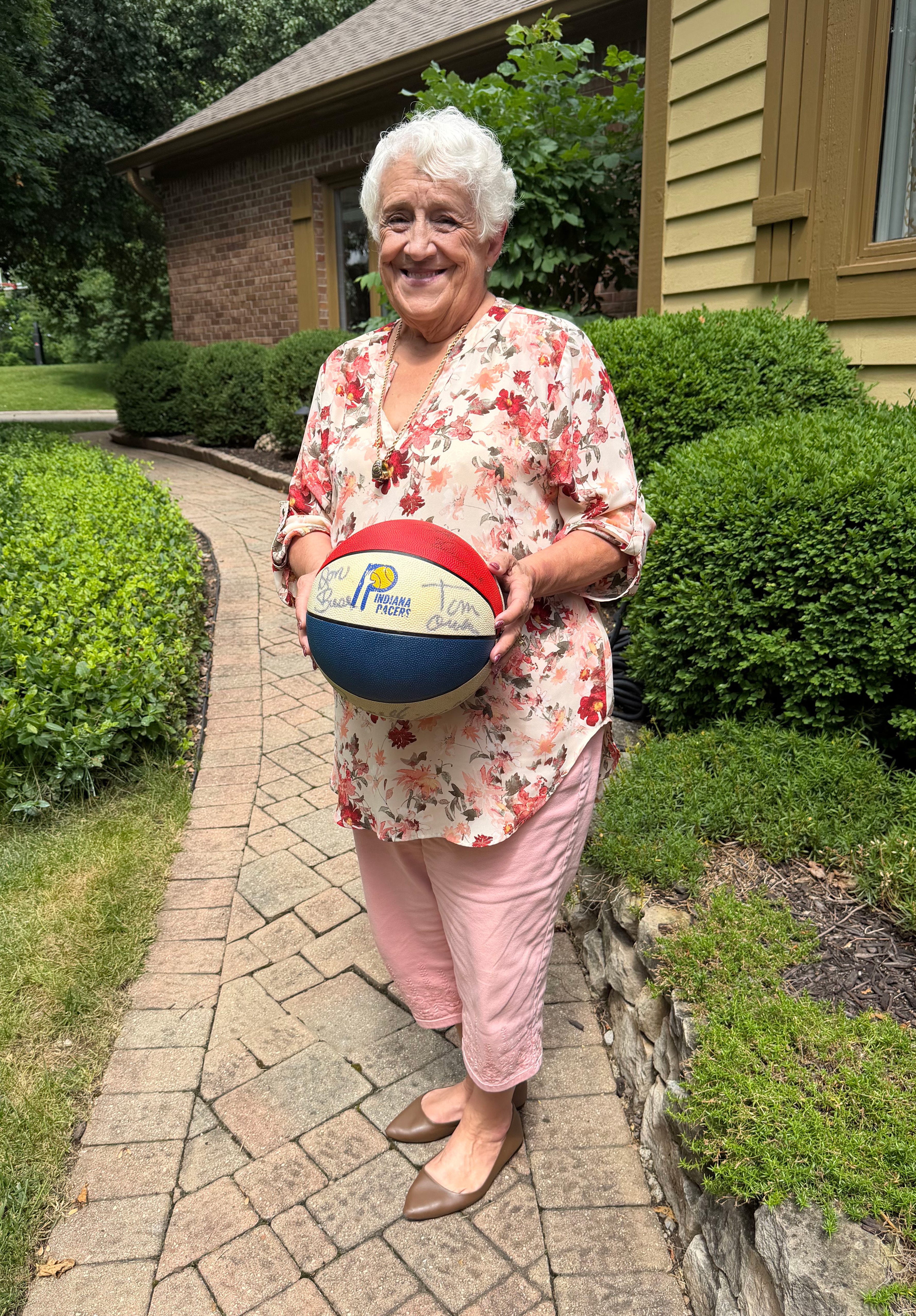
“He wasn’t a look-at-me person,” his daughter, Donna Dowd, says. “But I don’t think he was given enough credit. After the ABA closed up, I said, ‘Why can’t they give him a lifetime of tickets? Two tickets and a parking place?’ It really irked me.
“He never said a word. He just said, ‘This is where I was needed, and I moved on.’ But it really hurt me.”
D-Day veteran
Willard Eason, who died in 2002, would have had a dramatic story to tell even without the Pacers.
A native of Loving, Texas, he enlisted in the Army during World War II. He was assigned to the Air Corps and participated in the D-Day invasion as a gunner in a glider. Under the cover of darkness, mere hours before the naval and air assault on the shores of Normandy began, about 3,900 American troops were airlifted via wooden gliders into occupied France, pulled by Douglas C-47 airplanes.
Eason’s glider was forced to land earlier than planned to avoid German gunfire, and both of his legs were injured in the crash landing. They turned “a funny-looking purple” as he recounted in an interview with his grandson, Alan Dowd, in 2001, and remained swollen for several weeks, during which the skin on his legs peeled off and he had to rely on crutches to walk. The soldiers in his regimen were supposed to remain in France for seven weeks but didn’t get relief for 11. They barely survived by living off the land, one day at a time, even eating raw chickens.
“You just did the best you could with what you had,” Eason told Dowd. “You just do what you have to do.”
Shortly after the war ended, Eason came to Indianapolis to visit a couple of his fellow veterans. He liked it so much he stayed. With help from the GI Bill, he enrolled in dental school at Indiana University’s Indianapolis campus, then switched to Butler University to study biochemistry.
He met his wife, Hazel, in a bar. She, like him, had grown up humbly, and they continued to live that way for several years. Both worked to meet expenses while he attended college. After graduating from Butler in 1954, Eason was building a career at Ford Motor Co. but was growing restless. Constantly tinkering at home, he put his scientific mind to use by inventing the Unimeter, a blood-testing device that enabled doctors to obtain results immediately and at lower cost.
He and partners formed a company, Bio-Dynamics, in 1964, and it took off. No longer poor and both an avid participant and fan of sports, he joined the investors in the Pacers’ original ownership group, Indiana Professional Sports Inc., as a board member in 1968, before the team began its second season.
He was mostly a silent partner at first, attending meetings and contributing desperately needed financing. But by 1975, when a new ownership group assumed all debts and took over, he was front and center as board chair.
When the final ABA season ended in 1976, the future of the league — and the Pacers — was in serious doubt. Just seven teams finished the season, and Virginia folded shortly after. The only way for the remaining ABA teams to survive was to join the NBA, which held nearly all the leverage in negotiations that lasted months.
Finally, on June 17, after four days of tense meetings in New York, including one that ran until 4 a.m., the NBA’s board of governors agreed to accept four ABA teams — the Pacers, Nuggets, Spurs and Nets. They welcomed their new members with a virtual slap in the face, requiring a $3.2 million entry fee and loss of network television revenue for several years.
Despite winning three championships, the Pacers had never turned a profit in their ABA existence. The various members of the three ownership groups had managed to keep the games tipping off, but most of them were much closer to well-off than wealthy. Eason had the deepest pockets aside from Indianapolis Motor Speedway owner Tony Hulman, but Hulman’s investment and interest in the Pacers were minimal.
As board chair, Eason was spokesman for the new group, the one quoted extensively in every Indianapolis newspaper article related to the Pacers’ effort to join the NBA. He was the franchise’s lone representative at the make-or-break meetings in New York, which entailed far more than he anticipated.
“He was going to be there for one day, but was gone [four days],” Hazel Eason told me in an interview before her death in 2013. “He wore the same shirt every day.”
She said she donated $125,000 of her own money to the cause, but Bill Eason picked up the tab otherwise.
“If not for my husband, the Pacers would not be here,” she said.
Donna Dowd recalls her father stating privately that he lost more than $3 million on the Pacers. And Bob Collins, the former Indianapolis Star sports editor who had intimate knowledge of the franchise’s business throughout the ABA seasons, wrote in an article in 1983 that “Bill Eason … poured millions into the operation and never complained.”
Ultimately, regrets
It would be nice to report a happy ending given all the time, trouble and charity Eason devoted to the Pacers, but that wouldn’t be accurate. He hoped to be paid back by the sale of partnerships, but to his dismay the business community in Indianapolis didn’t respond. And while he never seemed to care about public recognition and appreciation, that didn’t come, either.
Eason told Bill Benner of The Indianapolis Star in November 1978 that he wished he had done what the owners of the Kentucky and St. Louis ABA franchises did — take a buyout for personal profit rather than pay the NBA’s blood-letting entry fee.
“No, I’m not happy about [my involvement], because when we were finally admitted to the NBA we thought we could at least open this thing up and sell public shares,” Eason told Benner. “I felt that was all the franchise lacked: stability and a league to play in. And I was dead wrong in that aspect.
“I’m not blaming anybody else. The mistakes were mine. But if I had to do it over again, I wouldn’t. I would have taken St. Louis’ and Kentucky’s position and not come in. It was too high, too much to overcome, a crippler.”
Ultimately, Eason’s only financial compensation was a tax write-off when the franchise was purchased by California investors in 1979. He did, however, earn the respect of those who knew him. Bob and Nancy Leonard attended his funeral service, as did a few of the former players.
“I really adored Bill Eason,” Benner says. “He was a good man. He was about the Pacers, and he was about the city.”
“He was a great person and would do anything to help the Pacers,” former trainer David Craig adds. “He was quiet and very humble. He just wanted to do what he could to help.”
Eason dropped out of public view after unloading the franchise by moving to Nashville in Brown County with Hazel to operate a 370-acre cattle farm, where he successfully crossbred bulls and cows. That, at least, provided fresh air and a fresh start. His business experience with Bio-Dynamics, which was acquired by Boehringer-Mannheim, had resulted in lawsuits and bitter feelings.
Hazel was a savvy investor and salvaged as much as she could. She said it took 4-1/2 years to close his estate, and she had to pay $250,000 of her own money to do so.
There’s a red, white and blue ball autographed by the players on the Pacers’ final ABA team in Donna’s basement, along with a photo of Eason and civic leader Tom Binford taken at a press conference when they were introduced as heads of the new ownership group in 1975.
On it, Binford wrote, “Hopefully our new venture will be as rewarding as our association has been to me.”
It didn’t turn out that way. But one testimony to Eason’s career stands out above all others: The Pacers still exist. He is firmly entrenched among the saviors who kept the franchise on life support amid difficult financial battles.
It’s like he told his grandson: You just do the best you can with what you’ve got.•
__________
Montieth, an Indianapolis native, is a longtime newspaper reporter and freelance writer. He is the author of three books: “Passion Play: Coach Gene Keady and the Purdue Boilermakers,” “Reborn: The Pacers and the Return of Pro Basketball to Indianapolis,” and “Extra Innings: My Life in Baseball,” with former Indianapolis Indians President Max Schumacher.
Please enable JavaScript to view this content.
Excellent article. I did not know his story.
I have known the Eason family for 40 years. They are very humble. I knew a bit of this story and glad it is finally being shared more broadly.