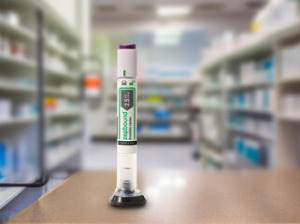
At issue is whether a drug developed by Point Biopharma, based in Indianapolis, infringed on a patent issued in 2020 and assigned to Purdue Research Foundation.
The Indianapolis-based drugmaker said Thursday it was taking legal action against at least six additional medical spas and weight loss centers that it claimed are selling counterfeit and compounded versions of tirzepatide, the active ingredient in Lilly’s diabetes treatment Mounjaro and weight-loss treatment Zepbound.
The race to score blockbuster weight-loss drugs like Eli Lilly’s Mounjaro and Zepbound is pushing one of the world’s largest population of people with obesity to creative lengths.
Eli Lilly’s drug—Kisunla, the brand name for donanemab—is one of the few treatments developed for Alzheimer’s that modifies the underlying disease and will join just one other drug, Leqembi, on the commercial market.
South Carolina-based RealtyLink is suing Lebanon for more than $25 million, alleging the city withdrew incentives after the project was delayed by the city’s inability to service the park with water.
The CHIPS and Science Act is starting to tackle its goal of fueling domestic innovation and high-tech manufacturing in the areas of microelectronics, biotechnology, artificial intelligence and more, in Indiana and nationwide.
Indianapolis-based Pure Development has developed more than 35 real estate projects nationally and has a contract with the Indiana Economic Development Corp. to lead efforts on the LEAP Lebanon Innovation and Research District.
Massachusetts-based Morphic Holding Inc. is a nine-year old, publicly traded company that is developing a class of drugs known as oral integrin therapies to treat autoimmune diseases, pulmonary hypertensive diseases, fibrotic diseases and cancer.
AnalytiXIN is a collaborative effort between major Indiana corporations, industry groups and academic institutions to share information on data sciences, including digital, AI and advanced analytic capabilities.
State and corporate leaders believe a tech park taking shape on the western edge of downtown could be a launchpad for health sciences innovation and commercialization as part of the state’s ambitious economic development portfolio.
The Roche drug is a once-daily pill, compared to Lilly’s tirzepatide, sold under the brand names Mounjaro (for diabetes) and Zepbound (for obesity), which is a once-weekly shot.
Indiana is home to 32 Australian businesses and two Singaporean-owned businesses, and several Indiana-based companies do business in either Australia and Singapore, or both.
This year’s list introduces nearly 70 new individuals, encompassing corporate executives, philanthropic leaders and notable personalities making significant contributions in Indiana.
DEI efforts remain popular with the Indiana Chamber of Commerce and some prominent members of the Hoosier business community even as companies elsewhere back away from what has become a culture war flashpoint.
Shortages of brand-name drugs made by Novo and Eli Lilly and Co. have allowed pharmacies to make what are essentially copies, and telehealth companies like Hims are selling them to patients at a steep discount.
It was a mating dance that lasted more than three years. At the end, Eli Lilly and Co. wound up buying a Massachusetts-based biotech developing treatments for inflammatory bowel disease for $3.2 billion.
The spotlight is turning to Indianapolis-based Eli Lilly and Co. as the next possible member of the so-called “Trillion-Dollar Club,” based on the drugmaker’s climbing stock price and swelling demand for its treatments for diabetes, obesity and other diseases.