Autonomous tech is coming to farming. What will it mean for crops, workers?
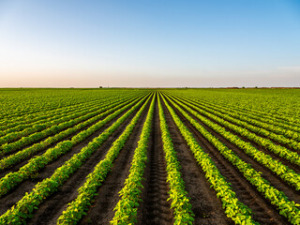
Automation could ease the sector’s deepening labor shortage, help farmers manage costs, protect workers from extreme heat and improve yields.
Stephen Meyers says consumers in Indiana and across the country can expect an above-average pumpkin crop, both in terms of yield and quality.
The state’s largest agricultural lobbyist group announced its legislative priorities Thursday morning.
Corteva, the Indianapolis-based seed and crop protection giant, formed a joint venture with the startup, Pairwise, based in Durham, North Carolina, aimed at increasing crop yield for food, fuel and fiber production.
Sen. Mike Braun, the Republican candidate for governor, partnered with conservative public policy group Hoosiers for Opportunity, Prosperity & Enterprise Inc., or HOPE, to develop his agenda.
The legislation would add the U.S. Secretary of Agriculture to the Committee on Foreign Investment in the United States, which can recommend that the president block or suspend any transactions with a worrisome impact on national security.
Farmers are also planting more acres of corn, in part to meet demand for ethanol, which means more plants working harder to stay cool — pumping out humidity that adds to steamy misery like that blanketing much of the U.S. this week.
According to Perdue and the U.S. Agriculture Department’s Food Safety and Inspection Service, the recall covers select lots of three products sold nationwide.
The 300,000-square-foot facility will receive and distribute primarily corn and soybean seeds that will eventually end up on Indiana and Ohio farms.
Republican Micah Beckwith, Democrat Terry Goodin and Libertarian Tonya Hudson spent most of Tuesday’s agriculture-focused debate arguing over whose tax policies would be most beneficial.
More than 80 farms in the U.S. and Canada, including three in Indiana, have teamed up with Peanuts Worldwide to create “Peanuts”-themed mazes to celebrate the beloved strip’s 75th birthday this summer and fall.
Agriinstitute, a Danville-based agricultural advocacy group, will host the Aug. 13 debate. It’s scheduled to begin at 3 p.m. at the Indiana State Fairgrounds’ Purdue Extension Building.
The AgriNovus Indiana report quantifies agbiosciences as contributing $22.7 billion to the state’s gross domestic product. It also identifies several key areas of opportunity for growth in this sector.
For Indiana—the seventh-largest agricultural exporter and ninth-largest farming state in the U.S.—the legislation could have wide-ranging impacts.
The Indiana General Assembly passed House Enrolled Act 1557 last year, tasking the Indiana State Department of Agriculture to estimate the amount of farmland lost—as well as the cause of it—from 2010 to 2022.
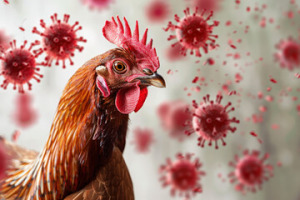
So far, scores of dairy farm cows in 12 states—including Michigan and Ohio—have been infected with H5N1, also known as bird flu.
Property taxes again took center stage during tax reform discussions Tuesday—with farmers asking for a reprieve and local units of government seeking to head off significant cuts in revenue.
Elanco has called Bovaer a potential blockbuster, meaning it could ring up annual sales of at least $100 million.
IBJ talked with State Agriculture Director Don Lamb about the trade mission to Brazil, the importance of agriculture trade missions and Indiana’s import/export relationships.
Rep. Jeff Thompson, the chair of the House’s fiscal-minded Ways and Means Committee, says his goal is simplicity but that the changes he has in mind are so massive that they could take multiple sessions.