
Casino Association picks former state rep as president
Matt Bell, a former state representative and chairman of the Indiana Gaming Commission, has been picked to lead the Casino Association of Indiana, succeeding longtime president Mike Smith.
Matt Bell, a former state representative and chairman of the Indiana Gaming Commission, has been picked to lead the Casino Association of Indiana, succeeding longtime president Mike Smith.
Pinnacle Entertainment’s proposed sale of its casinos to Gaming & Leisure Properties is being opposed by a union that will ask the Indiana Gaming Commission to reject the plan, saying the deal would give the company more casinos than state law allows.
Horse track operators and breeders are concerned the good times might be trotting to a close as some states move to rein in a lucrative subsidy that's helped prop up their long suffering-industry.
The complex, called American Place, would contain Indiana's smallest casino, 1.2 million square feet of retail space, 200 condominiums, 25 high-end hotel suites, a conference and performance center, offices, a movie theater with moving seats and a health club.
The deal will create a combined real estate investment trust that will own 35 casino and hotel facilities in 14 states, including three in Indiana.
Mike Smith plans to resign as president and CEO of the Casino Association of Indiana after more than a dozen years in the position, the group announced Monday.
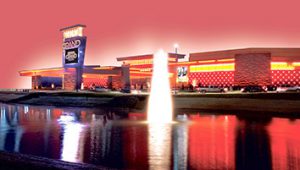
Indiana lawmakers bought the state’s embattled casino industry time, but the new protections might not be enough to ensure each gambling parlor’s long-term survival.
The center, to be located near Indiana Downs, will provide health services to horses and serve as a working laboratory for veterinary school learning and research.
Tribal Chairman John Warren said the law specifying the process for the state to enter into a compact violates the Indian Gaming Regulatory Act because it includes stipulations on what the compact must include.
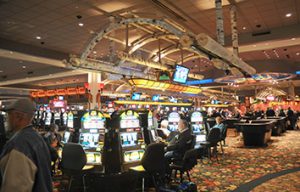
Indiana’s riverboat casinos will be allowed to build new on-land facilities under a bill that Gov. Mike Pence will allow to become law without his signature. But Pence vetoed a bill that would have allowed online betting on horses.
Lawmakers have approved a deal to allow Indiana's riverboat casinos to build on-land facilities, but live dealers won't be working table games anytime soon at the state's two horse track casinos.
The question of whether the two horse track casinos in central Indiana will be allowed to add live dealers for their current electronic table games remained unsettled Monday with little more than a week left in this year's legislative session.
The legislation will move to a joint House-Senate conference committee where members will try to strike a deal that can be passed by both chambers by midnight April 29.
The Senate bill, which passed 36-13, doesn’t allow live dealers to oversee table games at the state’s horse track-based casinos in Anderson and Shelbyville, at least not for five years. And that could be a deal-breaker in the House.
Centaur Gaming plans to release an annual report this week that plays up its charitable contributions and tax payments as state senators debate whether to allow the company to add live dealers at its central Indiana racetrack casinos.
Because Four Winds Casino would be on land-in-trust controlled by a Native American tribe, it would not be subject to the same tax and regulatory system as other casinos in Indiana.
Racetrack casinos would have to wait until 2021 to get live dealers at table games under a proposed Senate amendment to a gambling bill that has already passed the House.
The bill allows riverboat casinos to build on their existing land footprints, creates a tax credit for existing casinos to build hotels, and gives racinos the ability to convert half of their electronic table game machines to live dealing stations.
Gov. Mike Pence has been firm that he doesn’t want an expansion of gambling operations in the state. But he has not been clear about what he means by “expansion.”
The House has stripped language out of a controversial gambling bill that would have cut millions of dollars in funding that goes to communities where casinos are located.